Where to stay in Cape Town
A neighbourhood-by-neighbourhood breakdown of eight areas, with realistic nightly rates from R320 for a dorm bed to R6,000 for a Camps Bay sea view in January.
 Rooftops of Cape Town's City Bowl with Table Mountain rising behind
The City Bowl: Gardens, Tamboerskloof and the CBD
The City Bowl is the amphitheatre of streets between the harbour and the mountain, and it is where most first-time visitors should sleep. Gardens and Tamboerskloof sit on the slopes above Kloof Street, close enough to walk down to Bree Street for dinner and steep enough to earn the view. Guesthouses on Union Street, Belmont Avenue and Hof Street run roughly R1,100 to R2,200 for a double with breakfast, less in June. The Lion's Head trailhead is a R70 Uber away, the Company's Garden a fifteen-minute walk, and Kloof Street itself has a supermarket, a pharmacy and about thirty restaurants.
The CBD proper — Long, Loop, Bree and Buitengracht — is cheaper and louder. Backpackers on Long Street sell dorm beds at R320 to R450 and private doubles around R900; serviced apartments in converted office towers on St George's Mall go for R1,300 to R1,900. Weekday mornings the district hums with office workers; Sunday it empties completely and feels bleak. Take a room facing an internal courtyard if you are near Long Street, because the bass from the clubs carries until 4am on Friday and Saturday. Parking is metered on the street and R80 to R120 a night in secure garages.
Atlantic Seaboard: Green Point, Sea Point and Camps Bay
Green Point and Mouille Point are the sensible compromise: flat, walkable, five minutes from the V&A Waterfront, and stocked with mid-range apartment blocks along Main Road and Beach Road. Expect R1,200 to R2,400 for a one-bedroom with a balcony, and use the Green Point Urban Park and the promenade as your morning routine. Sea Point, further along, is denser and better value — R900 to R1,600 buys a decent apartment on Regent Road, with Mojo Market, the Sea Point Pavilion tidal pool and a hundred cafés within a few blocks. It is also the most genuinely mixed, all-hours neighbourhood on this coast.
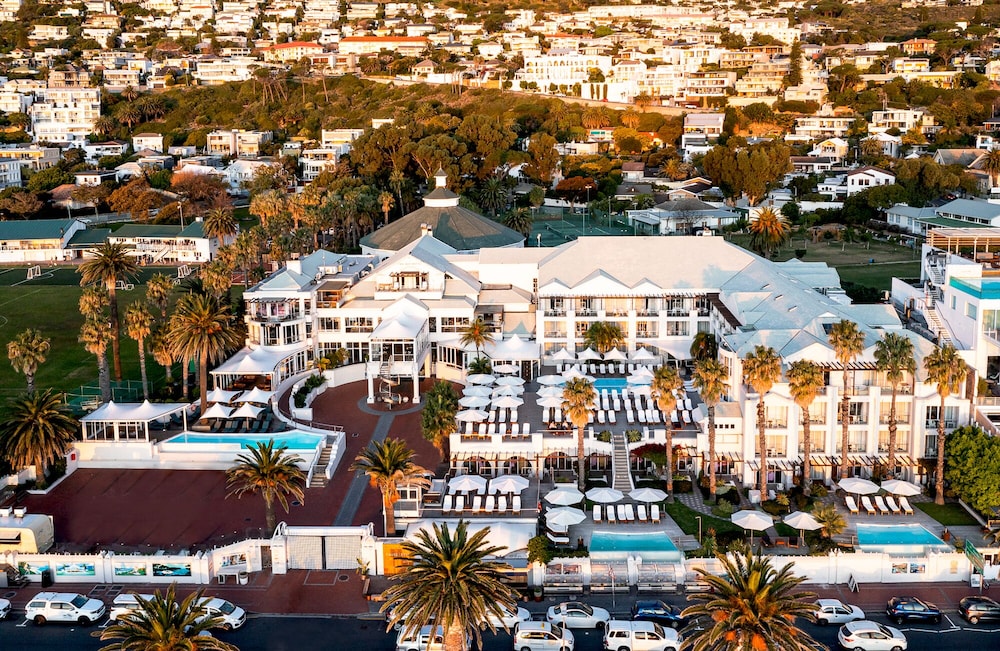
Camps Bay and Clifton are the postcard, and priced accordingly. A sea-facing apartment on Victoria Road runs R3,500 to R6,000 in December and January, dropping to R1,800 in winter when the wind stops being charming. You pay for the Twelve Apostles behind you and the sunset in front, but you will drive or Uber for almost everything else — R120 to R150 each way into town, more with surge after dinner. Bakoven, just past Camps Bay, is quieter and slightly cheaper. Llandudno has no shops at all. Do not stay this far out on a first two-night trip.
V&A Waterfront and De Waterkant
The V&A Waterfront is a working harbour wrapped in a shopping centre, and it is the safest-feeling place in the city to walk at 10pm. Hotels here start around R2,400 and climb past R9,000; the trade-off is that you are inside a curated bubble with R55 coffees and cruise-ship crowds. It genuinely suits travellers with small children, mobility limits or a single night before an early flight, and the Robben Island ferry, the Zeitz MOCAA museum and the Two Oceans Aquarium are all within the precinct. MyCiTi buses connect it to Civic Centre station in about twelve minutes for R11.60 off-peak.
De Waterkant, on the slope between the Waterfront and the CBD, is the prettiest small district in Cape Town: cobbled lanes, Cape Georgian cottages painted in sherbet colours, and a cluster of design shops around Dixon and Napier Streets. Whole cottages sleeping four go for R2,000 to R3,200, which beats two hotel rooms. It is also the heart of the city's gay scene, with bars on Somerset Road running late. Downsides: streets are narrow, parking is a nightmare, and the Buitengracht traffic noise reaches the eastern edge. Walk everywhere from here and you will barely use a car.
Woodstock, Observatory and Salt River
Woodstock along Albert Road is the design-and-coffee corridor: the Old Biscuit Mill, Woodstock Exchange, galleries, and Saturday market crowds. Rooms in converted warehouses and small guesthouses cost R750 to R1,400, noticeably less than Gardens for the same square metres. The caveat is granularity — one block is renovated, the next is not, and walking after dark east of Sir Lowry Road is not recommended. Stick to the main arteries, use Uber at night, and you will get a livelier, less touristy version of the city with the CBD ten minutes away by car or a short Metrorail hop.
Observatory, known universally as Obs, is student territory around Lower Main Road: bars, vegan cafés, a 24-hour Spar, and rooms from R600. It is scruffy, cheerful and well connected by rail on the Southern Line, and it puts you close to Groote Schuur Hospital and the University of Cape Town. Salt River sits between the two, mostly residential and industrial, and works best if you have a car and a specific reason. All three are inland, which means warmer summer nights and no southeaster battering — but also no sea view and a 20-minute drive to the Atlantic beaches.
The False Bay side: Muizenberg, Kalk Bay and Simon's Town
False Bay water is roughly six degrees warmer than the Atlantic, which is why Muizenberg is where Cape Town learns to surf. Board and wetsuit hire on Surfer's Corner runs R250 for two hours, a lesson about R450. Guesthouses on Beach Road and up the Muizenberg hillside cost R800 to R1,600, and the Metrorail Southern Line puts Cape Town station 35 minutes away for under R30 when services run to schedule. The village itself is small: a few cafés, the Blue Bird Garage market on Friday nights, and the painted Victorian bathing boxes everyone photographs at sunrise.
Kalk Bay, four minutes further south, is the one to pick if you want charm without a car battle: a working fishing harbour, antique shops and bookstores along Main Road, and seafood at Kalky's on the quay. Rooms are R1,000 to R2,000 and often perched above the railway line, so ask which side faces the tracks. Simon's Town, the naval base at the end of the line, has the penguin colony at Boulders Beach and the calmest swimming anywhere near the city. Staying this far south means committing to the peninsula; the city centre is 45 minutes each way.
Southern Suburbs, Hout Bay and what you actually pay
The Southern Suburbs — Newlands, Claremont, Rondebosch, Constantia — are leafy, residential and organised around schools, the Kirstenbosch gardens and Newlands cricket and rugby grounds. Bed-and-breakfasts here go for R900 to R1,800 and are excellent value if you have a car and plan to spend time in the wine estates of Constantia or on the mountain's eastern trails. Hout Bay, over Suikerbossie hill, is a fishing harbour turned commuter village with the Bay Harbour Market and Chapman's Peak Drive on its doorstep; guesthouses run R1,000 to R2,500 and the sunsets over the bay are the best value in town.
Book December and January accommodation by August — rates double, minimum stays of five to seven nights appear, and the good Gardens guesthouses sell out first. From May to August the same rooms drop 40 to 50 percent and you can negotiate weekly rates directly. Add a 1 percent tourism levy to most hotel bills, check whether breakfast and parking are included before comparing prices, and confirm the property has an inverter or generator for load shedding. If you are choosing blind on a short trip, pick Gardens or Sea Point and you will not go wrong.
Frequently asked questions
What people ask before they set off on this one.
Long Street is fine by day and busy until late on weekends, but it is the highest-density spot in the city for pickpocketing and aggressive begging after midnight. If you stay there, choose a property with a manned entrance and take an Uber the last few hundred metres rather than walking alone at 2am. Rooms facing the street are noisy Thursday through Saturday. Backpackers here are cheap, sociable and well run, which is why they stay popular.
Choose the Waterfront if you want maximum safety, easy walking at night, the Robben Island ferry on your doorstep and you do not mind a curated, pricey environment. Choose the City Bowl — Gardens, Tamboerskloof or the CBD — if you want restaurants at half the price, real neighbourhoods and quick access to Lion's Head and the cableway. The two are about twelve minutes apart by MyCiTi bus or R70 by Uber, so neither strands you.
In shoulder season, budget R900 to R1,600 for a good three-star double or a well-run guesthouse, R2,000 to R3,500 for four-star, and R5,000 upward for the harbour and Camps Bay landmarks. Dorm beds run R320 to R450 and private rooms in hostels around R900. Those figures rise by 60 to 100 percent between 20 December and 10 January, and drop by roughly half in June and July.
Not if you base yourself in the City Bowl, Sea Point or the Waterfront, where Uber and Bolt cost R60 to R120 for most trips and MyCiTi covers the main corridors. A car earns its keep if you are staying in Hout Bay, Constantia or on the False Bay coast, or if you plan several days out of the city. Hire starts around R400 a day for a small manual, plus roughly R23 a litre for fuel and R80 to R120 a night for secure parking.
Green Point and Mouille Point work well: flat pavements, the promenade for scooters, the Green Point Urban Park playground, and the Waterfront aquarium a short walk away. Muizenberg and Simon's Town suit beach-focused families because the False Bay water is warm enough to swim. Camps Bay looks tempting but the Atlantic is genuinely cold and the surf is strong. Self-catering apartments with a washing machine cost less than two hotel rooms almost everywhere.
For late December to mid-January, book six months ahead and expect minimum-stay requirements of five to seven nights. February and March fill up around the Cape Town Cycle Tour and the jazz festival, so allow two to three months. For May through August you can often book a fortnight out and negotiate a discount for stays over five nights. Always confirm backup power arrangements before paying a deposit.
Hotels in Cape Town

Hotels we cover across Cape Town
- Afribode Monreith Apartment 4★
- Afribode Villa Marina 4★
- African Holiday Home in Table View 4★
- African Queen Guest House 4★
- African Violet Terraces 4★
- Aguila Views 4★
- Alcamal 4★
- Alexa By Stay Amazing 4★
- Alexander Road 7B 4★
- Almondbury Cottage 4★
- Alpha On The Bay 4★
- Alpha Sunsets 4★
- Alphen Drive Apartments 4★
- Always Power De Waterkant City Sanctuary 4★
- Always Power De Waterkant Mountain View Apartment 4★
- Always Power Luxury Sky Retreat 4★
- Ambassador Self Catering Apartments 4★
- Amru Guesthouse B&B 4★
- Ananda 5 4★
- Angel Cottage 4★
- Antrim Villa 4★
- Apartment in Sea Point. 4★
- Apartment near V&A Waterfront & Convention Centre 4★
- Apartment near Waterfront Rooftop Pool 4★
More guides to Cape Town
All guides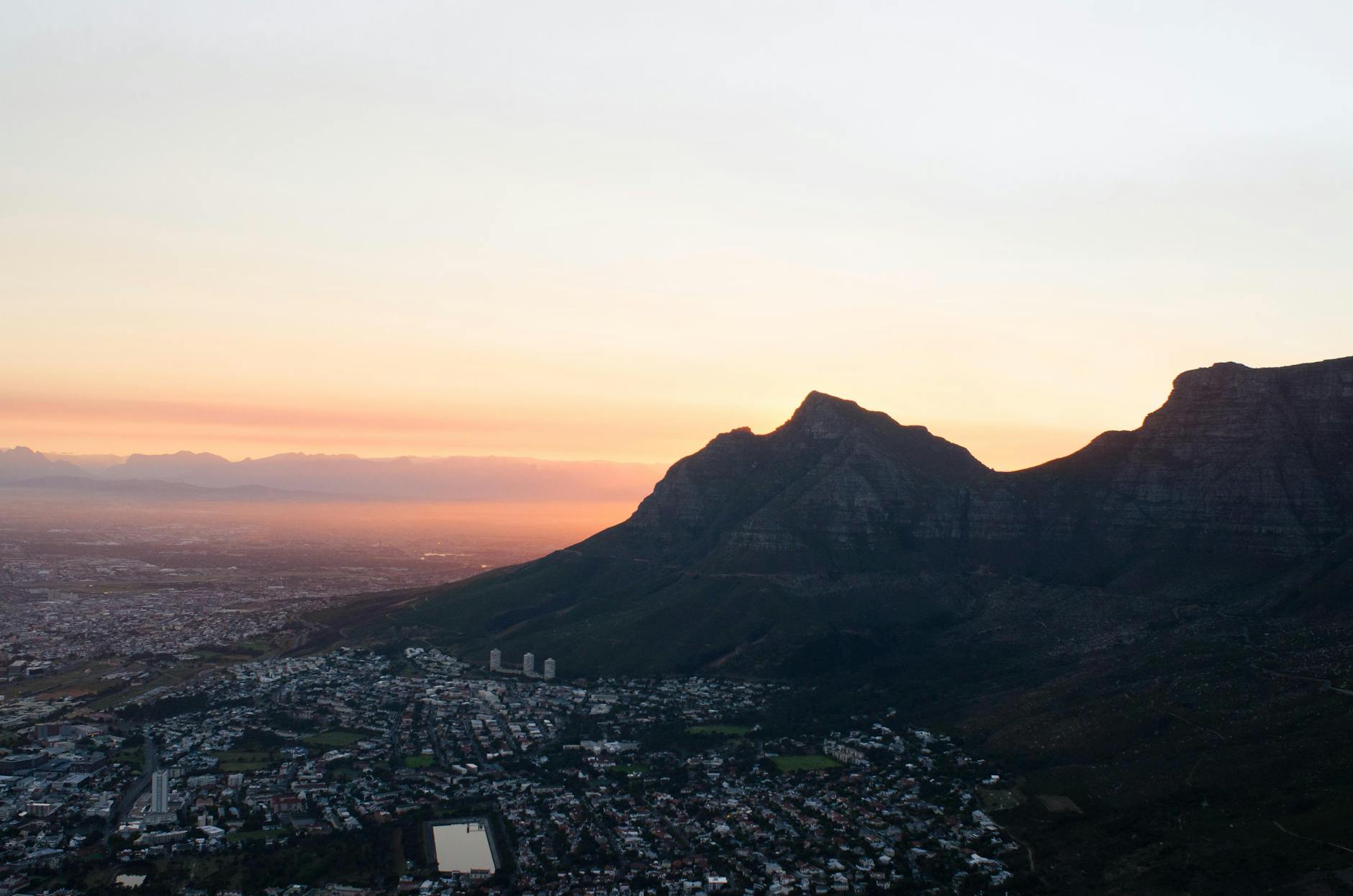 Itineraries · 9 min read
48 hours in Cape Town
Itineraries · 9 min read
48 hours in Cape Town
Two full days, one mountain, one peninsula drive and roughly R2,500 per person in entry fees, food and transport if you plan the order properly.
 Itineraries · 10 min read
One week in Cape Town
Itineraries · 10 min read
One week in Cape Town
Seven days split as four in the city, two in the Winelands and one on the whale coast, with a realistic all-in spend of about R12,000 per person excluding flights.
 Itineraries · 9 min read
Cape Town in 3 days on a budget
Itineraries · 9 min read
Cape Town in 3 days on a budget
Three days of mountain, coast and city for around R1,800 a person in fees, food and transport, by hiking what other people ride and eating where Capetonians actually eat.
Compare rooms from Woodstock to Camps Bay, pay the same price as anywhere else, and remove a tonne of CO2 in the process.