48 hours in Cape Town
Two full days, one mountain, one peninsula drive and roughly R2,500 per person in entry fees, food and transport if you plan the order properly.
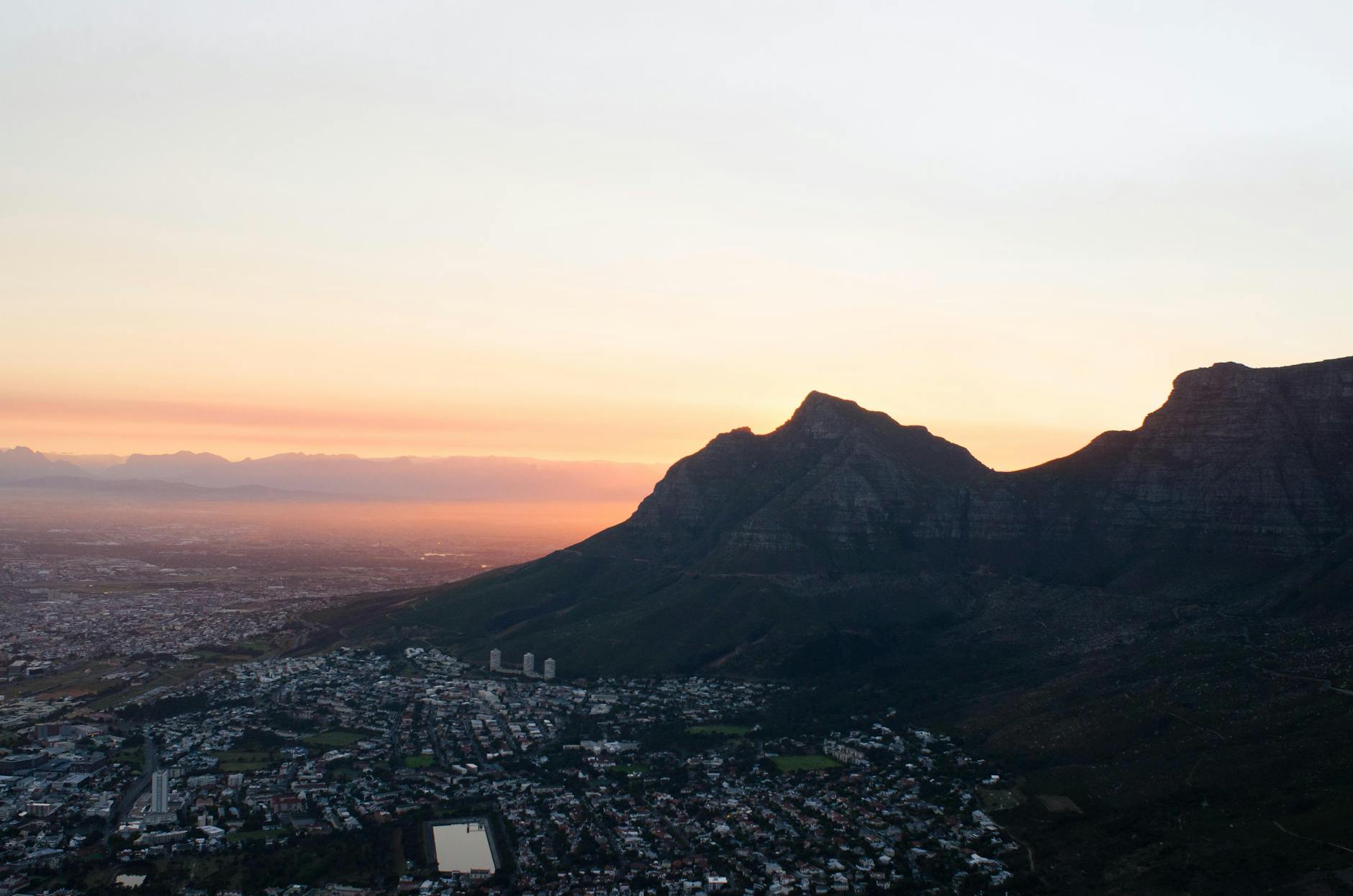 Table Mountain seen across the City Bowl at first light
The rule that makes 48 hours work: do the mountain first
Cape Town runs on weather, not on your itinerary. The Table Mountain Aerial Cableway on Tafelberg Road closes in high wind and low cloud, and it closes with no warning, so the single biggest planning decision in a two-day trip is to keep the mountain flexible and go up the first morning the summit is clear. Check the cableway webcam and wind reading before breakfast. A return ticket runs about R440 for adults, roughly R240 one-way, and buying online the night before saves you the queue that builds from 09:00 in summer.
If the cable car is shut, do not write off the day. Lion Head, reached from the Signal Hill Road parking area, is a 90-minute walk up a spiral path with chains and staples near the top and costs nothing. Signal Hill itself is a five-minute drive from the City Bowl and gives you the same harbour panorama with no effort. Platteklip Gorge, starting from Tafelberg Road about 1.5km past the lower cableway station, is the direct summit hike: two to three hours up, relentless steps, no shade after 09:00. Carry two litres of water per person.
Day one morning: summit, then Kloof Nek down into the Bo-Kaap
Allow 90 minutes on top. The Dassie and Agama walks are flat, signposted loops of 20 to 40 minutes and take you away from the crowded viewing deck to the Atlantic-facing edge above Camps Bay. The upper cafe sells coffee around R40 and sandwiches near R95, but you are better off eating in town. Come down by 11:30 and drive or Uber over Kloof Nek into the city; a ride from the cableway to Long Street is usually R70 to R100 and takes twelve minutes outside rush hour.
Spend the rest of the morning in the Bo-Kaap, the Cape Malay quarter on the slope above Buitengracht Street. Wale Street and Chiappini Street carry the painted facades everyone photographs; the Bo-Kaap Museum at 71 Wale Street costs about R60 and takes twenty minutes. Buy koesisters or samoosas at a corner shop for R10 to R20 each. This is a residential neighbourhood and residents are visibly tired of camera crews, so shoot from the street, ask before you photograph doorways, and do not sit on people's stoeps.
Day one afternoon: Company's Garden, District Six, and the harbour
Walk down into the Company's Garden, the 350-year-old vegetable plot turned public park that runs from Government Avenue to the South African Museum. Entry is free, the squirrels are shameless, and the garden restaurant does a decent lunch for R120 to R160. On the eastern edge, the District Six Museum on Buitenkant Street charges about R60 and is the single most useful hour in the city for understanding forced removals under apartheid. Guides who lived in District Six before 1966 often lead the tours; tip them R50 to R100.
From there it is a fifteen-minute walk to the Castle of Good Hope on Darling Street, entry around R50, with a key ceremony and cannon firing at 10:00 and 12:00 on weekdays. If you would rather spend the afternoon on the water, the V&A Waterfront is a R60 Uber away. The Two Oceans Aquarium is about R280, and Robben Island ferries from the Nelson Mandela Gateway cost roughly R600 and take three and a half hours round trip. Robben Island sells out days ahead and is cancelled in swell, so book it before you land.
Day one evening: Kloof Street, Bree Street or Sea Point
Cape Town eats early by European standards and late by American ones: book for 19:00 or 19:30 and you will be fine. Bree Street is the dense strip. Expect R180 to R260 for a main at a mid-range place, R60 to R90 for a glass of good Cape wine, and R45 for a flat white at Truth Coffee on Buitenkant if you need caffeine before dinner. Kloof Street, up the hill, is slightly calmer and has the same price band with more outdoor tables and easier parking.
For a first-night view, Sea Point is the better call. Take a taxi to the Sea Point Promenade, walk the paved 3km seafront between Mouille Point lighthouse and Bantry Bay while the sun drops, then eat on Regent Road, where a plate of grilled linefish runs R190 to R240 and a Cape Malay curry closer to R140. Sunset in December is around 20:00 and in June around 17:45, so plan the walk accordingly. Both areas are busy and well lit; keep your phone out of your back pocket regardless.
Day two: the Cape Peninsula loop
Day two is one long, spectacular drive. Leave the city by 08:00, head out on the M6 through Camps Bay and Llandudno, and take Chapman's Peak Drive from Hout Bay to Noordhoek. The toll is about R63 for a car and the road closes in heavy rain or rockfall, in which case you loop inland via Ou Kaapse Weg with no real loss. Stop at the second and third viewpoints, not the first. Reaching Cape Point via Scarborough takes roughly 90 minutes with photo stops.
Cape of Good Hope entry is around R400 per international adult and the gates open at 06:00 in summer, 07:00 in winter. The Flying Dutchman funicular to the old lighthouse costs about R110 return, or you climb the stairs in fifteen minutes. Do the signpost at the Cape of Good Hope headland too; it is a five-minute drive from the Point car park. Baboons here are aggressive and organised: no visible food, windows shut, doors locked. Budget two hours inside the reserve.
Day two afternoon and evening: penguins, Kalk Bay, and getting out
Come back up the False Bay side. Boulders Beach at Simon's Town costs about R200 for international adults and the boardwalk at Foxy Beach puts you two metres from breeding African penguins; go to Seaforth next door if you want to swim in the same warm, sheltered water for free. Simon's Town's Jubilee Square has the Just Nuisance statue and a row of cafes doing fish and chips around R120. Allow an hour, then push on to Kalk Bay before the harbour road clogs at 16:00.
Kalk Bay is the best last stop on the peninsula: Main Road antiques shops, a working fishing harbour where boats land snoek, and Kalky's on the quay selling battered hake and chips for roughly R80 at plastic tables. Olympia Cafe across the road does breakfast until late afternoon. From here it is 35 minutes back to the city on the M4 and M3, or a R25 Metrorail Southern Line ticket if you prefer the train in daylight hours. If you fly out that night, allow 45 minutes to the airport plus traffic on the N2.
Frequently asked questions
What people ask before they set off on this one.
It is enough for the mountain and the peninsula, which are the two things the city is famous for, but nothing else. You will skip the Winelands, Kirstenbosch and any beach time. If you can add even one day, add it and use it for Stellenbosch or Franschhoek. Two nights minimum means arriving before 15:00 on day one, otherwise you are really doing 30 hours.
Budget roughly R2,500 per person for two days excluding accommodation: about R440 for the cableway, R400 for Cape Point, R200 for Boulders, R63 for the Chapman's Peak toll, R700 to R900 for food and R400 to R600 for transport. A shared rental car for the peninsula day costs around R550 including fuel and is cheaper than a full-day Uber run. Add R600 if you do Robben Island.
Rent one for the peninsula day only. The city centre, Bo-Kaap and Sea Point are easy on foot and by Uber for R50 to R100 a hop, and parking on Bree and Kloof Street is a nuisance. The Cape Point loop, by contrast, is a 130km circuit with no useful public transport past Simon's Town. Small hire cars start near R450 a day plus fuel.
Mountain first, always. The cableway closes for wind more often than the peninsula road does, so you want a spare morning in reserve. Cape Point is drivable in almost any weather and is arguably better under moody cloud. If day one is clear, go up at 08:00 before the queues and the haze build.
In daylight the City Bowl grid, Company's Garden, Bree Street, the Waterfront and the Sea Point Promenade are fine with normal city awareness. After dark, walk only on busy lit streets and take an Uber for anything longer than three blocks. Do not walk up Signal Hill, Lion Head or the mountain paths alone or at dawn and dusk; muggings on the lower trails are the one recurring problem.
Hotels in Cape Town
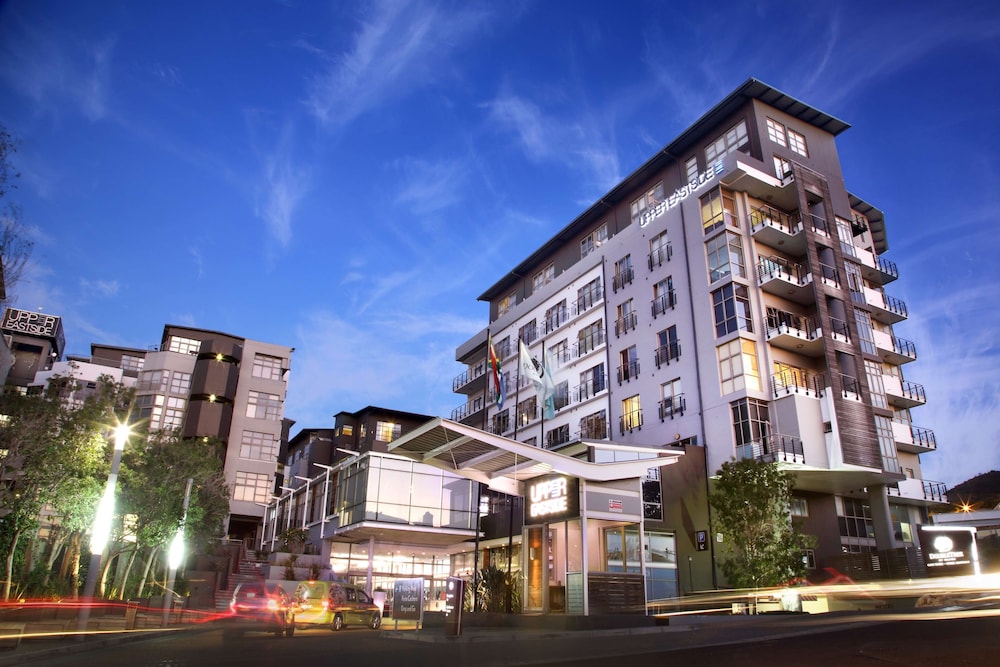

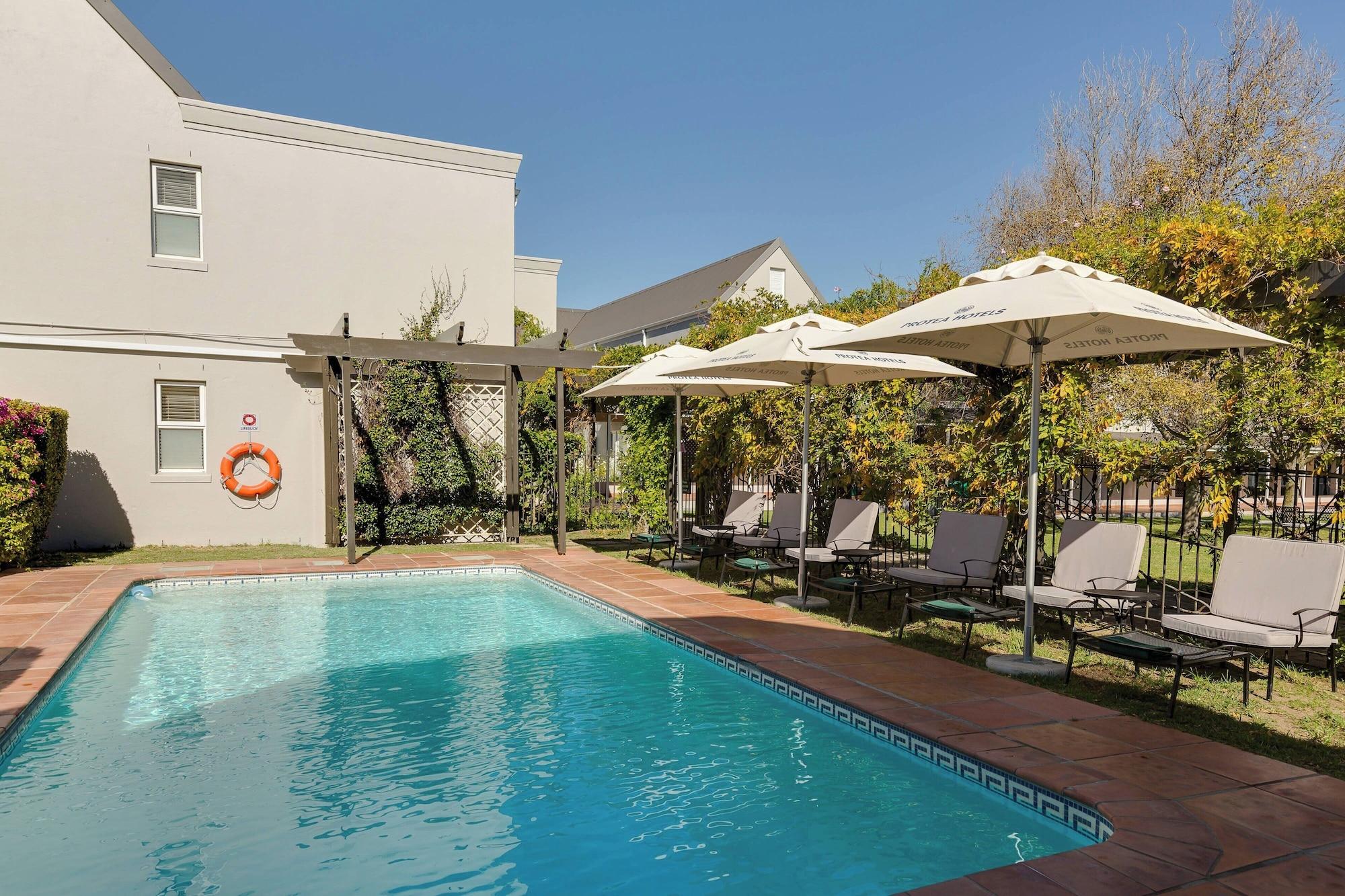
Hotels we cover across Cape Town
- Spearhead on Lake Accommodation 5C 3★
- Spectrum of Views Near Muizenberg 3★
- Spring forth guest house 3★
- St James Mansions Apartment 3★
- St James Pool Cottage 3★
- St James Terrace 3★
- St Martini 416 3★
- St Martini Gardens 3★
- St Martini Mountain View Studio 3★
- Studio Apartment in Green Point Cape Town 3★
- Studio apartment Kloof Street 3★
- Stunning 3 Bedroom Beachfront Apartment with Parking 3★
- Stunning little studio apartment 3★
- Stunning Studio Apartment With Balcony Woodstock 3★
- Stunning work pad on 1onAlbert 601 3★
- Stylish brand new secure apartment with pool 3★
- Stylish Docklands Stay in De Waterkant 3★
- Stylish Monochrome 1BR in Son Vida 3★
- Stylish new pool secure home in heart of CBD 3★
- Stylish Studio Apartment with Rooftop Pool 3★
- Stylish Studio in Tableview Stay 3★
- Stylish Studio with City Views & Pool at Zeeland Pier 3★
- Stylish studio with swimming pool in the city bowl 3★
- Stylish waters edge apartment 3★
More guides to Cape Town
All guides Itineraries · 10 min read
One week in Cape Town
Itineraries · 10 min read
One week in Cape Town
Seven days split as four in the city, two in the Winelands and one on the whale coast, with a realistic all-in spend of about R12,000 per person excluding flights.
 Itineraries · 9 min read
Cape Town in 3 days on a budget
Itineraries · 9 min read
Cape Town in 3 days on a budget
Three days of mountain, coast and city for around R1,800 a person in fees, food and transport, by hiking what other people ride and eating where Capetonians actually eat.
 Itineraries · 9 min read
Cape Town in 3 days, upgraded
Itineraries · 9 min read
Cape Town in 3 days, upgraded
The same three days done properly: helicopter over the Twelve Apostles, private guide on the peninsula and two of the world's top 50 restaurants, for roughly R25,000 a head.
Compare rooms from Woodstock to Camps Bay, pay the same price as anywhere else, and remove a tonne of CO2 in the process.