Day trip to Stellenbosch from Cape Town
Fifty kilometres and 45 minutes east of the city, South Africa's second-oldest town packs 150 wine farms, a university and the best Cape Dutch street in the country into one very drinkable day.
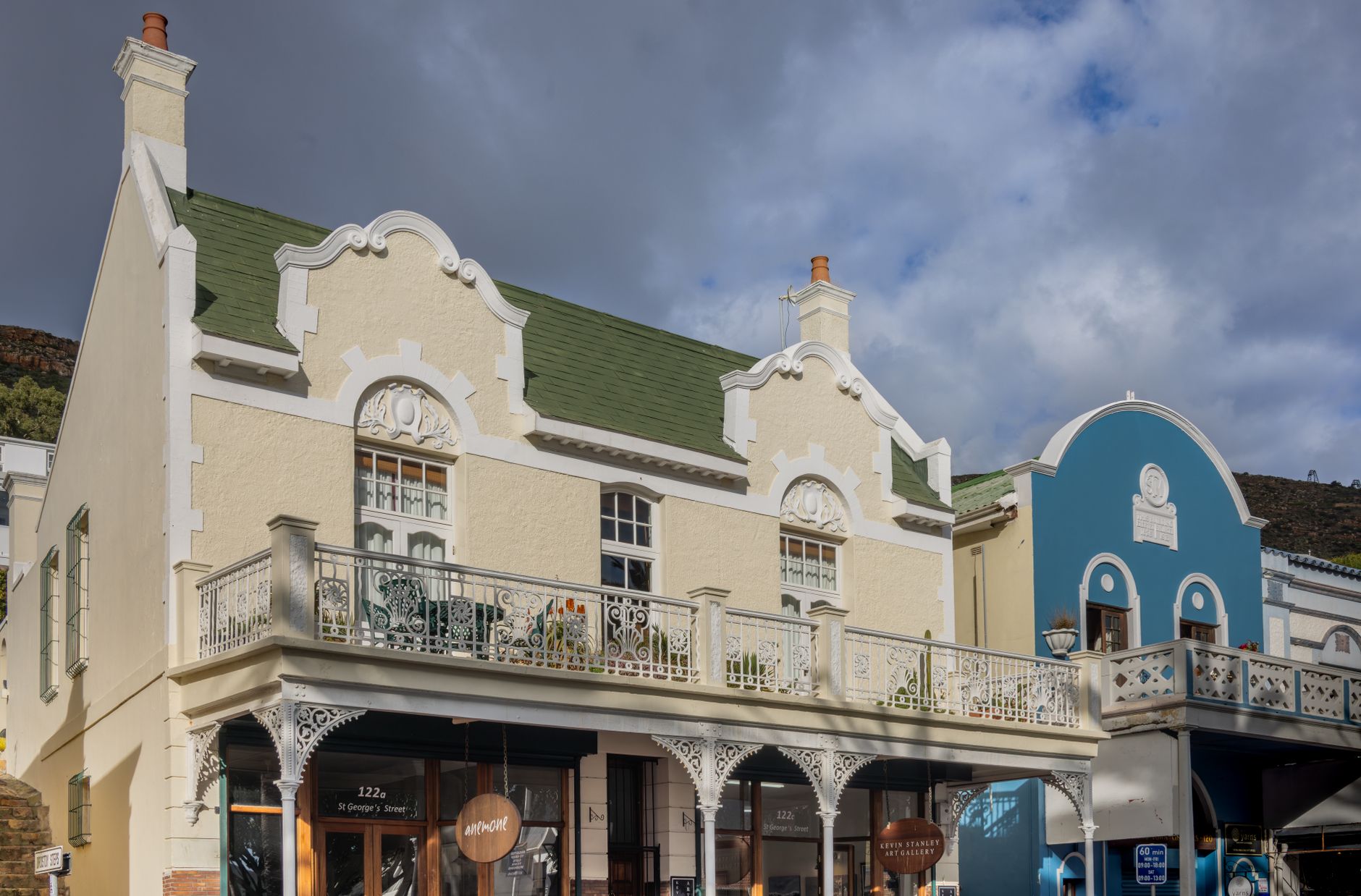 Oak-lined street of whitewashed Cape Dutch gables in Stellenbosch
Getting there and getting around
Stellenbosch sits 50km east of Cape Town in a bowl of mountains at the head of the Eerste River valley. Driving, take the N1 to the R304 or the N2 to the R310 through Baden Powell Drive; both take 40 to 50 minutes outside rush hour, and the R310 approach past Spier and the Stellenbosch Mountain is the prettier one. Parking in town is metered street parking at R10 to R15 an hour, or free at the Eikestad Mall on Andringa Street. Fuel for the round trip is about R220 in a small car.
Without a car you have options. Metrorail's Northern Line runs to Stellenbosch station for roughly R25 but is slow and best avoided outside peak daylight hours. Shared day tours from Cape Town run R850 to R1,400 including two or three tastings and lunch. A private driver-guide is R2,800 to R4,000 for the day for up to four people, which works out cheaper than it sounds when split and means everyone drinks. Once in town, the historic core is walkable in twenty minutes end to end.
The town itself: Dorp Street and the historic core
Do the town before the wine, while you can still read plaques. Dorp Street is the longest continuous row of Cape Dutch, Georgian and Victorian buildings in South Africa, running under 200-year-old oaks that give the town its nickname, Eikestad, the town of oaks. Oom Samie se Winkel at 84 Dorp Street has been trading since 1904 and sells biltong, preserves and tat in equal measure. The Stellenbosch Village Museum on Ryneveld Street links four period houses from 1709 to 1850 for about R60, and takes an hour.
Church Street, pedestrianised and lined with galleries and coffee shops, is where the students are. The Rupert Museum on Stellentia Avenue, entry around R120, holds Irma Stern, Maggie Laubser and Alexis Preller in a building worth the ticket on its own. The Toy and Miniature Museum and the Braak, the old village green with the Kruithuis powder magazine of 1777, fill any remaining gaps. Coffee at Hazz or Schoon on Church Street runs R38 to R48; a bakery breakfast is about R90.
Which wine farms to actually visit
Stellenbosch has more than 150 producers, so pick a corridor rather than crisscrossing. The R44 north towards Klapmuts gives you Kanonkop, the country's benchmark Pinotage and Paul Sauer Bordeaux blend, with tastings around R150; Warwick, which does a picnic on the lawn from R450 for two; and Simonsig, whose Cap Classique flight is about R110 and whose Kaapse Vonkel was the first bottle-fermented sparkling wine made in South Africa in 1971.
The Helshoogte Pass corridor towards Franschhoek is the view route. Tokara pours a R230 flight and has a sculpture garden and a serious restaurant; Delaire Graff next door charges around R250 and sells the Botmaskop panorama as hard as the Cabernet. South of town, Spier does family-friendly picnics and a R120 tasting on a 1692 farm, and Waterford runs a chocolate-and-wine pairing at about R220 that is far better than it sounds. Most estates open 10:00 to 17:00, last tasting 16:00 or 16:30.
Lunch, and how much a day here costs
Eat on a farm rather than in town. Tokara Restaurant does three courses for R650 to R800 with the valley below; the Deli next door is half that. Jordan Restaurant with George Jardine, on the Stellenbosch Kloof road, sits around R600 for two courses and is consistently among the best kitchens in the Cape. Overture at Hidden Valley charges roughly R750 for a set menu on a terrace above the vineyards. In town, De Warenmarkt food hall on Ryneveld Street does plates from R90 to R160 with no booking needed.
A moderate day looks like this: R220 fuel, R15 parking, three tastings at R150 each, lunch at R350 and a bottle to take home at R220, so around R1,250 per person driving yourself. Cut it by choosing farms that waive the tasting fee on purchase, which most do, and by making lunch a Spier picnic at R400 for two. Push it up fast by adding Delaire Graff lunch and a case of Kanonkop. Tastings are typically four to six wines and take 30 to 45 minutes each.
Timing, seasons and the drink-driving problem
February and March are harvest, when the cellars smell of fermenting fruit and estates run crush experiences; the valley is also at its hottest, regularly 33 degrees. April and May bring vine colour and empty tasting rooms. Winter, June to August, means fires in the tasting rooms, R100 tastings and a green valley under cloud; several farms close Sundays or shut early. December and January are busy and require booking every tasting and every table.
South Africa's blood alcohol limit is 0.05 percent, enforced with roadblocks on the R44 and N1 on weekends, and the penalties are serious. Do not drive the Winelands and taste properly. Either nominate a driver who spits, book a driver-guide at R2,800 to R4,000, use Uber, which operates in Stellenbosch and costs R80 to R200 between town and most nearby farms, or stay overnight. Guesthouse doubles in town start around R1,100 and turn a rushed day trip into a good evening on Bird Street.
Adding Franschhoek, Somerset West or the Bottelary Hills
Stellenbosch pairs naturally with Franschhoek, 30km and 25 minutes over the Helshoogte Pass, and doing both means two tastings each rather than four in one valley. Alternatively drop south to Somerset West and the Helderberg for Vergelegen, whose 1700 camphor trees and formal gardens cost about R50 to walk with tastings from R130, then loop back to Cape Town on the N2 in 40 minutes.
For something less polished, the Bottelary Hills north-west of town hold small family cellars with R60 tastings and no coach parties: Villiera for Cap Classique and a free wildlife drive, Hartenberg for Shiraz. If you would rather walk off the wine, the Jonkershoek Nature Reserve, 10km from town, charges about R60 per person and has a 17km circular trail plus shorter waterfall walks; gates open 07:00 to 18:00 in summer and it is the best hiking within an hour of Cape Town after Table Mountain.
Frequently asked questions
What people ask before they set off on this one.
About 50km, or 40 to 50 minutes by car on the N1 and R304, or the N2 and R310 via Baden Powell Drive. Add 20 to 30 minutes in weekday rush hour, which runs roughly 07:00 to 09:00 inbound and 16:00 to 18:00 outbound on the N1. Metrorail's Northern Line reaches Stellenbosch station for around R25 but takes over an hour.
Tastings run R80 to R250 for four to six wines, with most estates waiving the fee if you buy a bottle. Budget around R1,250 per person for a self-driven day with three tastings, lunch and fuel. A shared day tour from Cape Town including transport and two or three tastings costs R850 to R1,400; a private driver-guide is R2,800 to R4,000 for the vehicle.
Yes, via a shared or private tour, or by taking Uber from Cape Town, which runs around R450 to R600 each way and also operates locally between town and the closer farms. Some estates including Spier and Delaire are reachable by short Uber hops from Stellenbosch town centre. The historic core, Dorp Street, Church Street and the museums, is entirely walkable.
Stellenbosch if you want a real town with a university, museums and 150 wineries at every price point. Franschhoek if you want a two-street village, higher-end restaurants and the hop-on hop-off Wine Tram. Stellenbosch is closer to Cape Town by about 25 minutes and cheaper across the board. If you have the day, do both; they are 25 minutes apart over the Helshoogte Pass.
February and March for harvest energy, though it is hot at over 30 degrees. April and May give you vine colour, mild weather and quiet tasting rooms, which is the sweet spot. Winter from June to August is green, wet and cheap, with fires lit indoors and some farms closing early. Late December is packed and requires booking every tasting.
For the town plus three wine farms, yes. For anything more, including Jonkershoek hiking, the Bottelary Hills or a proper long lunch, stay a night; guesthouse doubles start around R1,100 and let you drink without arranging a driver. A day trip realistically means leaving Cape Town at 09:00 and being back by 18:00 before the light goes.
Hotels in Cape Town
Hotels we cover across Cape Town
- Modern Beachfront 2 bed 2 bath 143 Eden Big Bay 3★
- Modern Beachfront Apartment 3★
- Modern Beachfront Eden on the Bay 210 2 bedroom 2 bathroom 3★
- Modern Beachfront with Ocean Views Infinity G9 Blouberg Cape Town 3★
- Modern Central and Secure Studio Apartment Cape Town 3★
- Modern Coastal Townhouse at The Majestic 3★
- Modern cottage in Hout Bay 3★
- Modern Luxe On Park 3★
- Modern Micro Apartment Sea Point 3★
- Modern One Bedroom Wavescapes Apartment Muizenberg 3★
- Modern Sea Point Oasis Garden Pool & Gym Access 3★
- Modern Seaside Apartment 3★
- Modern Top Floor Flat With Mountain Views 3★
- Modest Home in Cape Town 3★
- Montclair 604 3★
- Montclaire 50F 3★
- Montreux 1 3★
- Morakani 3★
- Morrison Hotel 3★
- Mouille Grange 203 Apartment 3★
- N One Self Catering 3★
- Nala Guest House 3★
- Nansen Place 3★
- Nature Estate Family Holiday Home with Pool and Sea view 3★
More guides to Cape Town
All guides Itineraries · 9 min read
48 hours in Cape Town
Itineraries · 9 min read
48 hours in Cape Town
Two full days, one mountain, one peninsula drive and roughly R2,500 per person in entry fees, food and transport if you plan the order properly.
 Itineraries · 10 min read
One week in Cape Town
Itineraries · 10 min read
One week in Cape Town
Seven days split as four in the city, two in the Winelands and one on the whale coast, with a realistic all-in spend of about R12,000 per person excluding flights.
 Itineraries · 9 min read
Cape Town in 3 days on a budget
Itineraries · 9 min read
Cape Town in 3 days on a budget
Three days of mountain, coast and city for around R1,800 a person in fees, food and transport, by hiking what other people ride and eating where Capetonians actually eat.
Compare rooms from Woodstock to Camps Bay, pay the same price as anywhere else, and remove a tonne of CO2 in the process.