Neighbourgoods Market at the Old Biscuit Mill
The Saturday morning that turned a derelict Victorian biscuit factory in Woodstock into the loudest, best-smelling room in Cape Town, where a hundred traders sell everything from Cape Malay curry to hand-thrown ceramics.
 Crowded Saturday food hall with traders and communal tables at the Old Biscuit Mill in Woodstock
What to expect at Neighbourgoods Market at the Old Biscuit Mill
The Old Biscuit Mill occupies a block of red-brick Victorian industrial buildings at 373-375 Albert Road in Woodstock, the strip of workshops and warehouses that runs east out of the city centre towards Salt River. The mill really did make biscuits; when the machinery left, the buildings sat empty until a redevelopment in the mid-2000s turned them into studios, galleries and restaurants. The Saturday market that opened there in 2006 was the first of its kind in the city, and it changed how Cape Town eats out. Before it, a farmers market meant a church hall and a trestle table. After it, every suburb wanted one. Today around a hundred traders fill two covered halls and the cobbled courtyard between them, split roughly between prepared food, farm produce and design goods, and the whole thing runs for five hours and then vanishes until the following week.
You come in off Albert Road through a gate into a courtyard of cobbles and shipping-container bars, and the noise hits before the smell does. The food hall is the loud one: long communal tables down the middle, traders packed shoulder to shoulder around the edges, steam rising off griddles. In any given hour you can eat oysters shucked to order, a boerewors roll, Cape Malay lamb curry with sambals, Ethiopian injera, dumplings, paella from a pan the size of a manhole cover, and three kinds of croissant. The second hall is calmer and sells things you carry home: ceramics, leather bags, screen-printed textiles, jewellery, small-batch preserves, coffee beans. Outside, growers from the Boland sell tomatoes and cheese. By eleven you shuffle rather than walk, and finding two free seats becomes the day's main athletic event.
Plan it as a morning, not an outing you slot in after something else. Arrive between 09:00 and 09:45 and you get parking, an unhurried lap and a table; arrive at 11:30 and you get the full sensory experience and nowhere to sit. Do one reconnaissance circuit of the whole food hall before you buy anything, because the first stall you see is never the one you actually want. Bring a card and some cash: nearly everyone takes card, but signal in the halls can wobble and a few produce sellers prefer notes. Bring a tote if you intend to buy anything from the design hall or the produce tables. Skip breakfast beforehand. Do not bring a large pram if you can avoid it, and do not plan to buy anything that needs refrigeration unless the car is close.
Getting there from the city centre is short and slightly awkward. The Mill sits about 4 km east of Adderley Street. By car, take the N2 or Nelson Mandela Boulevard out of town and drop onto Albert Road at the Woodstock off-ramps; the run takes 10-12 minutes outside peak and roughly double that on a busy Saturday morning. There is no dedicated market car park, so you park on Albert Road or the side streets around it and tip an informal car guard R10-R20 on your return. Metrorail's line to Woodstock station puts you about 12 minutes walk away along Victoria and Albert Roads, though weekend train frequency and reliability are patchy enough that most visitors do not rely on it. Golden Arrow buses and minibus taxis run Albert Road constantly. An e-hailed car from the city centre is usually R60-R100 each way and is what most people do.
Entry costs nothing at all, which is the trap: you spend on the inside. Coffee runs about R30-R50, pastries and doughnuts R35-R70, a substantial plate of hot food R80-R160, oysters roughly R25-R40 each, craft beer R45-R80 a glass and wine by the glass R50-R100. Two adults grazing properly and drinking a couple of things will spend R400-R600 between them without trying. Produce is priced like a good greengrocer rather than a supermarket. The design hall is where the real money goes: ceramics from R150 for a small piece, leather goods from around R600, prints and textiles anywhere upward of R250. There is no combined ticket, no membership and nothing to book. The only unavoidable extra is the R10-R20 you hand the car guard.
The market runs on Saturdays only, from 09:00 to 14:00, and the useful hours are narrower than that. Nine to half past ten is the locals window: traders are fresh, the coffee queue is three deep instead of fifteen, and you can hear yourself order. From 11:00 to 13:30 it is genuinely crowded, with the summer months of December to February at their worst as visitors pile in. From about 13:30 traders start breaking down and the best food has sold out. Winter, June to August, is the better-kept secret: the halls are covered so rain is not a problem, the crowd thins, and the food skews towards stews and soup. Long weekends and the days around Christmas can see the market skip a week, and trading arrangements at the Mill have shifted more than once over the years, so check the market's social media before you make a special trip.
It suits eaters, groups of friends, solo travellers who like sitting at a communal table, and anyone who wants to buy a genuinely good souvenir rather than a fridge magnet. Teenagers love it. It is much harder work with toddlers: the crush at midday is chest-height chaos for a small child and pram navigation between the tables is close to impossible after 11:00. Wheelchair users manage the courtyard and the ground-floor halls, but only comfortably in the first hour. It is a good rainy-afternoon option in the sense that the halls are roofed, though the courtyard between them is not. If you have only an hour, go at nine, eat one thing well and leave; the market rewards a short early visit far more than a long late one.
Fold it into a Woodstock half day. The street art that covers Albert Road and the side streets around Gympie Street starts right outside the gate and is best walked before the market opens. Woodstock Exchange, another converted warehouse with design studios and a coffee roaster, is about six minutes walk west along Albert Road. Side Street Studios and a scattering of galleries sit within the same ten-minute radius. Salt River's fabric shops are a further ten minutes east. From the Mill it is roughly a 10-minute drive back into the City Bowl for the Company's Garden and the museums around it, or 15 minutes to the V&A Waterfront if you want a completely different kind of afternoon. Most people combine the market with the street art and call it done by two o’clock.
Honest caveats. This is not a cheap local food market and it has not been one for fifteen years; prices are restaurant prices in a shed, and you can eat better value at a Sea Point cafe. It is not undiscovered either, and anyone who sells it to you as a hidden gem has not been on a February Saturday. Popular stalls run queues of ten minutes or more at peak, and the seating shortage is real rather than a quirk. Woodstock is a working neighbourhood in transition: it is fine in daylight with normal city sense, less so wandering the side streets alone after dark, and the contrast between the market inside and the street outside makes some visitors uncomfortable. Finally, several traders you read about in old articles have moved on. Treat any specific stall recommendation older than a year as a suggestion, not a guarantee.
Questions about Neighbourgoods Market at the Old Biscuit Mill
Entry is free, every Saturday, with no ticket and no booking. What you spend is inside: coffee R30-R50, pastries R35-R70, a hot plate of food R80-R160, oysters around R25-R40 each, craft beer R45-R80 and wine by the glass R50-R100. Two people grazing and drinking should budget R400-R600. Design-hall goods start around R150 for small ceramics. The only hidden cost is R10-R20 for the informal car guard when you park on Albert Road.
There is no admission charge at any time, so the question of free hours does not apply. The market trades Saturdays from 09:00 to 14:00 and you can walk in and out as often as you like at no cost. If what you want is the cheapest visit, come at 09:00, buy one coffee and one pastry for about R80 and browse everything without eating a full plate. Traders start packing down from 13:30 and some discount remaining stock rather than carry it home.
Two to three hours is right for most people. Allow 20 minutes for a first lap of both halls, an hour to eat properly, and another 30-45 minutes for the design hall and the produce tables outside. If you arrive at 09:00 you can do the whole thing comfortably by 11:30 and beat the crowd out. Anyone just wanting coffee and a look can do it in 45 minutes. Serious shoppers who also want to walk the Albert Road street art should block out a half day.
The market itself runs on Saturdays only and is closed the other six days of the week, including Sundays. The Old Biscuit Mill precinct around it keeps different hours: its restaurants, studios and shops generally trade Monday to Friday roughly 09:00-17:00 and on Saturdays, so the site is not dead midweek, but the hundred-trader market is a Saturday event. It can also skip a weekend around Christmas or a public holiday, so check the market's social media before travelling across the city for it.
No. There is no ticket, no reservation and no timed entry; you walk in off Albert Road. The only thing worth booking is a table at one of the Mill's sit-down restaurants if you want lunch after the market, because they fill on Saturdays. Large groups do not get a reserved space in the halls, so if there are six of you, arrive before 10:00 or accept that you will eat standing. Parking is unbookable and first come, first served on the street.
Woodstock station on the Metrorail line is the closest rail stop, about 12 minutes walk via Victoria and Albert Roads, though weekend services are unreliable enough that most visitors avoid them. Golden Arrow buses and minibus taxis run along Albert Road all day and stop within a minute of the gate. By car it is 10-12 minutes from Adderley Street via the N2 or Nelson Mandela Boulevard, parking on Albert Road and the side streets. An e-hailed car from the city centre costs roughly R60-R100.
Hotels near Neighbourgoods Market at the Old Biscuit Mill
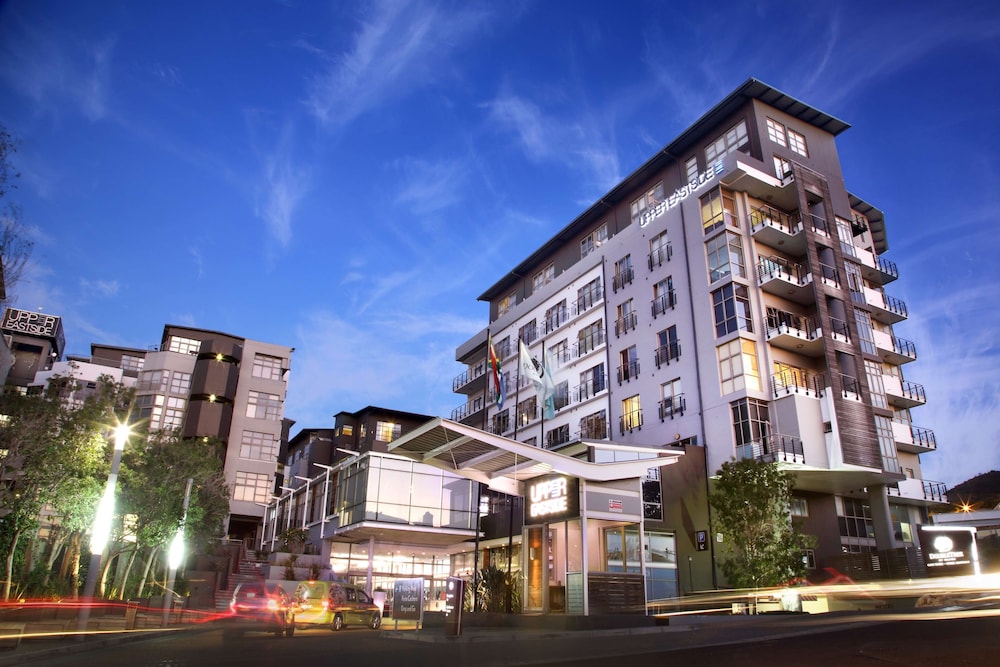
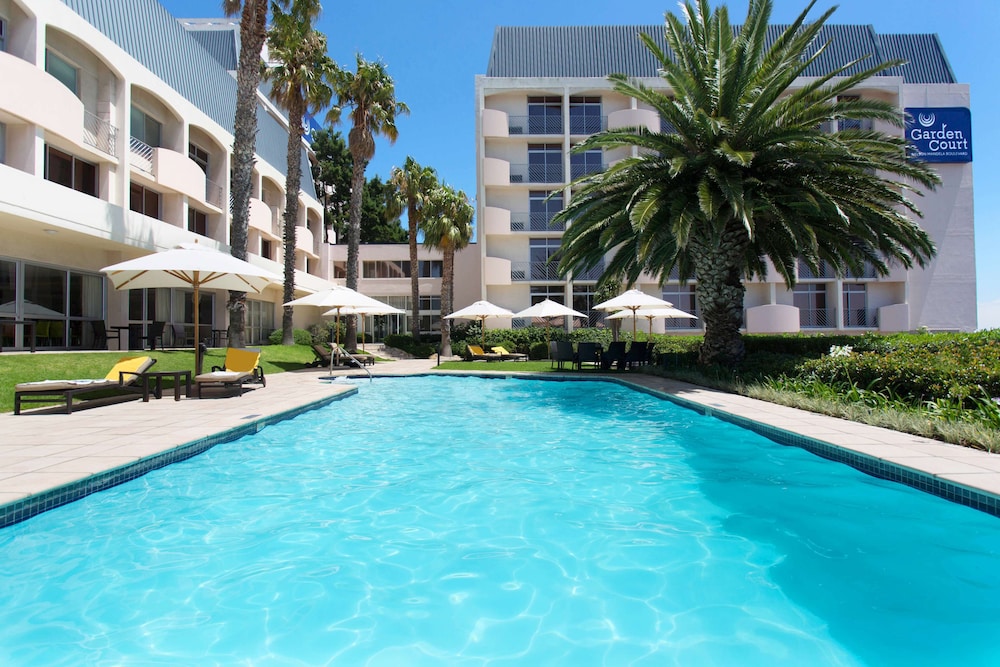
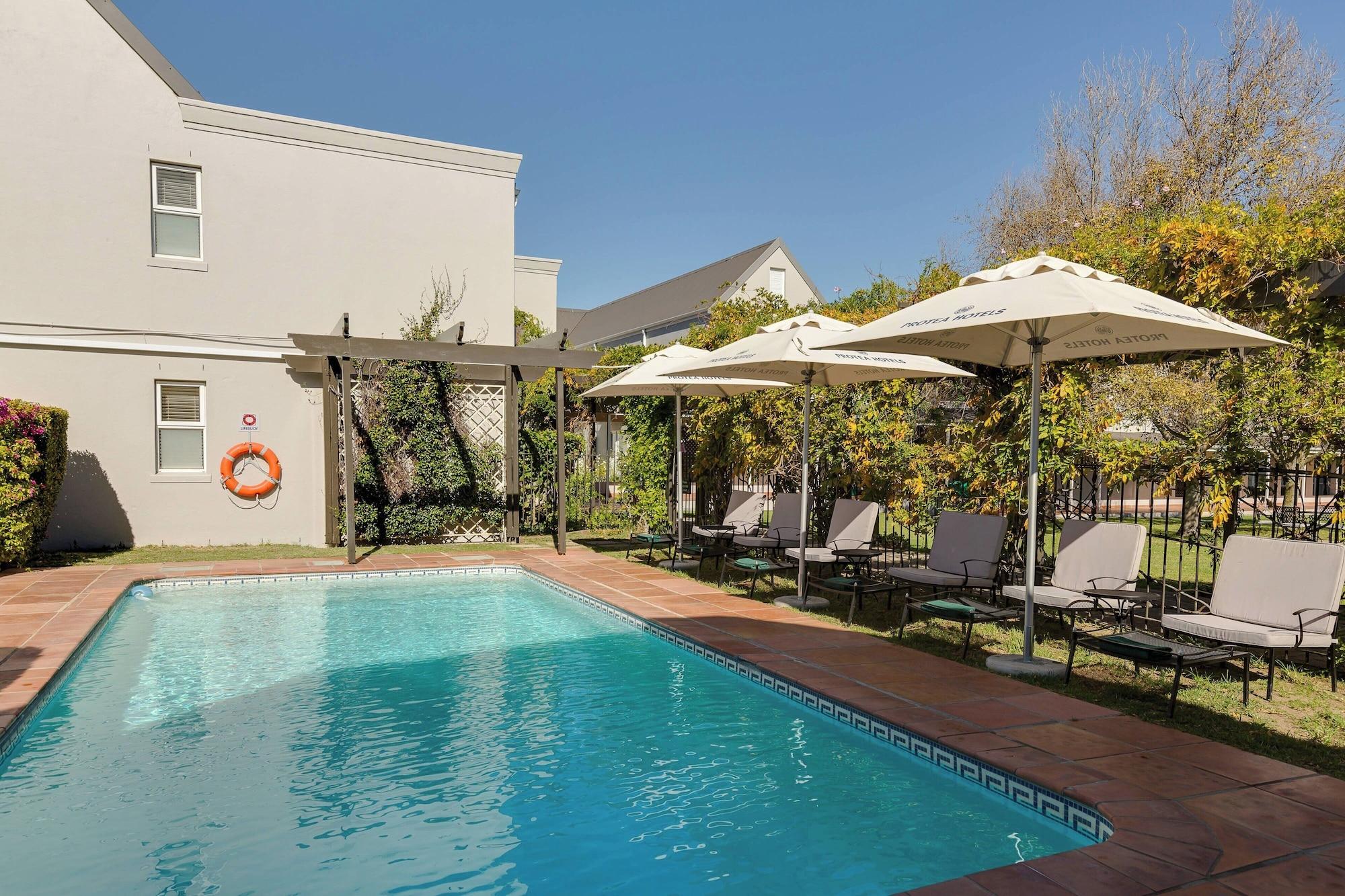
Every hotel we cover in Woodstock
- Capetown Condos 3★ · 0.4 km away
- City Club On Milner 3★ · 0.5 km away
- Happy Home Woodstock Apartment 3★ · 0.6 km away
- St. Georges Lodge 4★ · 0.7 km away
- Experience Woodstock from Industrial Loft Apartment 0.7 km away
- Angel Cottage 4★ · 1 km away
- Delightful 2 Bedroom Townhouse in Woodstock 3★ · 1 km away
- Sussex Mews Luxury Studios 1 km away
- Exclusive 3 Bedroom Luxury Villa Cape Town CBD 4★ · 1 km away
- Stock Exchange Apartment Hotel 4★ · 4.5/5 · 1.1 km away
- 402 WEX1 by Perch Stays with daily housekeeping 4★ · 1.1 km away
- Brand new penthouse with waterfront views 4★ · 1.1 km away
- Wex1 Living Serviced Apartments 4★ · 1.1 km away
- 401 WEX1 by Perch Stays 3★ · 1.1 km away
- 404 WEX1 by Perch Stays 3★ · 1.1 km away
- 406 WEX1 by Perch Stays with daily housekeeping 3★ · 1.1 km away
- 432 WEX1 by Perch Stays with daily housekeeping 3★ · 1.1 km away
- Albert Road Wex Apartment Cape Town 3★ · 1.1 km away
- Wex1 Style living 3★ · 1.1 km away
- 423 Wex1 by Perch Stays with Daily Housekeeping 1.1 km away
- Amazing Views in the WEX 1.1 km away
- Gorgeous Studio 534 Wex 1 1.1 km away
- Lush Living in Woodstock 1.1 km away
- The Wex 530 3★ · 1.1 km away
More things to do
All things to do


From the journal
All posts Hotel round-ups
Hotels with pools in Cape Town
Hotel round-ups
Hotels with pools in Cape Town
The Atlantic sits at 12-16°C most of the year, which is why a heated hotel pool is worth paying R400 a night extra for — here is where to find the good ones, by area and price band.
 Hotel round-ups
Best beachfront hotels in Cape Town
Hotel round-ups
Best beachfront hotels in Cape Town
Cape Town has roughly 70km of coastline inside the metro and startlingly few true beachfront hotels — here is where the sand-to-lobby options actually are, in six areas, with the honest catch on each.
 Hotel round-ups
Hotels with Table Mountain views in Cape Town
Hotel round-ups
Hotels with Table Mountain views in Cape Town
Table Mountain is 1,086m high and looks completely different from six different suburbs — here is which side of the city gives you the flat-topped postcard from your bed, and which gives you a wall of grey rock.