Where to stay in Hout Bay: the working harbour option
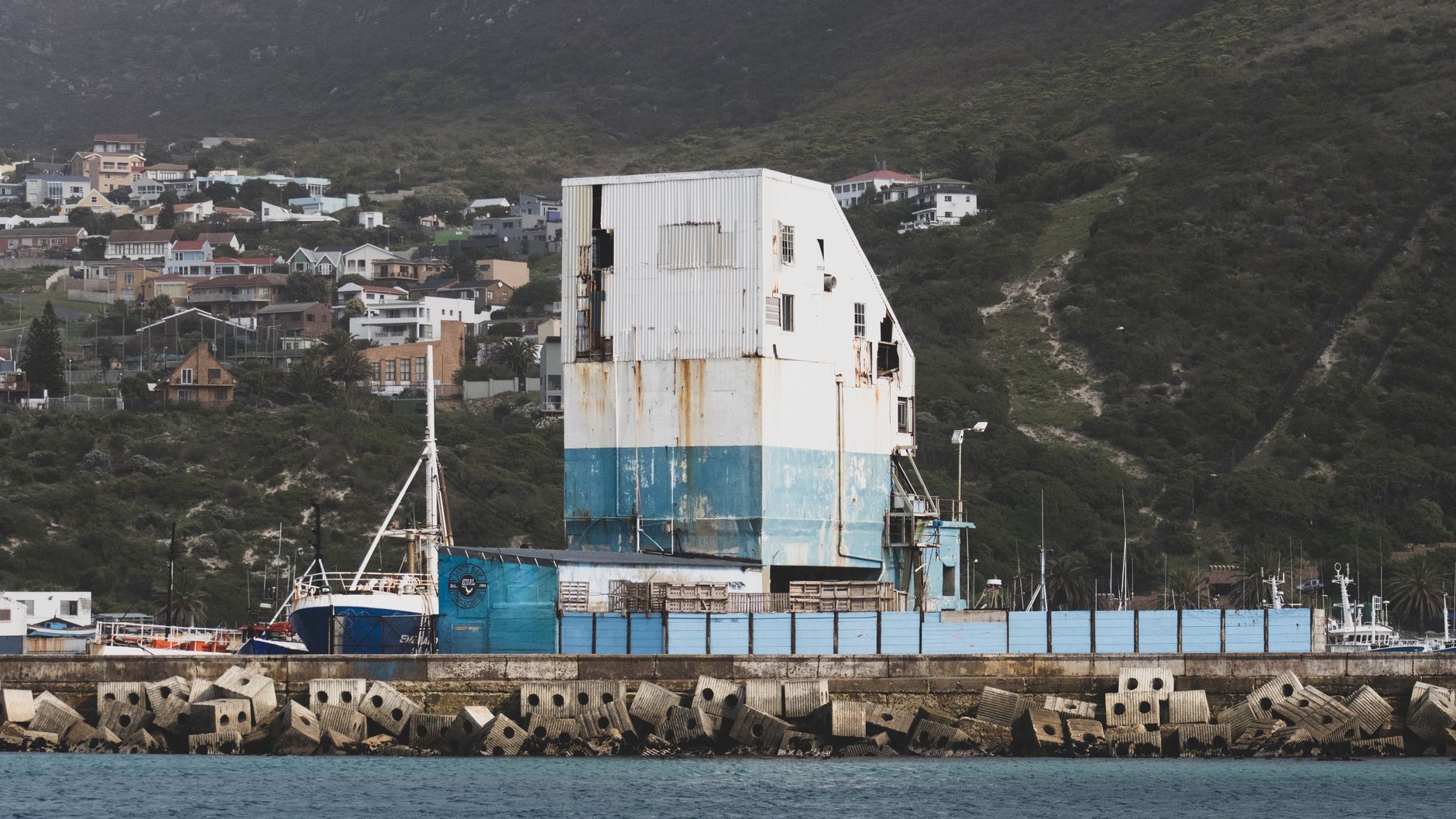 Fishing boats in Hout Bay harbour with the Sentinel peak rising behind the breakwater
Hout Bay gives you a beach, a fishing harbour and a mountain valley for roughly 40 to 60 percent less than Camps Bay, at the cost of a 20 to 30 minute drive to everything urban.
The shape of the place
Hout Bay sits in a deep valley on the Atlantic side, ringed by the Sentinel, Chapman's Peak and the Constantiaberg, opening onto a wide bay with a long sandy beach at one end and a working fishing harbour at the other. It is a proper town rather than a resort suburb: schools, a small mall at the Village Centre, a Main Road with hardware shops and doctors, horse paddocks up the valley, and a substantial informal settlement, Imizamo Yethu, on the eastern slope. The mix is unusual for Cape Town and much of the appeal lies in it.
Geographically it is the hinge of the peninsula. North over the Suikerbossie hill you reach Camps Bay in 15 minutes. East over Constantia Nek you are in the wine valley in 15. South along Chapman's Peak Drive, one of the great coastal roads anywhere, you reach Noordhoek in 20 and Cape Point in about an hour. That position makes Hout Bay the single most efficient base in the city for a trip built around the peninsula, and the single least efficient for a trip built around the CBD.
Who should book here
Drivers with a peninsula-shaped itinerary: Cape Point, Boulders penguins, Kirstenbosch, the Constantia wine estates, Chapman's Peak and the Atlantic beaches all sit within 40 minutes. Families, because R2,500 buys a house with a garden here where the same money buys a one-bedroom flat in Camps Bay. Outdoors people, because the Karbonkelberg and Sentinel trails leave from town, and the Silvermine and Constantia Nek trailheads are close. And anyone who prefers a place with a supermarket, a school run and a fish shop to a place with a cocktail strip.
It also suits travellers on the second or third visit who already know they will hire a car and want more space and quiet for the money. A four-bedroom house with a pool and mountain views in the Hughenden or Scott Estate areas runs R4,000 to R9,000 in shoulder season, which in Camps Bay would be R10,000 upwards. Over ten nights that gap funds the whole car hire and most of the wine. If your trip is two people and four nights, the maths matters far less and Hout Bay's advantage largely disappears.
Who should book elsewhere
Anyone without a car. Buses run the coastal corridor and e-hailing works, but a trip to the CBD is roughly R250 to R400 each way and drivers can be reluctant late at night. Nightlife-seekers: Hout Bay winds down early and its evening options are a handful of good restaurants and pubs rather than a scene. Museum-and-gallery visitors, because the entire cultural map is 25 to 40 minutes away and you will resent the drive by day three. And anyone who wants to walk out of a hotel into a promenade crowd.
It is also a poor first-visit base if your time is short. On a four-night trip, thirty minutes each way to town is two hours a day of your holiday, which is roughly a fifth of your waking time in Cape Town spent on Victoria Road. Stay in the City Bowl or Sea Point instead and take Hout Bay as a day trip: harbour, market, seal cruise, Chapman's Peak, back for dinner. That gets you the best of it for the price of a tank of petrol.
Prices and stock
Hout Bay is the best value on the Atlantic seaboard. Guesthouse rooms and B&Bs in the valley run roughly R1,100 to R2,200 in shoulder season, and small self-catering cottages R1,300 to R2,500. Beachfront and harbour-view apartments sit at R1,800 to R3,500. Houses with pools and views climb from R4,000 to R15,000 depending on size and position. The festive peak from mid-December to mid-January adds 50 to 100 percent and brings minimum stays, but the base is so much lower than Camps Bay that peak Hout Bay still undercuts shoulder-season Clifton.
The stock skews towards independent guesthouses and self-catering rather than hotels; there are a few larger properties, mostly on the beach road and up the valley, but no cluster of international-brand towers. That means more variation in quality: read recent reviews carefully, check whether hot water is solar-only, and confirm heating for a winter stay, because valley nights in July drop to about 8 degrees and a house without a fireplace or decent heaters is a cold house.
The sub-areas that matter
The harbour end, around Mariner's Wharf and the breakwater, is the atmospheric choice: fishing boats, seals hauled out on the slipway, Snoekies for hot fish and chips, and the Bay Harbour Market, an excellent covered market in a converted fish factory that runs Friday evenings and weekends with live music and food stalls. It also smells of fish, sometimes strongly, when the catch is landed or the wind sits wrong. Some people find that authentic and others find it a dealbreaker; go and stand there before committing to a week.
The beachfront strip along Royal Avenue and Beach Crescent gives you sand and sunsets and a fifteen-minute walk to the harbour. The valley proper, around Main Road, Baviaanskloof and Hughenden, is greener, quieter and cheaper, with horses and vineyards and a five-minute drive to everything. The high slopes at Ruyteplaats and Scott Estate deliver the big views and the steep driveways. Llandudno, a separate cove suburb over the hill towards Camps Bay, has no shops at all and prices closer to Clifton.
The walking radius and what to do on foot
From a beachfront address you can walk the full length of Hout Bay beach, roughly 1.3 km of sand with the Sentinel at one end, in twenty minutes, and continue to the harbour in another fifteen. The Village Centre with its supermarket, bakery and pharmacy is a ten to twenty-minute walk from most central addresses. Seal-viewing boat trips to Duiker Island leave from the harbour throughout the day, take around 40 minutes, and cost in the region of R100 to R200 per adult; confirm current prices and departure times with the operators on the quay.
Beyond that you drive. World of Birds, a large aviary complex in Valley Road, is a five-minute drive and a reliable rainy-day option with children. Chapman's Peak Drive begins at the southern end of the bay and carries a toll for light vehicles in the region of R60 to R70 for a single trip, with day and multi-trip options; the road closes in high wind or after rockfalls, so check its status before planning a sunset drive. Constantia Nek and its wine estates are ten to fifteen minutes east.
Weather, wind and honest caveats
The valley traps and funnels the southeaster in summer, and a Hout Bay afternoon in January can be windier than Camps Bay even while the bay itself looks calm. Winter brings northwesterly rain and the surrounding mountains catch it, so Hout Bay runs wetter than the city centre. On the plus side, the valley holds warmth on still autumn evenings and April here is close to perfect: 24 degrees, no wind, empty beach. October and November are similarly good and considerably cheaper than the festive weeks.
Two practical caveats. First, security: like most of the peninsula, opportunistic theft happens, so use off-street parking, leave nothing in the car, and take the standard advice about walking after dark seriously, particularly on the quieter valley roads. Second, kelp. Storms pile it on the beach and the smell is part of the deal. Neither should put you off, but both should be in the calculation alongside the honest fact that this is the cheapest way to sleep with a mountain and an Atlantic beach outside the window.
Before you book
The questions people ask about Hout Bay, answered with this month’s numbers.
About 20 km, which is 25 to 30 minutes over Suikerbossie and along Victoria Road outside peak, or a similar time via Constantia Nek and the M3. Allow 40 to 50 minutes on weekday mornings. E-hailing runs roughly R250 to R400 each way, which is why a hire car makes sense here.
Yes, one of the best. Chapman's Peak Drive starts at the southern end of the bay and Cape Point is roughly an hour away via Noordhoek and Scarborough. Check the Chapman's Peak toll and closure status before you set out, as the road shuts in high wind and after rockfalls.
Sometimes, yes. It is a working fishing harbour, and when the catch is landed or the wind sits from the west the smell carries a few hundred metres inland. If that would bother you, book on the beachfront or up the valley rather than within sight of the quay.
Substantially. Equivalent accommodation runs roughly 40 to 60 percent less, and the gap widens for larger properties: a four-bedroom house with a pool costs R4,000 to R9,000 in shoulder season here against R10,000 and upwards in Camps Bay. You pay the difference back in drive time.