Hotels for solo travellers in Cape Town, ranked
 A single traveller with a coffee on a guesthouse balcony overlooking the Sea Point promenade
Ten places to stay alone in Cape Town, ranked on single-occupancy value, how easy it is to meet people and whether you can walk home after dinner, from R450 dorms to R4,500 suites.
The three things a solo booking has to solve
First, the single supplement. Almost every Cape Town hotel charges close to the double rate for one person, so a R3,200 room costs you what it costs a couple. Guesthouses and aparthotels are the exception: many publish a genuine single rate, typically 25 to 35 percent below the double, and small hostels sell private rooms at R1,100 to R1,900 that are better value than any hotel. Always ask directly whether a single rate exists, because it is rarely shown on booking platforms.
Second, evening mobility. Cape Town is a ride-hailing city after dark rather than a walking city, with the exception of a few dense strips. Budget R60 to R150 for short hops and R280 to R400 from the City Bowl to Muizenberg or the airport. Third, people. Eating alone every night for a week wears thin, and the properties that solve it are the sociable hostels, the guesthouses with a communal breakfast table, and the aparthotels with a co-working lounge. Rank your options on those three and the choice narrows fast.
1 and 2: the Green Point and De Waterkant guesthouses
Green Point is my first pick for most solo travellers. Guesthouses and small hotels off Somerset Road and behind the stadium at R1,400 to R2,800, flat streets, and a genuine walking radius: Green Point Park, the promenade, the Waterfront in 15 to 20 minutes, and a dense run of restaurants where eating alone at the bar is completely normal. It is well lit and busy into the evening, which is the practical safety point. The catch is Friday and Saturday noise on Somerset Road, so ask for a room away from the street or one street back.
Second is De Waterkant, the cobbled quarter above Buitengracht, at R1,800 to R3,500. Small restored cottages converted to guesthouses, a village feel, and a ten-minute downhill walk to Bree Street's restaurants. It is one of the few parts of Cape Town where wandering out for dinner without a plan works. Trade-offs are stairs, tiny rooms and a steep walk back up. It is also the heart of the city's gay quarter, which for many solo travellers is exactly the point and for others is simply a lively, safe, welcoming neighbourhood to base in.
3 and 4: the Long Street and Kloof Street hostels
Third, the backpackers on and around Long Street: dorm beds R450 to R700, private doubles R1,100 to R1,900, and the highest concentration of other solo travellers in the country. They run tours, braais, bar crawls and shared transport to Cape Point and the Winelands, which solves both the company problem and the car problem in one booking. The honest catch is noise until 03:00 at weekends and a party culture you cannot opt out of if you take a street-facing dorm. Take a private room on an inner corridor and you get the sociability without the sleeplessness.
Fourth are the quieter, better-designed hostels around Kloof Street, Gardens and Tamboerskloof, at R550 to R850 for a dorm and R1,300 to R2,200 for a private. Smaller, calmer, with rooftop terraces, decent kitchens and a crowd that skews slightly older and more likely to be working remotely. You are ten minutes' walk from the Kloof Street restaurants and at the foot of the Lion's Head and Platteklip trailheads, which matters if hiking is why you came. Book these over Long Street if you want to meet people without a nightly bar crawl.
5 and 6: Sea Point B&Bs and apartment-hotels
Sea Point is fifth and the best choice for a solo traveller staying more than a week. Small guesthouses and apartment-hotels at R1,300 to R2,600, with a paved promenade running several kilometres between Mouille Point and Bantry Bay that is busy with runners, dog-walkers and families from 06:00 to well after dark. That constant activity is what makes it comfortable alone. Main Road and Regent Road cover groceries, laundries, gyms and about forty restaurants. The catch is that it is a residential suburb, so it is not where you will accidentally meet other travellers.
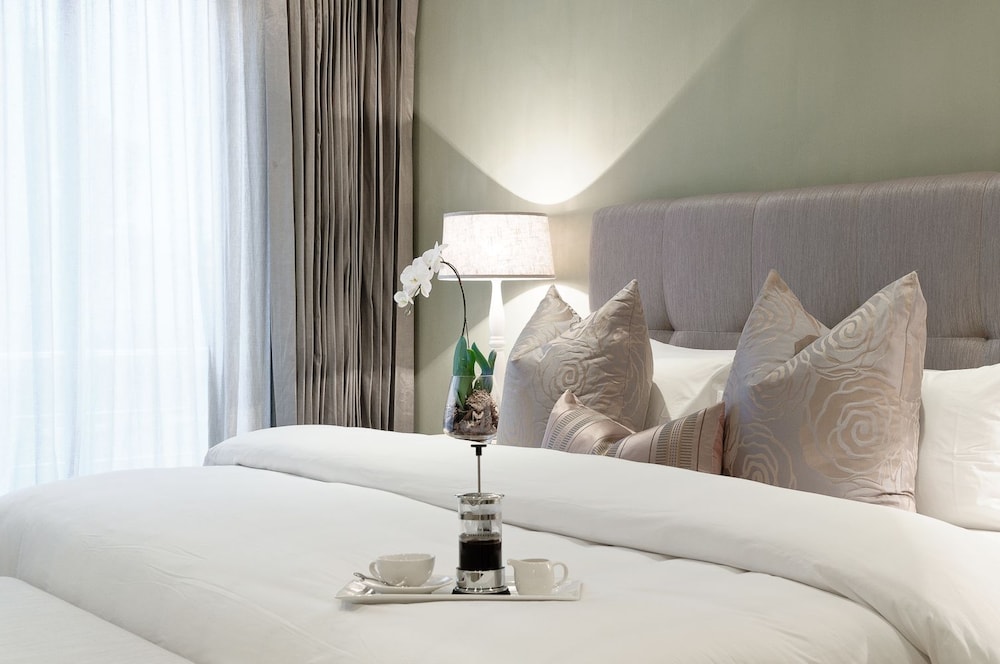
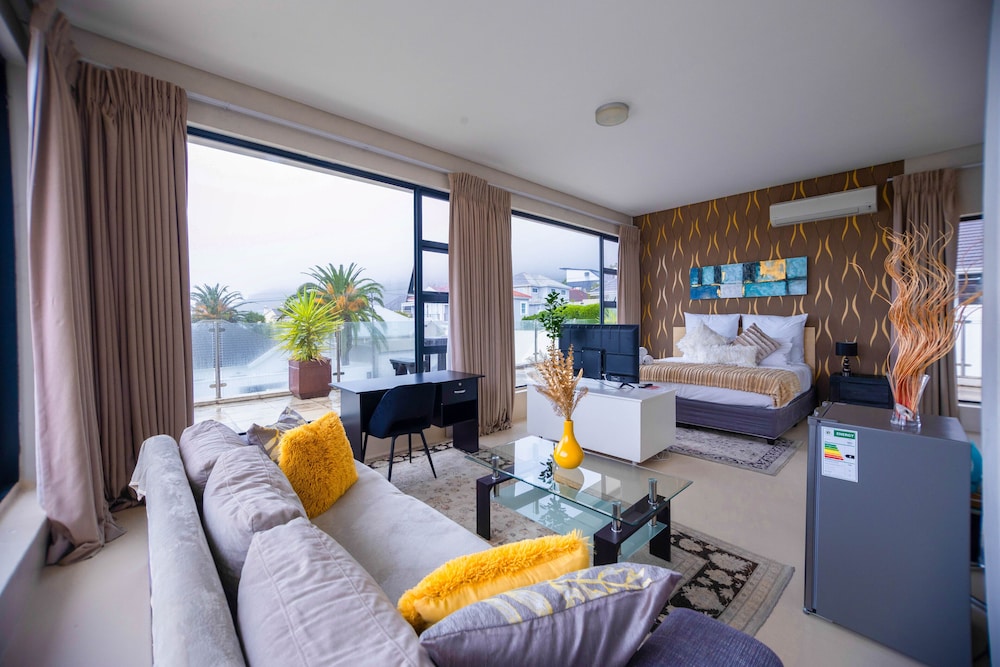
Sixth, and a variant, are the Sea Point aparthotels with a shared roof deck or lounge, R1,900 to R3,400. The shared space is the difference: it turns a self-catering flat into somewhere you have a conversation. This is the format that works best for solo remote workers doing a month, and several offer long-stay rates from about R22,000 monthly. Confirm the fibre speed and whether the router is on backup power before committing. Skip a ground-floor Beach Road unit, which gets both the wind and the pedestrian traffic outside your window.
7 and 8: the Waterfront, and Gardens boutiques
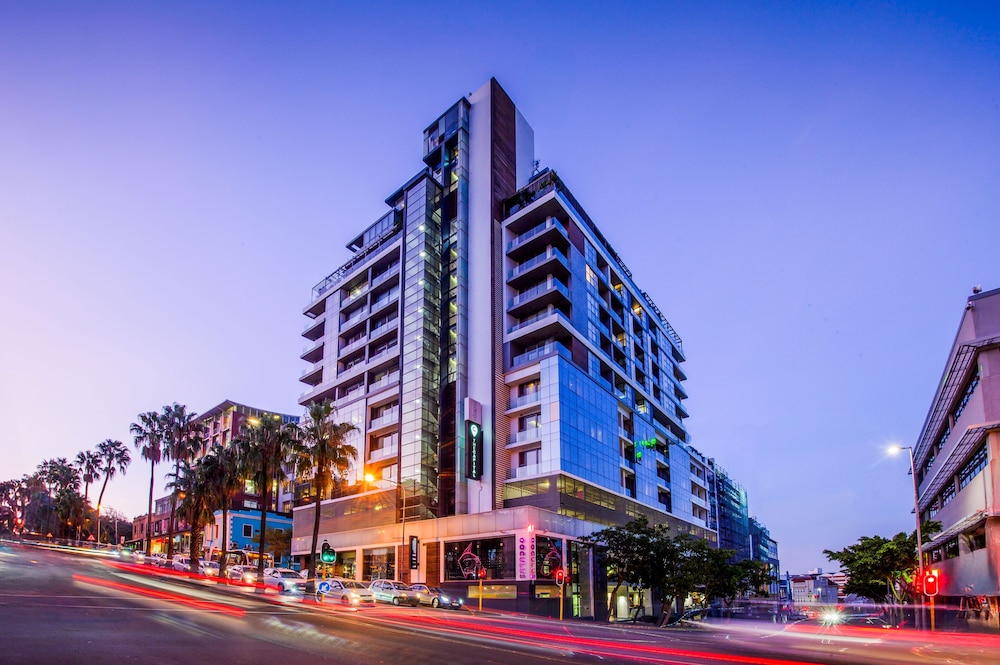
Seventh is the V&A Waterfront, which is the safest place in the city to walk alone at 22:00 and the least interesting to stay in. Four-star rooms from R3,800, precinct security and backup power, restaurants and cinemas within the gates. For a solo traveller who is nervous, arriving late, or here for two nights between flights, it removes every logistical worry at once. What you pay is the single supplement on an already high rate and the fact that you are in a shopping precinct rather than a city. Two nights yes, seven nights no.
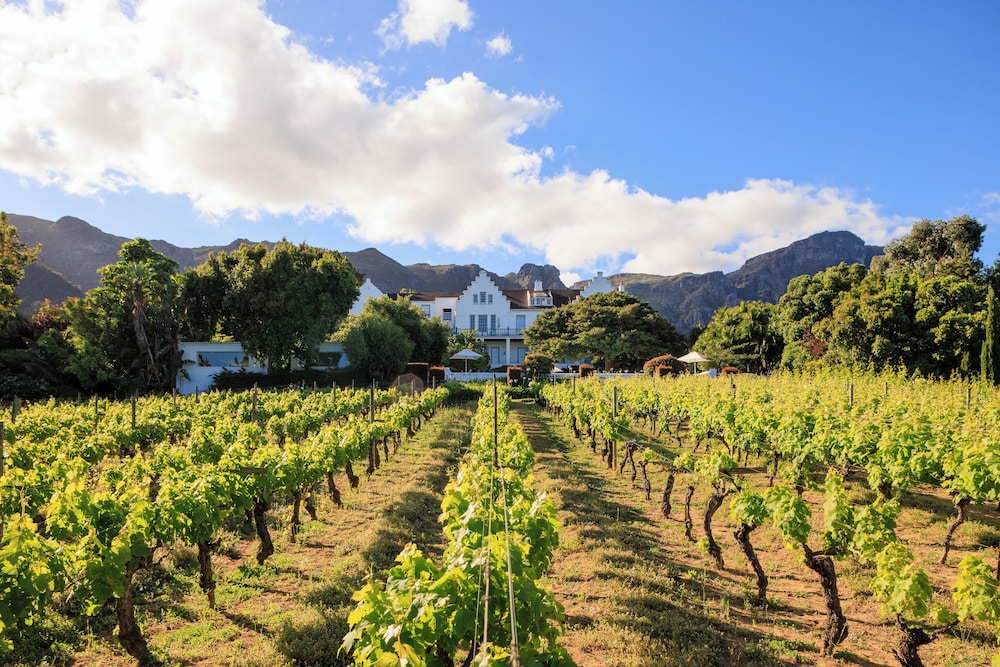
Eighth, the boutique villas of Gardens and Oranjezicht at R2,000 to R4,500. Eight to fifteen rooms, a communal breakfast, a pool, and hosts who will book your Table Mountain slot and tell you which trailhead to use. That personal service is worth a lot alone. The trade-off is the gradient: some streets are steep enough that you will call a car for 800 metres, and the walk back up from Kloof Street after dinner is a real climb. Ask how far below Upper Union Street the property sits before you book on the strength of a photo.
9 and 10: Observatory, Woodstock and Muizenberg
Ninth, Observatory's Lower Main Road guesthouses and backpackers at R600 to R1,600. It is a student suburb next to the university with cheap food, live music, secondhand bookshops and a genuinely mixed crowd, and it is the best-value sociable base in the city. Woodstock next door offers converted-warehouse rooms at R1,400 to R2,600 near the Old Biscuit Mill. Both require more street awareness than the Atlantic Seaboard, particularly after dark and particularly around the station areas, so use ride-hailing at night rather than walking, and do not wander the industrial blocks alone.
Tenth, Muizenberg, at R900 to R2,000, for the solo traveller who is here for two weeks and wants a village rather than a city. Surf schools, coffee shops, a beach that is busy all day and a small, friendly community of long-stayers. The commute into town is 35 to 50 minutes by car on the M3, and the Southern Line train service is worth checking with Metrorail rather than assuming. Book it as a second week after a City Bowl first week, not as your only base, unless surfing or writing is the actual purpose of the trip.
Eating alone, tours and getting around
Eating alone is easy in the right places. Bree Street and Kloof Street have bar seating at most restaurants and nobody blinks at a solo diner at 19:00. The Waterfront's food halls and the weekend markets in Woodstock and Oranjezicht are the low-effort option. Book dinner for 18:30 rather than 20:30 if you want a bar seat without a wait. Budget R180 to R350 for a good main course and R60 to R110 for a glass of wine. Tipping around 10 to 15 percent is standard and often the only income a car guard gets.
For sights, small-group day tours solve both transport and company: Cape Point and the peninsula loop, or a Winelands day, typically R900 to R1,600 a head with pickup from City Bowl and Atlantic Seaboard hotels. Hiking Lion's Head at sunset is the classic solo activity and there are always other people on the path, though a guided group is the sensible choice for Platteklip or anything on the back table. Confirm whether the MyCiTi bus route you plan to use is running before relying on it, since services and timetables change.
Safety specifics, and the booking I would make
The rules that matter alone are simple and locals follow them. Do not walk between neighbourhoods after dark, even short distances that look fine on a map; take a car. Keep your phone out of sight on the street, especially at intersections and around station areas. Do not hike alone on quiet mountain paths, and use the busy routes such as Lion's Head, Platteklip and the Pipe Track at popular times. Leave nothing visible in a parked car anywhere. Use the guarded parking areas at trailheads and tip the attendant R20.
The booking I would make for a first solo week is five nights in a Green Point guesthouse at around R1,800, with one Winelands day tour and two dinners at a Bree Street bar counter. For a traveller in their twenties wanting company, a private room in a Gardens or Kloof Street hostel at R1,500 does more for the trip than any hotel. For a month-long stay, a Sea Point aparthotel with a shared roof deck. Skip a Camps Bay hotel alone: it is beautiful, expensive, and you will eat every dinner in a restaurant full of couples.
Before you book
The questions people ask about Cape Town, answered with this month’s numbers.
Most hotels charge nearly the full double rate for one person. Guesthouses and small B&Bs frequently publish a single rate 25 to 35 percent lower, and hostels sell private rooms from about R1,100. Ask by email, because single rates are usually absent from booking platforms even when the property offers them.
Green Point and De Waterkant, then the Kloof Street end of Gardens. All three have short, well-lit, busy walking distances to restaurants. Sea Point works too along Regent and Main Road. Beyond those strips, use ride-hailing after dark rather than walking between neighbourhoods, whatever the distance looks like on a map.
Hostels with a bar and a tour desk on Long Street or around Kloof Street are the reliable route, along with small-group day tours to Cape Point or the Winelands at roughly R900 to R1,600. Free-to-join promenade running groups and surf lessons at Muizenberg also work well for longer stays.
Use busy routes at busy times: Lion's Head, Platteklip Gorge and the Pipe Track all carry steady traffic on weekend mornings. Avoid quiet paths and late starts, tell someone your route, carry water and a charged phone, and consider a guide for anything on the back table or the Twelve Apostles side.