Sea Point guide for tourists
 The Sea Point promenade at dusk with apartment blocks behind
An 11km promenade, some of the best value beds in Cape Town at R1,300-2,600 a night, and the most genuinely mixed street life in the city — here is how to use Sea Point properly.
The shape of the place
Sea Point is a dense wedge of apartment blocks between Signal Hill and the Atlantic, running roughly from Mouille Point in the north-east to Bantry Bay in the south-west. Three parallel roads organise everything: Beach Road on the sea, Regent Road with the cafés and shops in the middle, and Main Road behind it as the noisy arterial where the minibus taxis run. It has the highest concentration of mid-priced accommodation in the city, and it is one of the few genuinely walkable neighbourhoods in a car-dependent metro.
It is also the most socially mixed part of the Atlantic seaboard: old Jewish delis alongside Congolese barbershops, Israeli grills next to Ethiopian cafés, elderly residents who have lived in the same flat for forty years alongside remote workers on three-month lets. That mix is the reason to stay here rather than Camps Bay. It looks less like a postcard and far more like a city, and the promenade at 18:00 on a summer evening is the closest thing Cape Town has to a public living room.
The promenade — the reason to be here
The paved, car-free promenade runs about 11km from the Mouille Point lighthouse past Sea Point Pavilion to Bantry Bay, and it is used properly: runners from 05:30, dog walkers, prams, skateboards, outdoor gym equipment, a putt-putt course, three playgrounds and a scattering of public artworks including the well-known perspex-framed sculpture near the Pavilion. It is flat, well lit, and busy enough at most hours to feel comfortable. Whale sightings from the railing are common between roughly August and November, when southern rights move up the coast.
The Sea Point Pavilion at the southern end is a modernist public swimming complex with a 50m saltwater pool, diving boards and children's pools, right on the rocks. Entry is a few tens of rand — check opening hours with the City of Cape Town, as they change seasonally and for maintenance. On a hot January Saturday it is packed and joyous. It is, for my money, the single best-value thing you can do in Cape Town for under R50.
Where to stay and what it costs
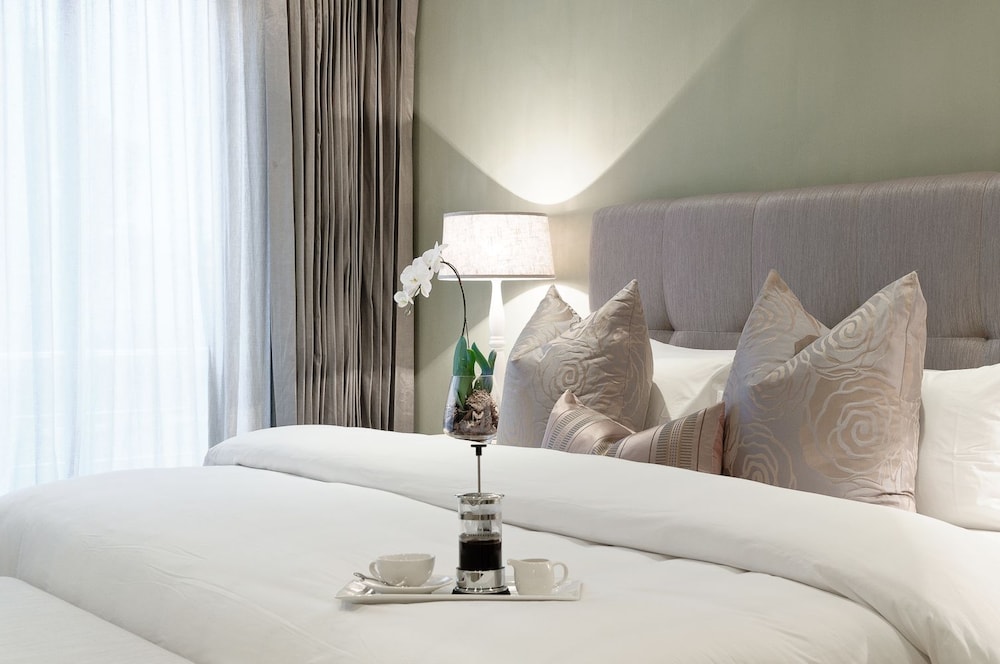
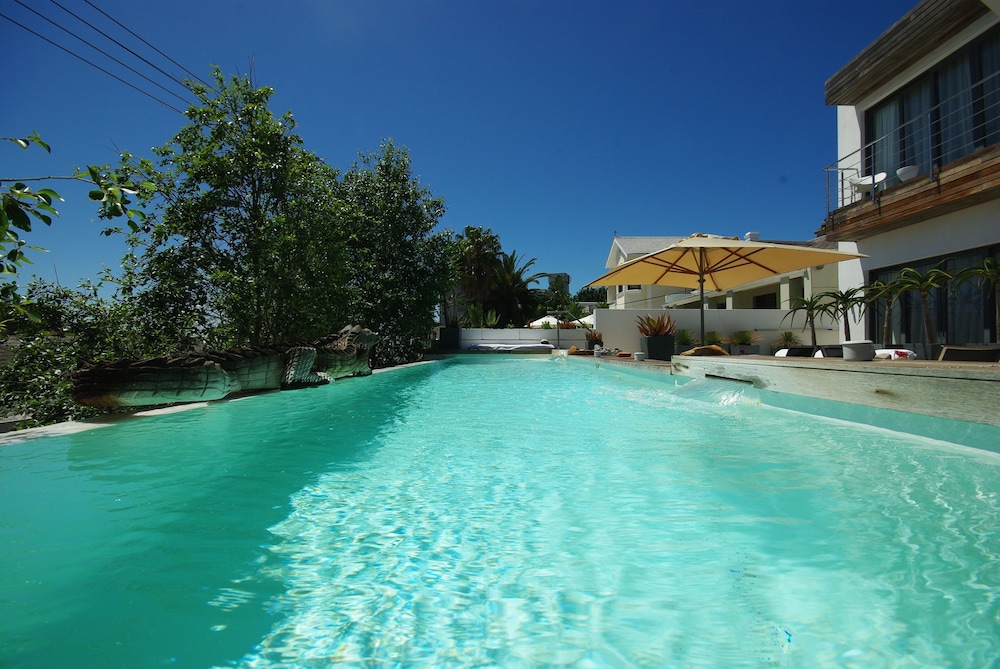
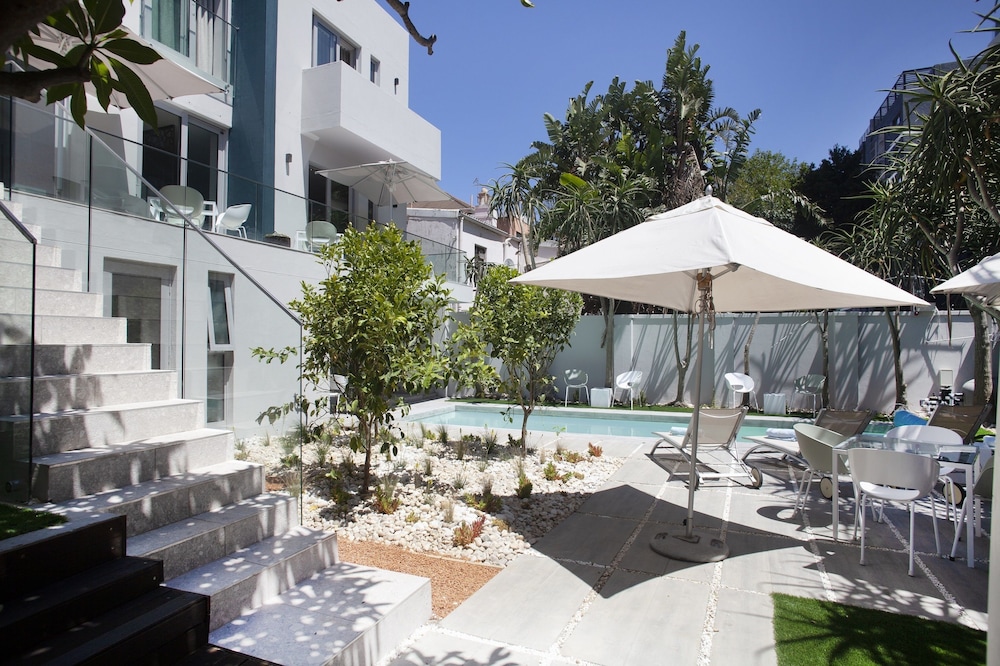
Sea Point's stock is mostly 1960s-80s apartment blocks converted into apart-hotels and self-catering units, plus a handful of full-service hotels on Beach Road and some smart boutique guesthouses climbing towards Bantry Bay. Bands: R1,300-2,000 for a decent double or one-bedroom in shoulder season, R2,000-2,600 in December and January, and R3,500-6,000 for the sea-facing boutique rooms in Bantry Bay where the cliff-side properties sit above the water. Many units include secure parking, which saves the R120-250 a night the CBD charges.
Two booking rules. Ask for a room on the mountain side above the third floor if you are anywhere near Main Road — the taxi traffic starts before 06:00. And check what "sea view" means: newer blocks on Beach Road have obscured older buildings behind them, so a listing shot taken from the roof is not the view from room 204. Bantry Bay is quieter and more expensive; Three Anchor Bay at the Green Point end is cheaper and closer to the Waterfront walk.
Eating: where locals actually go
Regent Road and Main Road carry the food. The strength is the mid-range and the late-night: shawarma and falafel counters, Israeli and Lebanese grills, a Portuguese-Angolan strain of peri-peri chicken and prego rolls, Ethiopian injera plates, and a well-established sushi trade. Expect R120-220 for a main across most of it, R60-110 for a shawarma, and R40-60 for a beer. Several places serve past 23:00, which is rare in Cape Town outside Long Street. The Sea Point delis do a strong breakfast at R80-140.
For a proper sit-down dinner, the upper end of the strip and the Mouille Point side deliver better than their reputation, and you can walk to the V&A Waterfront's restaurants in 20-25 minutes along the promenade. Skip the tourist-priced sea-view terraces on Beach Road that charge R280 for indifferent fish; the money is better spent one street back. On weekend mornings, the Oranjezicht City Farm Market at Granger Bay, a short walk or R50 Uber away, is the best breakfast in the area.
Getting around from Sea Point
MyCiTi bus routes run along Main Road and Beach Road, linking Sea Point to the Civic Centre in the CBD, to Camps Bay and Hout Bay on the seaboard route, and connecting to the airport service from town. You need a myconnect card, sold at stations and some retailers for a small fee, then load value — check current fares and route timetables with MyCiTi directly, since both change. For most visitors, Uber and Bolt are simpler: R50-90 into the CBD, R70-120 to Camps Bay, R250-400 to the airport.
Walking works within Sea Point and along the promenade, day and evening while it is busy. Do not walk the back streets late at night with a phone in your hand, and avoid the quieter stretches of the promenade after about 22:00 when the crowd thins. Parking on Regent and Beach Roads is metered by day, patrolled by car guards, and generally fine — tip R5-20 when you leave, and never leave anything visible in the car.
What is within 20 minutes
Sea Point's real advantage is its position. Signal Hill for sunset is a ten-minute drive; the Lion's Head trailhead is fifteen. The V&A Waterfront and the Robben Island ferry terminal are ten minutes by car. Clifton's beaches are five to ten, Camps Bay fifteen. The Bo-Kaap's painted houses and the Company's Garden museums are twelve to fifteen minutes into town off-peak. Kirstenbosch is 25-30 minutes over Kloof Nek and down the M3, and Hout Bay is 20 minutes along Victoria Road.
It is a poorer base for the False Bay side: Muizenberg is 35-45 minutes, Boulders and Simon's Town 45-55, and Cape Point over an hour each way. If your trip is weighted towards penguins, Chapman's Peak and the far south, consider splitting your stay — five nights in Sea Point for the city, three in the south. For a single-base seven-night trip covering the classic sights, Sea Point still costs you the least driving of anywhere with this price band.
Honest downsides
Sea Point has no swimming beach. The shoreline is rock, kelp and tidal pools, and the water is 12-15°C. If your holiday image involves lying on sand outside your hotel, book Camps Bay or Muizenberg instead. The area also has visible street homelessness and persistent begging along Regent Road, which some visitors find uncomfortable; the practical response is politeness, no cash on the street, and support for a local shelter if you want to help meaningfully.
Main Road is genuinely loud, the architecture is unlovely — this is a wall of 1970s concrete, not Cape Dutch charm — and some blocks are tired inside despite good photographs. But you are paying R1,300-2,600 for a location that would cost double in Camps Bay, with better food, better transport links and a promenade that is the most used public space in the city. For a first visit of a week or more, that is the trade I would make every time.
Before you book
The questions people ask about Sea Point, answered with this month’s numbers.
Yes — probably the best value one. You get an 11km promenade, walkable food on Regent Road, secure parking with most units, MyCiTi and ride-hailing links, and rooms at roughly R1,300-2,600 against R3,500-9,000 for comparable sea-facing rooms in Camps Bay.
Not in the sea — the shore is rock and kelp and the Atlantic sits near 12-15°C. Use the Sea Point Pavilion's public 50m saltwater pool and kids' pools on the promenade for a few tens of rand, or a hotel pool. Confirm Pavilion hours with the City before going.
Until about 22:00 it is busy, lit and generally fine, and locals use it constantly. After that the crowd thins and you should take an Uber instead. Keep phones pocketed on the quieter Bantry Bay end and on back streets behind Main Road at any hour after dark.