What is overrated in Cape Town, and what to do instead
 A long queue of visitors waiting at a mountain cable station on a busy summer day
Seven of the city's most-booked experiences are either badly timed, badly priced or quietly no longer what the brochure says, and each has a better substitute within 30 minutes.
The cableway at midday in high season
The mountain is not overrated; the way visitors ride it is. Arriving at the lower cableway station between 11:00 and 14:00 in December or January means a ticket queue and a boarding queue that can consume 60-120 minutes, a summit packed shoulder to shoulder at the viewing platforms, and haze off the Atlantic flattening every photograph. Then the southeaster gets up in the afternoon, the tablecloth cloud pours over the edge, and the service closes with people still queuing to come down. That is a bad day out with a good view attached.
Do it in the first cars of the day instead, tickets bought online the night before, checking the operator's wind status at breakfast. Better still, walk up Platteklip Gorge in about two to three hours starting before 08:00 and buy a one-way ticket down, which costs roughly half the return and turns the cableway into a reward rather than a queue. The other honest fix is late afternoon: the last cars up, the light going gold, and most of the coach traffic already gone.
The Camps Bay strip
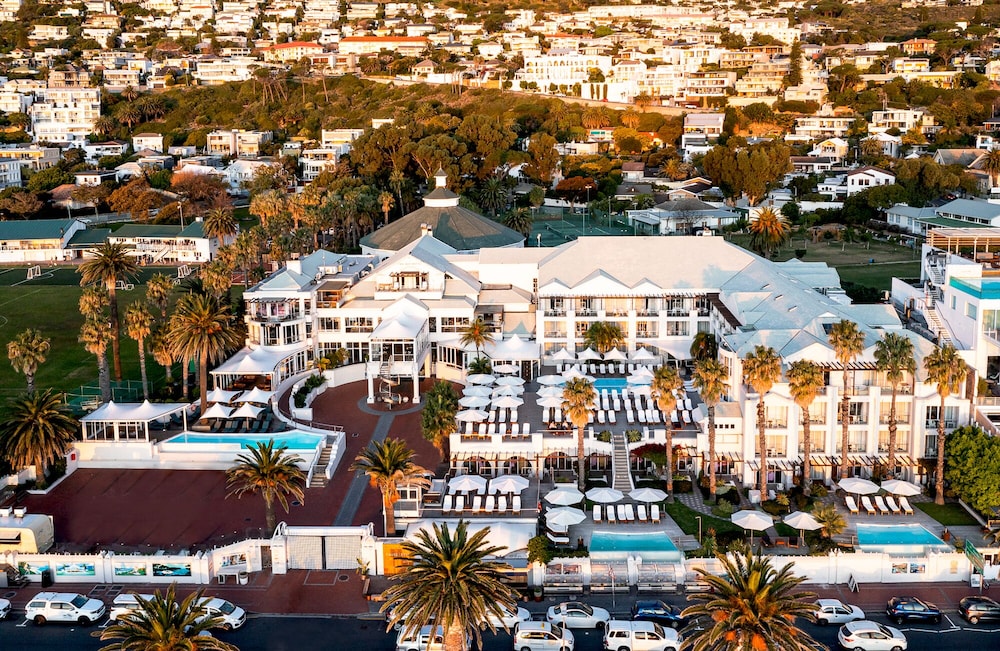
Camps Bay's beach is superb and its restaurant strip on Victoria Road is the weakest value in the city. Mains in the R220-350 band, beers at R60-90, and food that is mostly competent rather than good, in exchange for a palm-lined view you can have for nothing from the sand across the road. Add parking marshals, an evening wind that empties the terraces, and a table turn timed to the queue behind you, and you have paid a location premium for an experience the location was already providing free.
Buy your sundowners and a picnic from the shops behind the strip and sit on Glen Beach or the grass verge above the sand, which is what locals do. For an actual dinner, drive 12 minutes to Sea Point, where Main and Regent Roads run a dense strip of Middle Eastern, Portuguese, Japanese and Cape Malay places at half the price, or go into the City Bowl for Bree Street. Keep Camps Bay for the swim, the sunset and a single drink if the wind is down.
Long Street after dark
Long Street has been coasting on a reputation earned two decades ago. What is there now is a run of loud, sticky-floored bars with door touts, inflated drinks and a hustle-heavy pavement at 01:00, and it is the single most common place visitors report a phone lifted or a drink situation they did not enjoy. The Victorian balconies are genuinely beautiful in daylight and the second-hand bookshops and the Pan African Market are worth an hour, but the after-dark version is not the city's nightlife, it is its tourist trap.
Bree Street is the drinking and eating spine locals actually use, with wine bars, small-plate kitchens and craft beer within a few blocks. The East City around Harrington Street runs later and rougher-edged in a good way. Observatory's Lower Main Road is the cheap, student-heavy option with live music. Woodstock is best on a Saturday morning rather than a Saturday night. Whichever you pick, take an e-hail to and from the door after dark rather than walking between venues.
Cape Point as the meeting of two oceans
Cape Point is spectacular and the story attached to it is wrong. It is not the southernmost point of Africa, which is Cape Agulhas roughly 220 km east, and the two oceans do not meet at a fixed line you can photograph; the boundary moves with the seasons and the currents. The reserve is still one of the great coastal landscapes on earth, with 8,000 hectares of fynbos, baboons, ostriches by the roadside and a cliff edge dropping 200 metres into the Atlantic. Do go. Just go for the landscape, not the myth.
The specific thing to skip is the Flying Dutchman funicular queue in the middle of the day. The walk to the old lighthouse takes about 15 minutes uphill on a paved path and you will pass the queue. Arrive at the gate before 10:00 to beat the coaches, drive the loop to Cape of Good Hope for the sign photograph, and keep the middle of the day for the walk out towards Dias Beach. Take the conservation fee into account, and never leave food visible in the car because the baboons will open it.
Shark cage diving out of Gansbaai
This is the one experience whose product has genuinely changed. Great white sightings in Gansbaai and False Bay collapsed after a pair of specialist orcas began preying on them, and the famous breaching at Seal Island has largely stopped. Operators now frequently show bronze whaler and copper sharks instead, which are impressive animals but not the ones the marketing photographs feature. Add a 04:30 pickup, a two-and-a-half hour drive each way, a swell that makes a substantial share of every boat seasick, and a price that runs into thousands of rand.
Before booking, ask the operator directly what species they have seen in the past few weeks and what their refund policy is for a no-sighting trip; the honest ones answer plainly. If the answer is not what you hoped, spend the money on land-based whale watching at Hermanus between June and November, peaking around September and October, when southern right whales come within metres of the cliff path for free. A False Bay boat trip to Seal Island is a shorter, cheaper alternative with guaranteed wildlife.
The Franschhoek Wine Tram
The tram is charming for about 40 minutes and then it is a timetable. You are locked to fixed departures, you queue with the same 60 people at each stop, tasting time is compressed into the gap before the next tractor-trailer arrives, and by the third estate the group dynamic has taken over the day. The price sits in the low hundreds of rand before any tasting fees, and it only covers estates on the tram lines, which excludes some of the best cellars in the valley.
Hire a car and driver for the day instead. Roughly R1,800-2,500 buys a vehicle for four people around Stellenbosch, Franschhoek or the Helderberg, you set the schedule, you can leave a place that is not working and stay at one that is, and everyone tastes properly. If the budget will not stretch, do Constantia instead: four historic estates 20 minutes from the City Bowl, walkable between two of them, with the same tasting fees of R80-150 and no travel day attached.
The drive-through township tour and the Bo-Kaap photo shoot
A minibus that drives slowly through Langa or Khayelitsha with the windows up while a guide from elsewhere narrates poverty is the worst thing sold to visitors here. It teaches nothing, it treats residents as scenery, and almost none of the money stays local. The alternative is not to avoid these neighbourhoods; it is to book a walking tour run by people who live there, three hours on foot, visiting a shebeen, a workshop or a food stall where you spend money directly. Ask the operator who is paid and how much before booking.
Bo-Kaap needs the same shift. The painted houses on Wale and Chiappini Streets are private homes, and residents are tired of strangers posing on their front steps and blocking doorways for photographs. Walk it early, photograph the streetscape rather than individual doorways, ask before you point a camera at anyone, and put money into the neighbourhood at the Bo-Kaap Museum, one of the cooking classes, or a bakery on Rose Street. The koeksisters are the point of the visit; the Instagram frame is not.
What is not overrated, despite the reputation
The hop-on hop-off sightseeing bus is unfashionable and genuinely useful, particularly on day one or two: it connects the City Bowl, the cableway, Camps Bay and the Waterfront on a loop, solves the parking problem, and gives you a mental map of a city whose geography confuses everyone. Kirstenbosch justifies every rand, especially early on a weekday, and the Boomslang canopy walkway is worth the walk up. Robben Island is not a theme-park ferry ride: the ex-prisoner guides make it, and a rough-sea cancellation in winter is a real possibility worth planning around.
The two best experiences in the city cost nothing. Lion's Head at sunset is a 45-60 minute climb with chains and ladders near the top, and the 360-degree view beats the cable-car summit for photographs; take a head torch for the descent and go in a group. And the Sea Point promenade at golden hour, roughly 3 km of paved seafront with the Twelve Apostles behind you and the Atlantic breaking over the rocks, is the walk locals do daily and visitors somehow miss while queuing for something else.
Before you book
The questions people ask about Camps Bay, answered with this month’s numbers.
Yes, if you time it. Book online, take the first cars after opening or the last hour before closing, and check the wind status the morning of. Walking up Platteklip and buying a one-way ticket down costs roughly half a return and removes the worst of the queue entirely.
Not blindly. Contact operators first and ask what species they have actually seen in recent weeks and what happens if nothing shows. Great white numbers in Gansbaai and False Bay dropped sharply after orca predation, so a booking made on the strength of old photographs may not deliver what you expect.
Book a walking tour led by residents, ideally direct rather than through a hotel desk, and ask who receives the fee. Spend money in the neighbourhood at a food stall, a workshop or a shebeen, ask before photographing anyone, and treat it as visiting a suburb rather than an exhibit.
For the beach, absolutely: it is one of the most dramatic urban beaches anywhere, best in the late afternoon once the southeaster drops. For dinner, no. Eat in Sea Point or the City Bowl at roughly half the price, and keep Camps Bay for a swim, a sunset and one drink.