Hotels with rooftop bars and terraces in Cape Town
 A hotel rooftop terrace at sunset with Signal Hill and the Atlantic beyond
Ten rooftop and terrace options ranked by view, wind shelter and whether non-guests can get in, plus the four months when the south-easter closes half of them by 4pm.
The wind decides everything
Cape Town's south-easter, the Cape Doctor, blows hardest from November to February, regularly gusting 40 to 60 km/h through the afternoon and sometimes far more. It arrives from the south-east, which means terraces facing south and east get scoured while north and west-facing ones stay usable. Any rooftop that stays open in a December blow either has glass screens, a sheltered courtyard cut into the roof, or is on the eastern side of the City Bowl where Devil's Peak provides some cover. Ask a hotel directly how often their roof closes for wind, and treat a vague answer as a yes.
Sunset timing is the other planning fact. Late December sunsets fall just before 20:00, so a rooftop table at 18:30 buys you 90 minutes of golden light; in June the sun is gone by about 17:45 and the roof will be cold and probably shut. That makes the rooftop season roughly October to April, with February and March the best combination of long evenings and slightly calmer wind. Winter terrace drinking exists in Cape Town, but it happens next to a fire in a Winelands courtyard rather than on a rooftop above Bree Street.
1 and 2: the Silo District and the Waterfront roofs
The rooftop on the converted grain silo at the eastern end of the V&A Waterfront is the best in the city, full stop: a pool and bar on the sixth floor of a 1920s grain elevator, with 360-degree sightlines across the harbour, Table Mountain and Signal Hill. Rooms are far beyond most budgets, so the practical route is a drinks booking as a non-guest, which is usually possible with a reservation and a spend expectation. Book two to three weeks ahead for sunset. The catch is price and formality: this is a R250-a-cocktail room, and it is exposed when the wind turns.
Second, the wider Waterfront hotels offer terrace bars at water level rather than roof level, which is a genuinely different proposition. You lose elevation and gain shelter from the marina buildings, plus precinct power that keeps everything running when suburbs go dark. Expect R120 to R200 for a glass of Cape white and a crowd that skews cruise passengers and business travellers. Book these when the forecast is windy, because a sheltered basin table at the Waterfront beats a cancelled rooftop in Gardens every time. Skip them on a still February evening, when height is the whole point.
3 and 4: the Bree and Loop Street hotel roofs
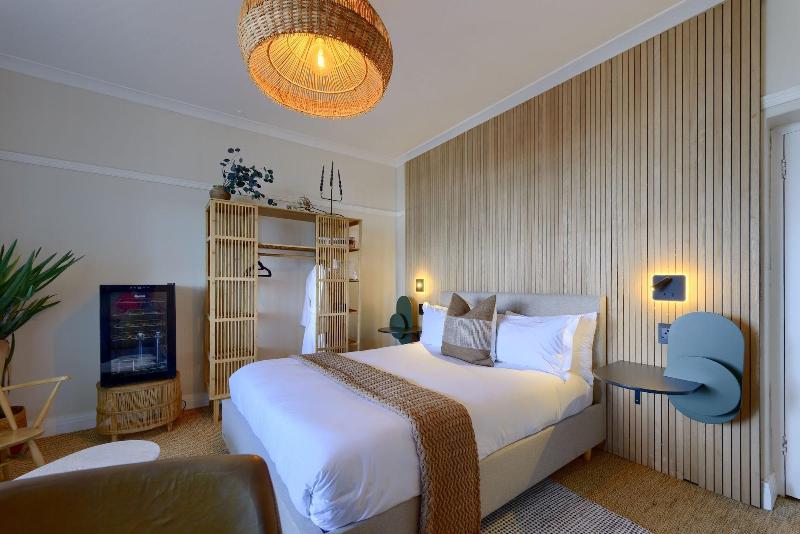
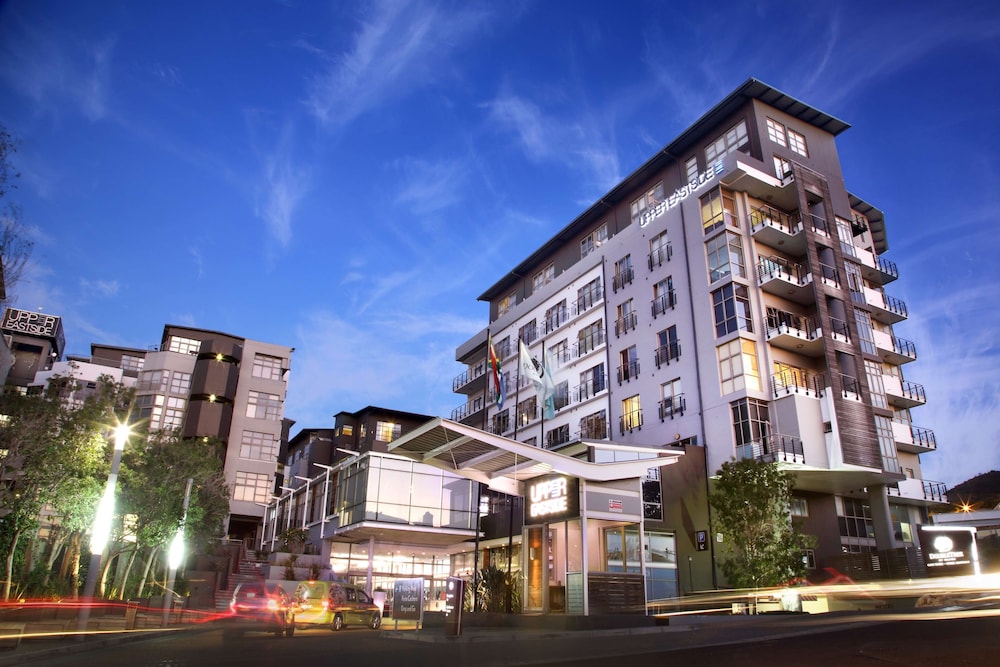
The City Bowl's newer hotels and aparthotels between Bree, Loop and Buitengracht are third, and they are the most usable option for most travellers. Small rooftop pools and bars four to eight floors up, with Table Mountain filling the southern view and Signal Hill to the west, in buildings where a room costs R1,900 to R3,800 rather than R12,000. Most are guests-only, which is precisely their appeal at 18:00 on a Saturday when the public rooftops are three deep at the bar. Confirm before booking whether the roof is a bar with staff or just a pool with sun loungers.
Fourth, the Long Street and lower Loop Street heritage buildings with converted roof levels, at R1,200 to R2,600. These are the cheapest rooftops in the city and the view is genuinely good, straight up Long Street to the mountain. What you sacrifice is polish: plastic furniture, a bar that closes at 22:00, and the noise of the street below rising all evening. For a traveller in their twenties on a budget, this is the best-value rooftop in Cape Town. For anyone wanting a quiet drink, take a room on Loop Street with a mountain-facing window instead.
5 and 6: Kloof Street and Gardens terraces
Gardens hotels are fifth and they mostly offer terraces rather than rooftops, which suits the neighbourhood: converted villas with a pool deck and a garden bar under the mountain, at R1,800 to R4,000. The mountain here is not a view, it is a wall directly above you, which is more impressive at close range than any panorama. These spaces are sheltered from the south-easter by the slope, so they stay usable when Bree Street roofs shut. The trade-off is that you cannot see the sea, and sunset happens behind Lion's Head rather than into the water.
Sixth, the Kloof Street strip itself is where the city's best non-hotel rooftops sit, and honesty demands saying so. Yours Truly has a roof level, Tjing Tjing occupies a converted Longmarket Street building nearby, and The Waiting Room above Long Street has been doing this longer than any hotel. If a rooftop drink is the goal rather than a rooftop room, book a good Gardens guesthouse for R2,200 and walk ten minutes to one of these. You will drink better and pay less than at most hotel roofs, and you can move on if the wind picks up.
7 and 8: Sea Point and Green Point
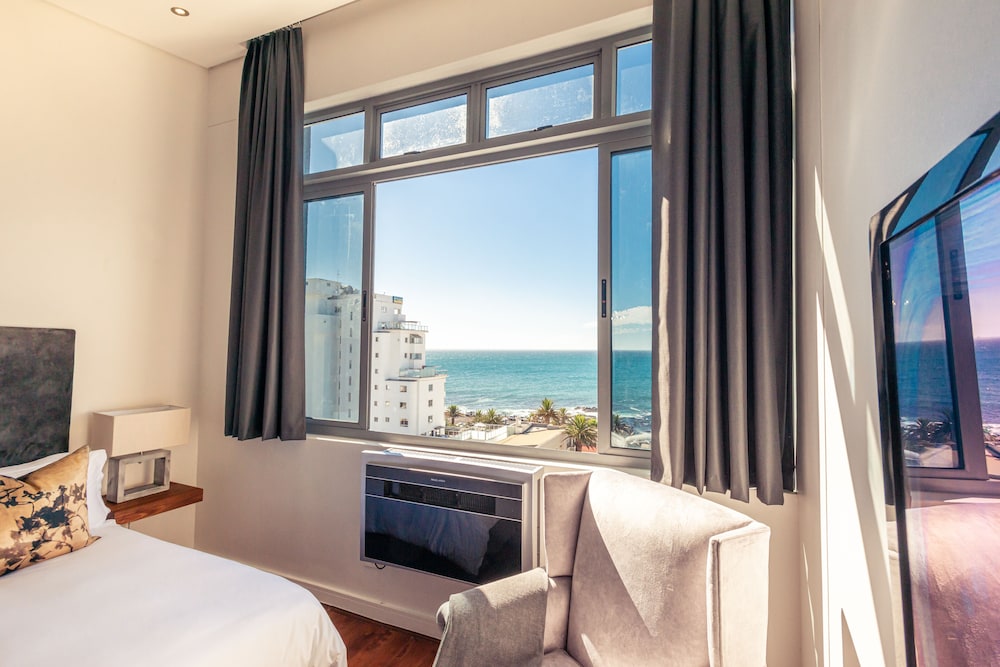
Seventh are the Sea Point apartment-hotels and boutique properties with roof decks along Main Road, Regent Road and the higher streets, R1,600 to R3,500. Because the suburb steps up from the sea, even a fourth-floor roof gives you an unbroken Atlantic horizon and sunsets that drop straight into the water from roughly November to February. The wind here is a west-side sea breeze rather than the full south-easter, so these roofs stay open more often than City Bowl ones. Bar service is usually minimal, so plan on carrying your own bottle up unless the property advertises a manned bar.
Eighth, Green Point and Mouille Point, where the roofs look across the stadium and the lighthouse to Robben Island. Rates run R1,800 to R4,000, and the walk to Waterfront restaurants is 12 to 20 minutes. The honest catch is that this is a lower, flatter area, so views from three or four floors up are partially blocked by neighbouring blocks; ask for a roof photo rather than a room photo. Choose Green Point over Sea Point for proximity to dinner, and Sea Point over Green Point for the promenade and the better sunset line.
9 and 10: Camps Bay decks and Winelands stoeps
Ninth is Camps Bay, where the sundowner deck rather than the rooftop is the format: hotels and guesthouses on the slope above Victoria Road with west-facing terraces looking over the Twelve Apostles and straight into the sunset, at R3,500 to R14,000 a night. Nothing in the city beats the light here at 19:30 in January. Two catches. The south-easter howls across this slope in midsummer and can make a deck unusable by 16:00. And the strip below fills with traffic and valet queues from December, so factor 25 minutes to get back into town.
Tenth, and the winter answer, are the Winelands estate stoeps in Stellenbosch, Franschhoek and Paarl: covered verandas facing vineyards, with a fire, at R2,200 to R6,000. From May to August, when every Cape Town rooftop is shut, this is where outdoor drinking still happens, because the mountains block the worst of the wind and the estates light braais at 17:00. Summer here is hot and still rather than windy, so an evening on a stoep at 21:00 in February is one of the best things in the Cape. Skip a rooftop hunt in winter and drive out instead.
Booking, access and the one I would pick
Three practical rules. Non-guest access varies enormously: the famous roofs require a booking and often a minimum spend, hotel-guest-only roofs are the reason to pick a mid-range City Bowl property, and public rooftop bars are free to enter but rammed from 18:00 on Thursday through Saturday. Second, always check the wind forecast at midday and have a sheltered fallback. Third, expect R110 to R200 for a glass of good Cape wine and R180 to R280 for a cocktail on a hotel roof, considerably less at the Long Street end.
If I were booking a room for the roof, I would take a Bree or Loop Street aparthotel at R2,400 with a small guest-only pool deck and walk to Kloof Street when I wanted a proper bar. If I were booking one special evening, the grain-silo rooftop at the Waterfront, reserved three weeks ahead for 45 minutes before sunset. And in June and July I would stop trying: book a Winelands estate with a fire on the stoep and accept that Cape Town's rooftop season runs October to April.
Before you book
The questions people ask about Cape Town, answered with this month’s numbers.
Roughly October to April, with February and March the sweet spot for long evenings and slightly calmer conditions. Sunset falls just before 20:00 in late December and around 17:45 in June, when most rooftops close entirely. The south-easter is at its most disruptive from November through February afternoons.
Some yes, some no. The best-known Waterfront and Silo District roofs take non-guest reservations with a minimum spend, while many City Bowl aparthotel roof decks are strictly for residents. Phone rather than email, book two to three weeks ahead for a sunset table, and confirm any dress code at the same time.
North and west-facing terraces, glassed-in roof bars, and courtyard-style decks cut into the roofline. Gardens terraces sheltered by the mountain slope and the sheltered water-level bars around the V&A marina stay open when exposed City Bowl roofs shut. Always have one of those as a fallback booking on a summer afternoon.
Around R110 to R200 for a glass of good Cape white or red on a hotel roof, R180 to R280 for a cocktail, and noticeably more at the landmark Waterfront rooftops. Long Street rooftop bars run about a third cheaper. Most add a service charge on larger tables, so check the bill.