A long weekend on the False Bay coast without a car
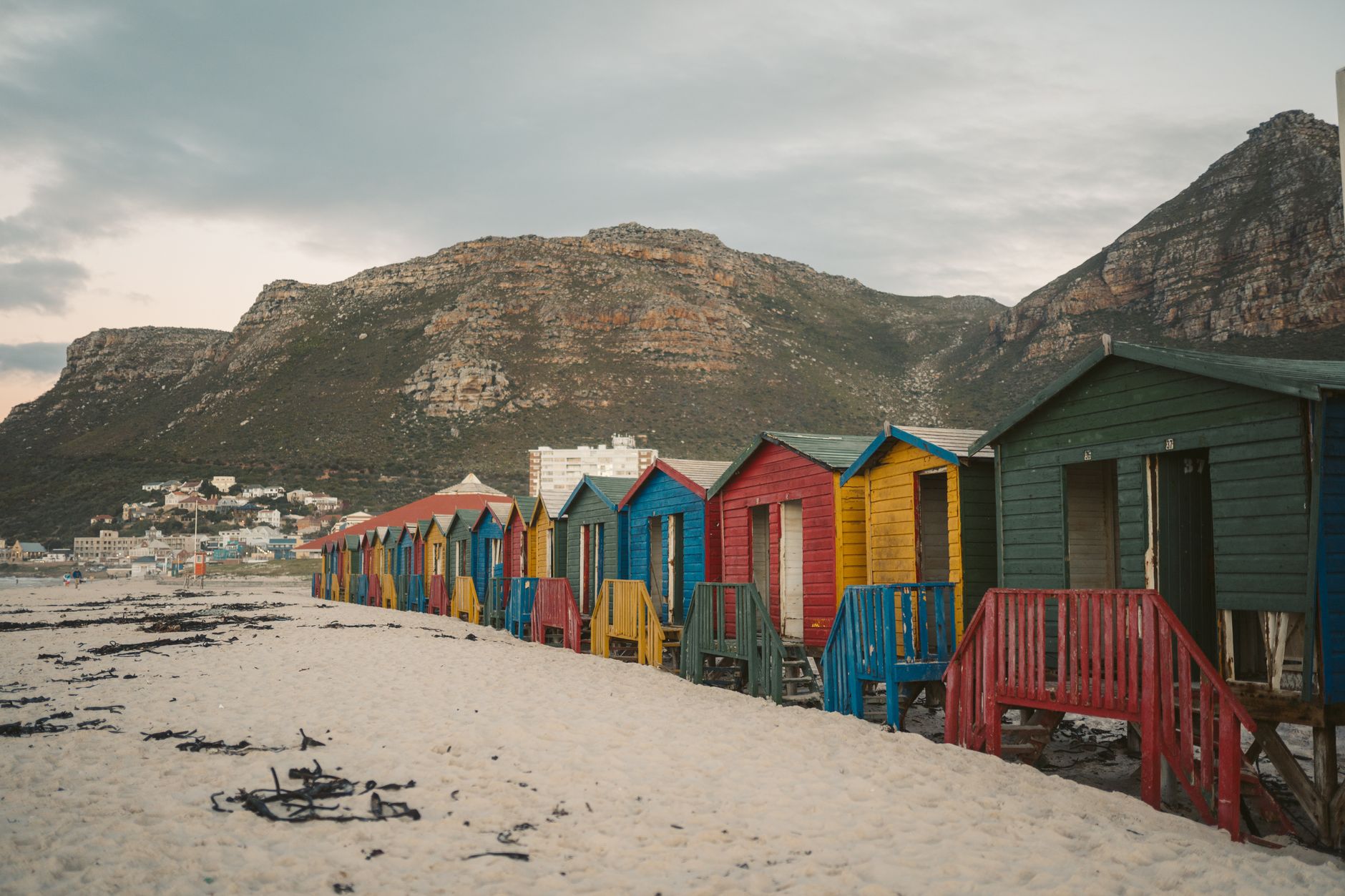 Colourful Victorian bathing boxes on Muizenberg beach with the False Bay mountains behind
Three days and 11 stops between Muizenberg and Simon's Town on the Southern Line, with warm-water swims, a working fish harbour and not one kilometre of driving.
Why the False Bay coast is the one part of Cape Town that works carless
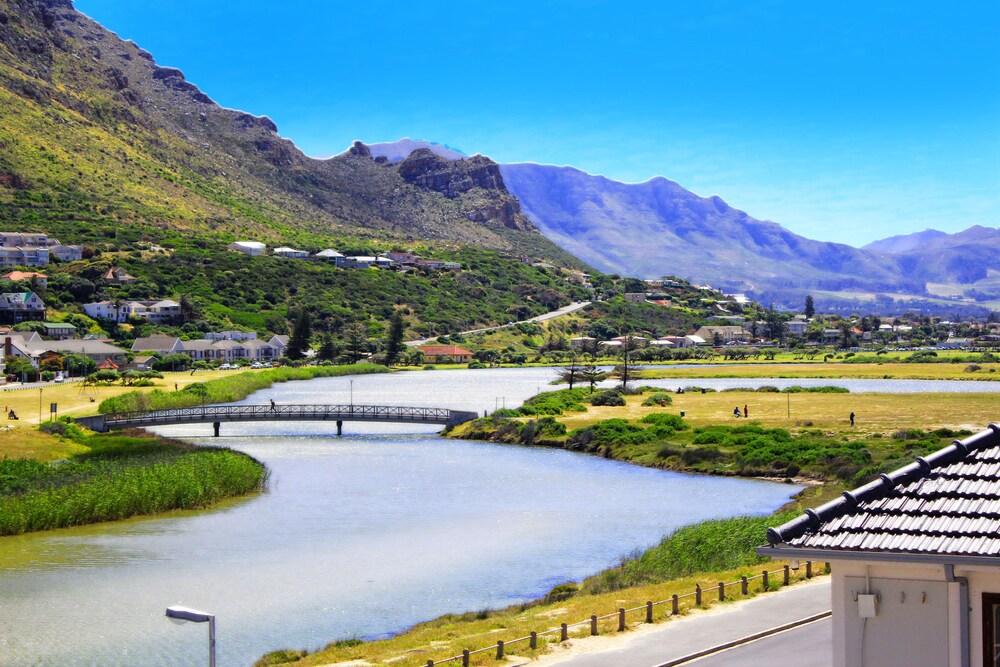
Almost everywhere else in Cape Town punishes you for not having wheels. The False Bay coast does the opposite: the railway line was laid along the shoreline in the 1880s and it still runs there, between the mountain and the surf, from Muizenberg through St James, Kalk Bay, Fish Hoek and Glencairn to Simon's Town. Stations sit 200 metres from the sand. The whole stretch is about 20 kilometres, and where the train does not take you, a tarred catwalk, a tidal pool or a harbour wall does. You can walk the entire coast in a weekend if you feel like it.
The second argument is the water. False Bay is fed by the Agulhas current side of the peninsula and sits around 17-21°C in late summer, against 12-15°C at Clifton and Camps Bay on the Atlantic side. That is the difference between a swim and a dare. August into November also puts southern right whales in the bay, often close enough to see from a station platform. Book three nights, move guesthouses once or twice, and treat the railway as your corridor rather than trying to base yourself in the City Bowl and commute out.
Getting down there on Friday, and the honest caveats
The Southern Line runs from Cape Town station in the CBD through the southern suburbs to Simon's Town. In good conditions it is roughly 40 minutes to Muizenberg and an hour to the end of the line, and single fares are in the low tens of rand rather than the hundreds. Metrorail services on this line have been rebuilt in stages after years of disruption, so timetables, ticket prices and which classes of carriage are running change; check the current schedule with PRASA or the station office on the day rather than trusting an old blog post, including this one.
Practical rules that locals actually follow: travel in daylight, prefer the middle of the day and the busier carriages, keep your phone in a pocket rather than in your hand at the window, and do not plan a late return from Simon's Town on the last service. If the train is not running when you want it, a Golden Arrow bus down Main Road or an e-hailed car covers Cape Town to Muizenberg for roughly R300-450 depending on time of day. Two of you splitting that once each way still beats three days of car hire and parking.
Day one: Muizenberg, hour by hour
Arrive by 10:00 and go straight to Surfer's Corner. Muizenberg is the gentlest beginner beach in the country: a long sandbar break, waist-deep whitewater, and a row of surf schools on Beach Road renting boards and wetsuits. A two-hour group lesson with kit runs about R550-750, and a board-and-suit rental alone about R250-350 for two hours. Take the 10:00 or 11:00 slot before the wind fills in. Afterwards, walk the beach north to the row of Victorian bathing boxes, repainted in primary colours, which are the most photographed 40 metres on the peninsula.
Lunch at one of the cafés on Palmer Road or York Road, then spend the afternoon on the Historical Mile: Casa Labia, an Italianate villa on Main Road with a small collection and a good tea room, and Rhodes Cottage, the modest seaside house where Cecil John Rhodes died in 1902. Both are cheap and take under an hour each; check opening days before you walk over. Sundowners are on the beach itself, facing east, so the light goes pink on the Hottentots Holland mountains across the bay rather than into your eyes. Sleep in Muizenberg: guesthouses off Beach Road and Atlantic Road, roughly R1,100-1,900 a night for a double, or a surf backpacker dorm at R400-550.
Day two: Kalk Bay, harbour to bookshop
Kalk Bay is one stop up the line, or a 40-minute walk along the catwalk past St James with its own painted boxes and the best tidal pool on the coast. Be at the harbour by 08:30. The trawlers come in through the morning and fish are sold off the quay, cleaned on the spot by men who have done it for decades, with seals and gulls working the scraps. Snoek, yellowtail and hottentot are the usual catch; prices are per fish, in cash, and negotiable. It is a working harbour, not a display, so stand out of the way and ask before photographing anyone.
Then do Main Road slowly: a bakery-café that has been feeding the village for years, a two-storey secondhand bookshop, antique dealers, a knife maker, and enough ceramics to fill your hand luggage. Lunch is at the pub built between the railway line and the rocks, where the trains pass a few metres from your table and there is a tidal pool below. In the afternoon walk up to Boyes Drive for the aerial view of the whole bay, or swim at Dalebrook. Sleep in Kalk Bay: the small guesthouses on the slope above Main Road, R1,600-2,600 a night, most with a sea view and a steep staircase.
Day three: Simon's Town and the end of the line
Take the 09:00-ish train to Simon's Town, the last station, and turn left into a town that has been a naval base since 1814. Start with Boulders: walk the 20 minutes along Bellevue Road and Seaforth Road rather than paying for a taxi, and enter via the SANParks boardwalk, where African penguins nest a metre from the handrail. Entry is a per-person conservation fee, in the low hundreds of rand for international visitors and less for South African ID holders; confirm the current rate with SANParks. Seaforth beach next door is a sheltered swim with penguins occasionally paddling past.
Back in town, Jubilee Square has the statue of Just Nuisance, the Great Dane enlisted in the Royal Navy in 1939, and the naval museum on the main street is a genuinely odd hour, all submarine periscopes and Second World War convoy charts. Eat fish and chips on the quay or something more considered at one of the restaurants along St George's Street. Sleep in Simon's Town: guesthouses on and above St George's Street, R1,300-2,200, quieter than Kalk Bay and closer to the penguins. If you are heading to the airport the next morning, e-hail from here costs roughly R450-600 and takes 45 minutes.
The walking links, the swims and the whales
Three walks stitch the weekend together. The Muizenberg-to-Kalk Bay catwalk is flat, paved and about 3.5 kilometres, with the St James and Dalebrook tidal pools on the way; do it at low tide when the pools are calm. Jager Walk in Fish Hoek is a 1.2-kilometre boardwalk on the rocks with whale-viewing benches. Boyes Drive above Kalk Bay is the high-level option, 5 kilometres of contour road with mountain-bike and hiking spurs running up into the Kalk Bay caves. None of them needs a guide, but all of them are better before 11:00.
Swimming: use the tidal pools when the swell is up and the open beaches when it is not. False Bay has a white shark history and the Shark Spotters programme runs flagged lookouts at Muizenberg, Fish Hoek and St James, with a siren and colour-coded flags; read the board at the beach before you go in. Whale season runs roughly June to November, peaking August to October, and southern rights come deep into the bay to calve. You do not need a boat trip: the cliff sections of Boyes Drive and Jager Walk deliver sightings for free on a calm morning.
What to skip, and what the weekend costs
Skip the drive-past Cape Point add-on. Getting there without a car means either an expensive private transfer or a bus tour that eats the whole day, and the peninsula's south end deserves its own trip with wheels. Skip Fish Hoek as a base too: it is the least characterful of the four villages and its alcohol-free-beach history means quieter evenings than you probably want. And skip trying to squeeze in the Constantia wine farms from here; they are 25 minutes away by car and awkward by anything else.
Rough per-person costs, excluding beds: train fares under R100 for the whole weekend, a surf lesson R550-750, Boulders entry a couple of hundred rand, three sit-down lunches at R150-280 each, three dinners at R220-400. Call it R2,200-3,400 for three days of eating and doing. Beds across the three nights land somewhere between R3,300 and R7,800 for a double, depending on whether you take the backpacker or the sea-view guesthouse. That is a full Cape Town weekend for less than three days of car hire, fuel and Camps Bay dinners would cost you.
Before you book
The questions people ask about Muizenberg, answered with this month’s numbers.
Plan around it, but keep a backup. Services on the Simon's Town line have been progressively restored, though frequencies and running hours shift. Check the schedule with PRASA or at Cape Town station the day before, travel in daylight, and budget roughly R300-450 for an e-hailed car if a service is cancelled.
Southern right whales are in the bay roughly from June to November, with August to October the reliable window for close inshore sightings of mothers and calves. Boyes Drive above Kalk Bay, Jager Walk in Fish Hoek and the St James catwalk all work without a boat. Calm, windless mornings give the best viewing.
Yes, though it is bracing. False Bay water sits around 14-16°C in winter against 17-21°C in late summer, several degrees warmer than the Atlantic side year-round. The St James and Dalebrook tidal pools warm faster on a sunny day and are protected from swell, which makes them the sensible winter choice.
Kalk Bay. It has the harbour, the best eating, the bookshops and the tidal pools within 500 metres of the station, and both Muizenberg and Simon's Town are under 20 minutes away by train. Expect R1,600-2,600 a night for a double in one of the guesthouses above Main Road.