Do you need a car in Cape Town?
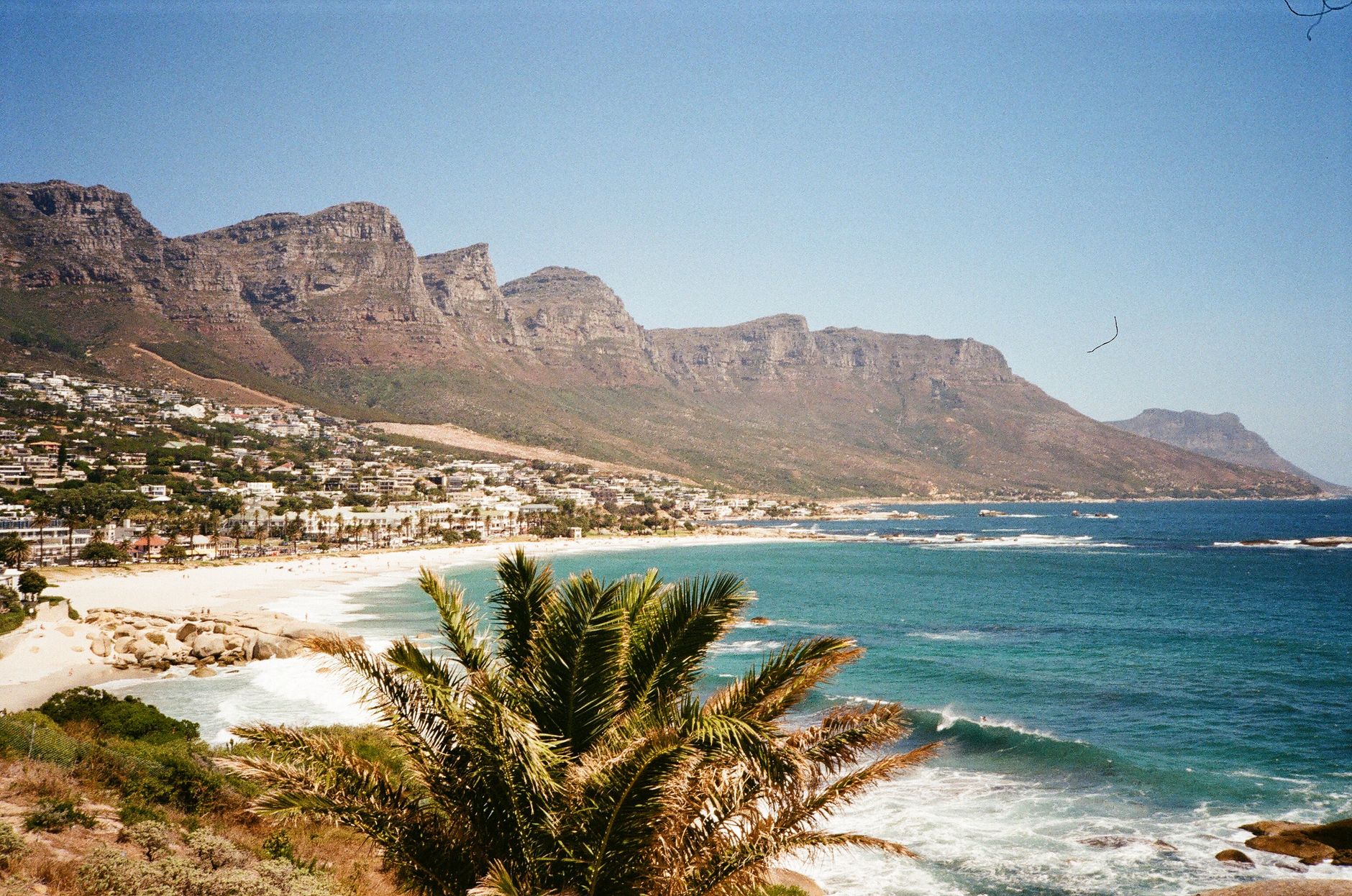 A hire car parked on a coastal road above the Atlantic near Camps Bay
For a four-day trip spent between the Waterfront, the City Bowl and Camps Bay the answer is no, but the moment Cape Point or Stellenbosch enters the plan a car at roughly R500-R900 a day starts paying for itself.
The honest answer, by how long you are staying
Three or four nights on the Atlantic Seaboard needs no car at all. The V&A Waterfront, the City Bowl, Green Point, Sea Point and Camps Bay sit inside an arc of about 9 km, and e-hailing covers all of it for roughly R60 to R180 a hop depending on traffic and time of day. Add the Table Mountain lower cableway station, Kirstenbosch and Bo-Kaap and you are still inside a compact triangle. Book a shuttle or an Uber from the airport, walk the promenade, and you will spend less than the cheapest rental once fuel, secure parking and the collision excess waiver are in the sum.
Seven nights changes the arithmetic completely. Cape Point is about 70 km from the CBD, Hermanus around 120 km, Stellenbosch 50 km and the Silvermine and Kogelberg trailheads are simply not served by public transport. Once you want a 06:30 start for a hike, a detour to a farm stall on the R44, or the freedom to leave Boulders when the crowds arrive rather than when a tour bus says so, a car stops being a luxury. My rule: under five nights, no car. Five to seven nights, hire one for two or three of them. Ten nights or more, hire for most of the trip.
Where a car genuinely earns its keep
The Cape Peninsula loop is the strongest case. Chapman's Peak Drive, Scarborough, the Cape of Good Hope section and Simon's Town make a 130 km day that no bus route stitches together, and the shared tours that do it move at the pace of the slowest passenger. Second-strongest is the Winelands: Stellenbosch is 45 to 50 minutes on the N1 and R310, Franschhoek about 70 minutes via the R45, and half the good estates sit on gravel side roads where e-hailing coverage thins out. Third is Hermanus and the whale coast between roughly June and November, a 90-minute drive over Sir Lowry's Pass.
A car also matters if you are staying outside the tourist spine. Constantia, Noordhoek, Hout Bay, Kommetjie and Simon's Town are all lovely bases and all awkward without wheels; a single evening trip from Constantia into town and back can cost R500 or more in e-hailing fares, and drivers get scarce for the return leg after 22:00. Families with a pram, a cool box and surfboards will also want the boot. If two of those three conditions apply to you, book the car before you book the restaurant tables.
Where a car is a liability
In late December and January, Camps Bay and Clifton parking is genuinely miserable. Victoria Road backs up, the Clifton steps have limited bays, and you can burn forty minutes circling before a marshal waves you into a spot 600 m uphill. Kloof Street and Bree Street on a Friday night are the same story with an added complication: you should not be driving after a wine tasting or a couple of Constantia reds, and the legal limit here is 0.05 g per 100 ml with roadblocks common on weekend evenings. Leaving a car outside a restaurant and taking an Uber home means retrieving it the next morning.
There is also the security tax on driving. Smash-and-grabs happen at intersections and at trailhead car parks, so nothing may be visible in the cabin, not a jacket, not a charging cable. That means repacking the boot every stop. Add hotel or guesthouse parking at roughly R80 to R200 a night in the City Bowl and at the Waterfront, plus street parking marshals at around R10 to R20 an hour in central zones, and an unused car quietly costs R1,000 a day. If your itinerary is museums, restaurants and a beach walk, skip it.
The e-hailing maths that decides it
Run the numbers before you commit. Typical fares at the time of writing: airport to the City Bowl or Waterfront around R200 to R350, City Bowl to Camps Bay R100 to R180, Sea Point to Kirstenbosch R150 to R220, City Bowl to Constantia R230 to R320, and Waterfront to Muizenberg R350 to R450. Surge on New Year's Eve and during summer evening rush can double those. Four short trips a day inside the Atlantic Seaboard lands around R500, which undercuts a hire car once you add fuel and parking. Six trips, or anything beyond the city edge, tips the other way.
Practical rules for using it well: order from inside a lobby or restaurant rather than standing on the kerb with a phone out, check the plate before you get in, and use the designated e-hailing pickup zone at Cape Town International rather than accepting an approach in the arrivals hall. Bolt and Uber both operate here and running both apps is worth it, because prices diverge sharply at peak. Metered taxis exist and are legal but typically cost more per kilometre; agree the fare in advance if you use one from a rank at the Waterfront.
What renting actually costs in 2026
Budget roughly R450 to R650 a day for a small manual hatchback in winter and R650 to R1,000 in the December to January peak, before extras. Automatics carry a premium of R150 to R250 a day and sell out first, so book them months ahead for a summer trip. The advertised rate rarely includes the excess waiver, which typically runs another R150 to R350 a day and is the difference between a scratched bumper costing nothing and costing R10,000 or more. Fuel is set nationally and adjusted monthly, so check the pump price rather than trusting an old figure.
Then the small print. A second driver fee, a young-driver surcharge under 23 to 25, a one-way drop fee if you finish in George on a Garden Route run, and a cross-border letter if you plan Namibia. Tolls are limited around Cape Town, but budget about R65 for a single passage of Chapman's Peak Drive and a similar order for the Huguenot Tunnel on the N1 toward Worcester. Airport collection carries a premium over a city branch pickup; if your first two days are city-only, collect the car downtown on day three and save two days of parking too.
The split-hire strategy most visitors should use
The best-value pattern for a week is a hybrid. Land, take a transfer or e-hail into town, and spend days one and two carless, walking Sea Point promenade, doing the cableway, eating on Bree Street and taking the ferry to Robben Island. On day three collect a car from a city branch, drive the peninsula, sleep a night in Simon's Town or Kalk Bay, and keep the car for a Winelands day and a Hermanus or Cape Agulhas run. Return it the afternoon before you fly, then use e-hailing for your last night out and the airport run.
That structure typically buys three or four rental days instead of seven, cuts parking nights in half, and removes the drink-driving problem from your restaurant evenings. It also lets you match the car to the job: a small hatch is fine for tarred routes, but if you are heading up the West Coast to Langebaan or onto gravel farm roads in the Swartland, take something with a bit more ground clearance. Book the collection slot for mid-morning rather than 08:00; branch queues on the Foreshore at opening time regularly run 30 to 45 minutes in season.
Driving here: the things nobody warns you about
You drive on the left, and most visitors adapt within an hour except at petrol stations, where there is no self-service anywhere in the country. An attendant fills the tank, checks oil, water and tyres if you ask, and expects R5 to R10. Traffic lights are called robots. When load-shedding cuts power, an intersection with dark lights is legally a four-way stop and locals treat it as one, arriving vehicles going in turn; hesitating in the middle is more dangerous than committing. Minibus taxis stop without warning in the left lane and pull out with a hoot rather than an indicator.
Route knowledge matters more than a map. The M3 through Newlands and the M5 are the fast southbound arteries; the N2 past the airport is the main airport road and is best driven in daylight with doors locked and nothing on the seats. Mountain passes fog in fast, and Chapman's Peak closes in high wind or after rockfall, so check its status before committing to that side of the peninsula. Avoid arriving in the City Bowl between 07:30 and 09:00 or leaving it between 16:30 and 18:00, when Kloof Nek and the Eastern Boulevard both crawl.
Before you book
The questions people ask about City Bowl, answered with this month’s numbers.
If your licence is printed in English and carries a photograph and signature, car hire firms and traffic officers here generally accept it on its own. If it is in another language, carry an international permit alongside it. Rules can change, so confirm requirements with your rental company before you fly.
On the main Atlantic Seaboard and Southern Suburbs routes, yes, with the usual habits: doors locked, windows up at intersections, bags in the boot, and fuel topped up before dark. Avoid unfamiliar detours suggested by navigation apps and stick to the M3, N1 and Victoria Road corridors rather than shortcuts.
No. Both are fully tarred and a small hatchback handles them easily. Chapman's Peak is a toll road, roughly R65 for a car one way, and closes in high wind or after rockfall. A higher-clearance car is only worth it for gravel farm roads in the Swartland or Cederberg.
Two to four months for an automatic, six weeks for a manual. December and January demand strips the fleet, prices roughly double against a June rate, and late bookers get upsold into large vehicles that are painful to park in Camps Bay. Check the rate again a month out for drops.