Clifton area guide: staying above the four beaches
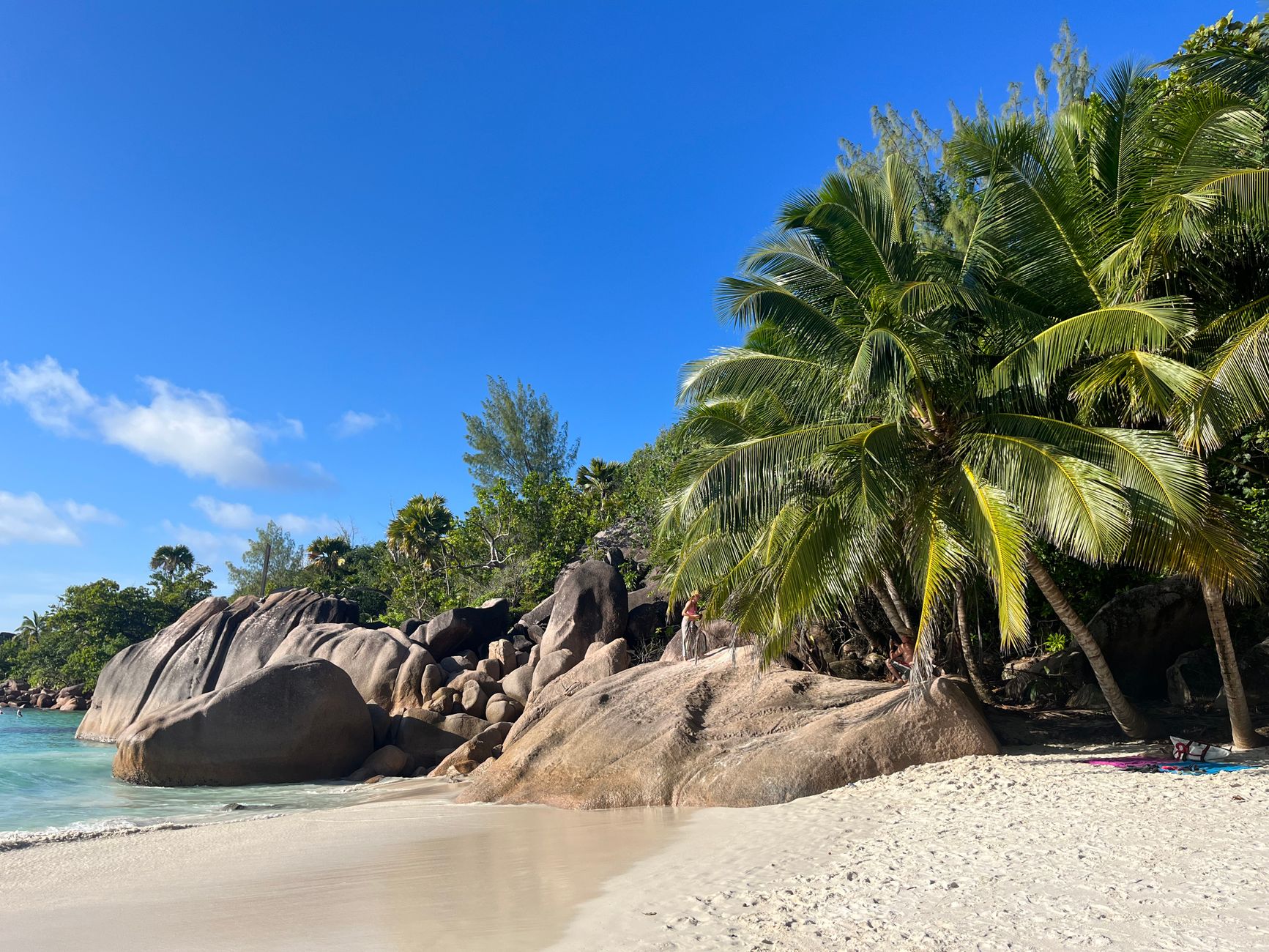 Granite boulders separating the white sand coves of Clifton beaches below cliff-side apartments
Clifton has four beaches, several hundred staircase steps, essentially no shops, and the highest residential property values in Africa on one 300-metre road.
What Clifton is, and is not
Clifton is a cliff face between Sea Point and Camps Bay, dropping to four small white-sand coves separated by granite boulders and numbered First to Fourth from south to north. Above them, houses and apartment blocks stack up the slope on Victoria Road, Kloof Road, The Ridge and Nettleton Road, the last of which regularly appears in lists of the most expensive streets on the continent. The whole suburb is roughly 1 km long. It is spectacular, it is compact, and it is a residential enclave rather than anything resembling a resort.
What it lacks is everything else. There is no supermarket, no pharmacy, no petrol station, no restaurant strip and no public square. There are a couple of kiosks near the beach access points in summer selling ice creams and cold drinks, and that is the extent of retail. If you book here you are booking a view, a beach and a staircase. Every meal beyond breakfast, every bottle of wine and every plaster involves either a drive or a determined walk to Camps Bay, 1.5 to 2 km south, or Sea Point, about 3 km north.
The four beaches, ranked for a guest
Fourth Beach is the biggest, the busiest and the easiest to reach, with the widest access path from Victoria Road, lifeguards in season, and the suburb's only meaningful parking. It has historically carried Blue Flag status, which is reassessed each season, so check the current list rather than assuming. Third Beach is smaller, quieter and reached by a long staircase. Second is narrow and has the strongest young-crowd energy in January. First, at the southern end, takes the most steps and rewards you with the least company; it is where you go on a Saturday in December when the others are full.
The common thread is the boulders. They are the reason Clifton is the reliable choice on a howling summer afternoon: the southeaster is broken and deflected by the granite and by the shoulder of Lion's Head, so while Camps Bay sandblasts its towels, Clifton sits in near-still air. The water is unforgiving Atlantic at roughly 12 to 16 degrees, cold enough that most people wade to the knees and retreat. Sunset here is the main event; the western aspect is unbroken and the coves stay warm with reflected light until nearly eight in midsummer.
Who should book Clifton
Couples and small families with a car, staying three to seven nights, who want the best view and the calmest beach air on the Atlantic seaboard and are content to drive to dinner. Also groups renting a villa: the top of the market here is spectacular, with infinity pools cantilevered over the sea, and split six or eight ways a R20,000 house comes to R2,500 or so a head, which is comparable to a good Camps Bay hotel room without the walk-in traffic. Also anybody who wants privacy: this suburb has no passing crowds after dark.
It also suits a specific kind of repeat visitor who has already worked out that Camps Bay's advantage, its restaurant strip, is only a seven-minute drive away, and would rather sleep somewhere silent. If your daily plan is a morning swim, an afternoon on the sand, and a sunset drink on your own terrace before driving out to eat, Clifton delivers that better than anywhere else in Cape Town. The suburb goes quiet at nine in the evening and stays that way.
Who should not
Anyone without a car, categorically. Buses run the Victoria Road corridor and e-hailing reaches you, but there is nothing to walk to, and the cost of eating out three times a day from here adds up fast. Anyone with mobility limitations should also think hard: the beaches are reached by staircases of 50 to 150-plus steps depending on which cove, many apartments involve external stairs from street parking, and there are no lifts down the cliff. Coming back up First Beach's stairs carrying a cooler box in 30-degree heat is a genuine effort.
Budget travellers will find nothing here. There is no hostel, no cheap guesthouse and very little under R3,000 a night at any time of year. Families with toddlers may also prefer elsewhere: the coves are small, the steps are relentless with a pram, and there is no lawn or playground. And if your trip is city-focused, Clifton is the wrong base entirely, with the CBD 20 to 30 minutes away and the whole cultural map of Cape Town on the other side of the mountain.
What a night costs
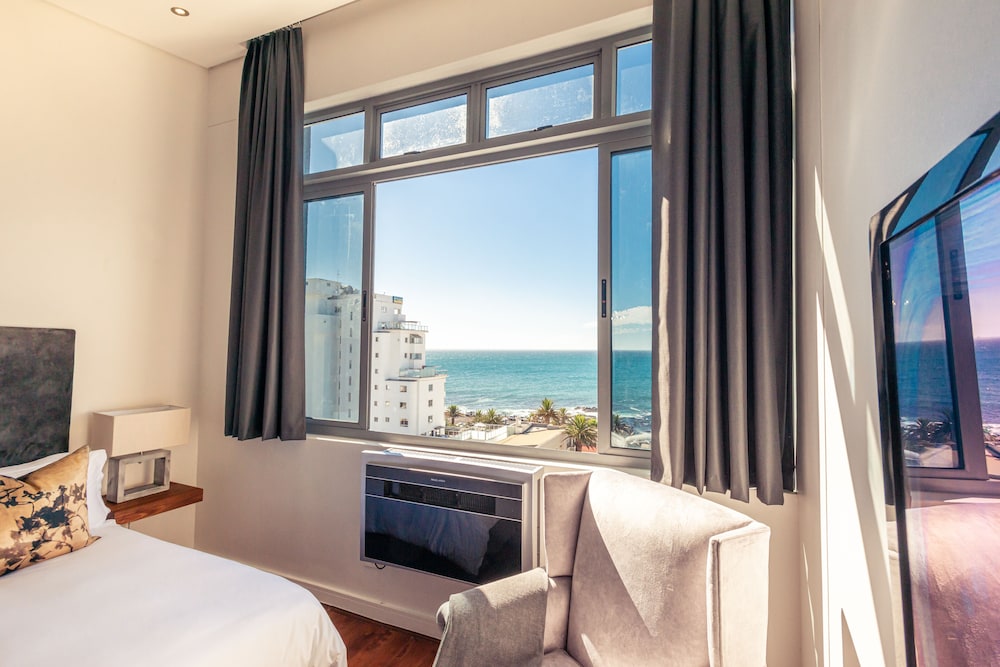
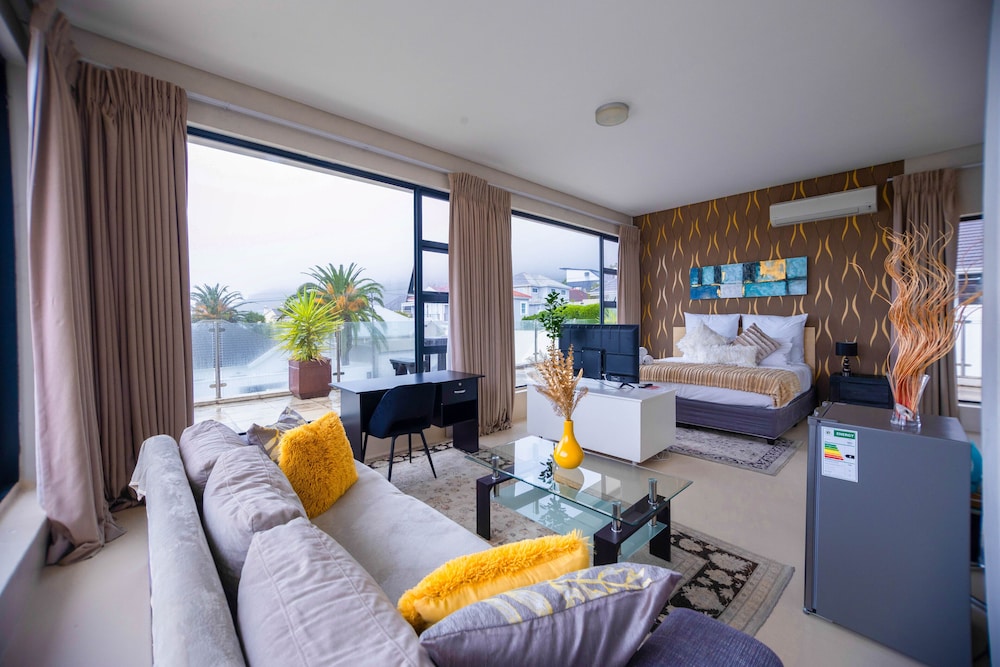
This is the most expensive per-night suburb on the Atlantic seaboard alongside Bantry Bay. Small self-catering apartments with a sea view start around R2,800 to R4,500 in shoulder season and R5,000 to R9,000 over the mid-December to mid-January peak. Larger apartments and boutique guesthouse suites run R6,000 to R15,000. Villas on Nettleton Road, Kloof Road and The Ridge sit between R15,000 and R60,000-plus a night in season, with minimum stays of seven to fourteen nights over the festive period and bookings made a year out.
Winter, June to August, is when Clifton becomes reachable for ordinary budgets: expect 40 to 55 percent off, with sea-view apartments occasionally under R2,000. The catch is that a winter Clifton is a rain-lashed cliff with nowhere to shelter, and the beaches are for storm-watching, not swimming. Set against neighbours: Camps Bay is roughly 20 to 30 percent cheaper for equivalent quality, Sea Point 50 percent cheaper, Hout Bay 60 percent cheaper. You are paying for exclusivity and the absence of other people, which is a real product but a narrow one.
Parking, steps and other logistics
Parking is Clifton's defining daily problem. Victoria Road has limited bays which fill by about ten in the morning on any warm weekend from November to March, and informal car guards work the strip; a tip of R10 to R20 on departure is the local norm. Some properties have garaging, many do not, and a place without allocated parking in December is a daily argument with yourself. Ask the question explicitly before booking and get the answer in writing. Maiden's Cove, just south towards Camps Bay, has a larger car park and picnic area and is the overflow.
Count the steps too. Between street level and many front doors sit two or three flights, and between front door and sand another long staircase. Ask how many, and ask whether there is a lift. Delivery drivers, luggage and grocery runs all pay that tax. On the plus side, the coastal footpath from Fourth Beach north towards Bantry Bay and south to Maiden's Cove and Glen Beach makes for excellent walking, and the Lion's Head trail head at Kloof Nek is a ten-minute drive for a sunrise climb.
Clifton or Camps Bay, decided
If you have a car, a shoulder-season booking and a taste for silence, book Clifton and drive to Camps Bay for dinner, seven minutes each way. If you have no car, small children, or a budget with edges, book Camps Bay, walk to everything, and take the two-minute drive or twenty-minute coast walk to Clifton on windy afternoons. That is the whole decision, and the wind clause is the part people forget: in a southeaster, Clifton is the beach and Camps Bay is the wind tunnel.
One combined approach works well on a longer trip. Take four nights in Camps Bay for the restaurants and the ease, then three in a Clifton apartment for the view and the quiet, and you will have seen both faces of the Atlantic seaboard for perhaps R1,000 a night more than staying put. If you can only pick one and want the best value across the whole coast, neither is the answer: Sea Point is, at roughly half the money, with a longer promenade and a proper suburb attached.
Before you book
The questions people ask about Clifton, answered with this month’s numbers.
Essentially no. Beyond seasonal kiosks near the beach access points, there is no dining strip. Camps Bay, 1.5 to 2 km south, is a seven-minute drive or a 25-minute walk, and Sea Point is about 3 km north. Plan on driving to dinner every evening or self-catering.
Fourth for facilities, lifeguards in season and the easiest access from Victoria Road. First if you want space on a crowded December Saturday and do not mind the longest staircase. Third for a quiet middle ground. All four are sheltered from the southeaster by the granite boulders.
Only if quiet and the view are the point of your trip and you have a car. You pay roughly 20 to 30 percent more than Camps Bay for less convenience, no restaurants and more stairs, in exchange for calmer air, emptier sand and no passing crowds after dark.
You can, briefly. The Atlantic here runs at roughly 12 to 16 degrees year-round and most people manage a short dip rather than a swim. Swim between the flags at Fourth Beach when lifeguards are on duty, and note that the shore break can be strong.