The Clarence Drive coast road: a two-day driving route to Hermanus
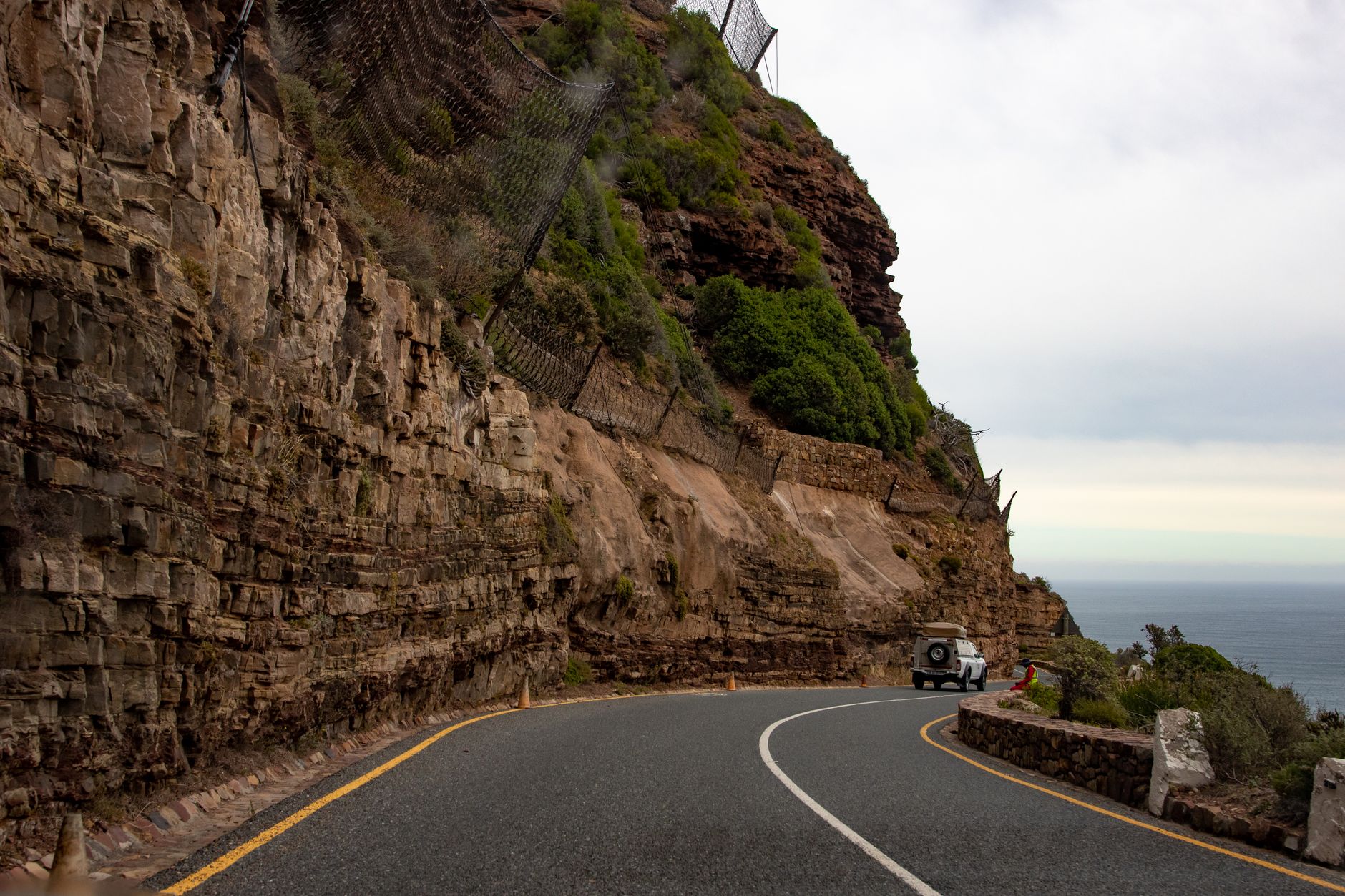 The R44 Clarence Drive coast road curving along cliffs above Kogel Bay near Rooi-Els
A 260-kilometre loop east of Cape Town over one of the world's great coast roads, with two penguin colonies, a 12-kilometre cliff path and one night on the Hermanus seafront.
The route in one paragraph, and why not to take the N2
Cape Town to Hermanus on the N2 over Sir Lowry's Pass is 120 kilometres and about 90 minutes of dual carriageway, trucks and Grabouw traffic. Cape Town to Hermanus on the R44 Clarence Drive is about 130 kilometres and takes three hours if you have any sense, because 30 of those kilometres are blasted into cliffs above Kogel Bay with the Kogelberg mountains dropping straight into the sea beside you. Go out along the coast, come home over the pass on day two, and you get both the drive and the fast return. Total loop with detours: roughly 260 kilometres.
Timing: leave Cape Town by 08:00 to clear the N2 before it thickens, and you are on the R44 at Gordon's Bay by 09:00. Fuel up in Somerset West or Gordon's Bay, because filling stations between there and Kleinmond are limited and the road is not somewhere to be nursing a warning light. At roughly R23-25 a litre, the whole loop costs about R400-500 in fuel for a small car. There are no tolls on this route, unlike the Chapman's Peak run on the other side of the peninsula.
Day one, 09:00-11:00: Gordon's Bay to Rooi-Els
Clarence Drive proper starts past Gordon's Bay harbour and immediately begins climbing along the cliff. There are half a dozen formal pull-offs; use them rather than stopping on the blind curves, which locals do at speed. The big one is above Kogel Bay, where the road hangs a couple of hundred metres above a crescent of white sand and the mountains stack away east towards Cape Hangklip. On a clear morning you can see the whole of False Bay and the Cape Peninsula lying flat on the far side, 30 kilometres away, which is the geography lesson the guidebooks fail to deliver.
Rooi-Els, about 25 minutes on, is a village of maybe 200 houses with no shops, a rocky shore and one famous asset: the gravel track along the coast west of the village is the most reliable place in the country to see the Cape rockjumper, which brings serious birders here with telescopes. It is also baboon territory, and the Rooi-Els and Pringle Bay troops are habituated and confident. Keep car windows up and doors locked when parked, never carry visible food, and do not attempt to shoo one away. Coffee and a pastry are available at Pringle Bay, ten minutes further.
Day one, 11:30-14:00: Betty's Bay, penguins and a mountain garden
Stony Point in Betty's Bay is the better of the two mainland African penguin colonies near Cape Town, and almost nobody knows it. Boardwalks run over an old whaling station's foundations past several thousand breeding pairs, plus four cormorant species and a rock hyrax population that treats the handrails as furniture. Entry is a modest per-person fee in the tens of rand, run by the local municipality, and there is rarely a queue, which is the whole point when Boulders on the peninsula is shoulder to shoulder. Give it 45 minutes and go early enough to beat the afternoon wind.
Ten minutes inland, the Harold Porter National Botanical Garden sits in a gorge between mountain and sea, protecting 200 hectares of coastal and montane fynbos. The Disa Kloof walk to the waterfall takes 30-40 minutes return on an easy path; the Leopard Kloof trail needs a permit and a key from the office and takes closer to two hours. Entry is in the low hundreds of rand and the tea room does a decent lunch. Erica and protea flowering runs strongly through late winter and spring, which makes August to October the standout months here.
Day one, 15:00 onwards: Kleinmond, Bot River lagoon and into Hermanus
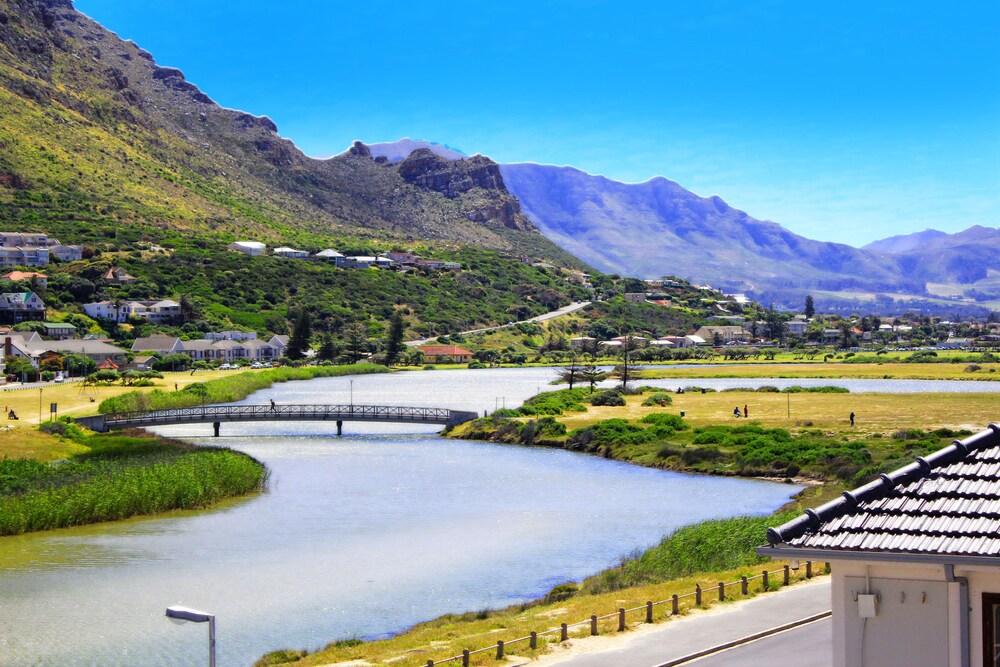
From Betty's Bay the R44 runs through Kleinmond, a low-key holiday town with a working harbour, a wide beach and the Palmiet river mouth, then swings around the Bot River lagoon on a causeway with mountains on three sides. This last stretch to Hermanus takes about 35 minutes. Arrive by 16:00, park near the Old Harbour, and walk straight onto the cliff path before the light goes. The path runs roughly 12 kilometres from the New Harbour to Grotto Beach, entirely free, entirely public, and clinging to the rocks the whole way.
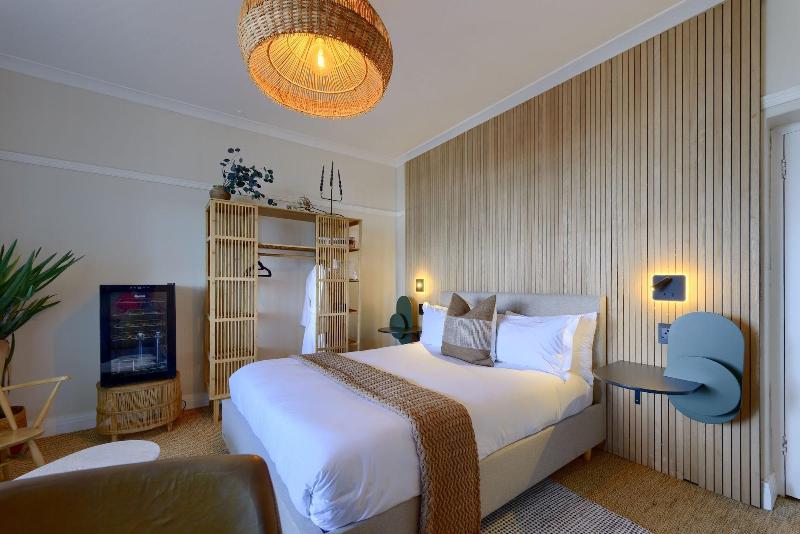
Between August and November, southern right whales come into Walker Bay to calve and can be 30 metres off the cliff path, close enough to hear breathing. Hermanus employs a whale crier who blows a kelp horn in a coded pattern to indicate where the animals are. You do not need a boat trip; if you want one, they leave from the New Harbour and run in the region of R1,300-1,800 per person. Sleep in Hermanus: the seafront guesthouses along Marine Drive and Westcliff run about R1,800-3,600 a night, quieter Voëlklip self-catering about R1,200-2,000, and the grande dame overlooking the Old Harbour is the splurge.
Day two, morning: Stanford, or the Hemel-en-Aarde valley
Two options, and they are genuinely different days. Stanford is 25 minutes east on the R43: a village of Victorian cottages on the Klein River, with a Saturday morning market, a brewery, a cheesery and river cruises that go looking for the local fish eagles. It is slow, cheap and largely unbothered by tour buses, and you can be back on the road by noon. This is the choice if you have children in the car or if two days of wine tasting sounds like work rather than holiday.
The alternative turns inland from Hermanus up the Hemel-en-Aarde valley, 20 minutes of vineyards on decomposed shale, which is South Africa's best pinot noir and chardonnay country. Tastings run about R120-250 per person, several cellars have restaurants, and the valley divides into three wards climbing away from the sea. Nominate a driver properly: the R320 back over the mountains to Caledon is gravel in parts and not a road for anyone who has been swirling since eleven. Either way, be heading west by 14:00.
Day two, the way home: Houw Hoek, Elgin and Sir Lowry's Pass
Rejoin the N2 at Bot River and climb over Houw Hoek Pass into the Elgin valley, which grows a very large share of South Africa's export apples and pears. The valley has quietly become a weekend destination in its own right: cool-climate wineries, a railway-siding market hall, cider producers, and mountain-bike trails in the pine plantations. Blossom season is roughly September, and apple harvest runs late January into April, when farm stalls sell boxes for a fraction of supermarket prices. Budget an hour here and you will still be home for dinner.
The last act is Sir Lowry's Pass, 400 metres above the Cape Flats, with a signposted viewpoint near the summit. Pull in: the whole basin is laid out below, Table Mountain 50 kilometres away, the Hottentots Holland behind you, and on a clear evening the light on False Bay is the best photograph of the two days. Do not linger after dark and keep valuables out of sight at the pull-off, which has had opportunistic break-ins. If you would rather stretch the loop to three days, the Elgin valley guesthouses run R1,400-2,600 a night and make a good final stop.
Driving practicalities, and what to skip
Clarence Drive is a two-lane road with low barriers, frequent cyclists at weekends and a habit of closing briefly after rockfalls in heavy winter rain; check for closures before you commit if a storm has just passed. Cellphone signal drops out between Rooi-Els and Betty's Bay. The southeaster funnels hard through this gap in summer afternoons, so do the exposed viewpoints in the morning. Motorcyclists love this road and overtake optimistically; hold your line. Hire cars are almost all petrol manuals unless you pay more, and an automatic makes the pass climbs less tiring.
Skip Gansbaai shark cage diving as a bolt-on. It is another 40 minutes past Stanford, needs an early start, costs R2,800-3,500 per person, and if it fits into a two-day coastal loop at all it is by ruining both days. Skip Betty's Bay's beach for swimming, too, which is beautiful and dangerously cold with a strong shore break. And skip the temptation to do this route as a day trip: seven hours of driving to see whales for 20 minutes is exactly the trip people regret.
Before you book
The questions people ask about Hermanus, answered with this month’s numbers.
Yes, if you go slowly and use the marked pull-offs. It is tarred, well engineered and barriered, but it is twisty for 30 kilometres with a steep drop on the sea side. Drive it eastbound, as this route does, and you sit on the mountain side rather than the cliff edge.
September and October: southern right whales are peaking in Walker Bay, the fynbos at Harold Porter and Kogelberg is flowering, and the summer southeaster has not yet set in for the afternoons. February and March give warmer swimming and apple harvest but no whales and more wind.
Not properly. Intercity buses run Cape Town to Hermanus on the N2 in about two hours and miss Clarence Drive entirely. If you want the coast road without driving, hire a car and driver for the day, or join a small-group tour from Cape Town, which typically costs upward of R1,800 per person.
Fuel for the loop is about R400-500. Entries at Stony Point and Harold Porter come to under R300 per person. Add two lunches and a dinner at roughly R700-900 per person, and one Hermanus seafront room at R1,800-3,600. Two people can do the whole thing comfortably for around R5,500-8,000.