Cape Town's wildlife and wildflower calendar: whales, penguins and the August bloom
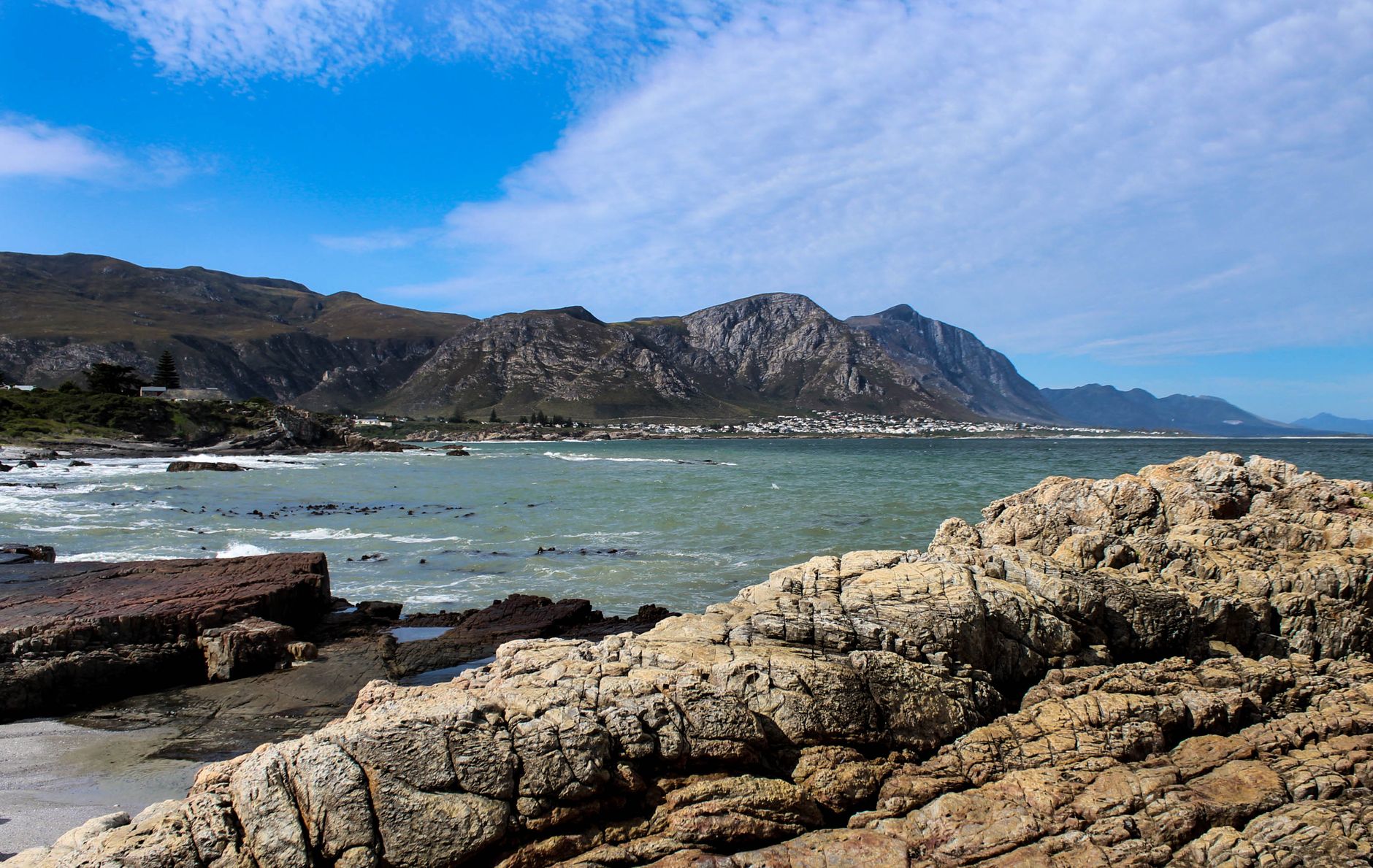 Southern right whale lifting its tail in Walker Bay below the Hermanus cliff path
Southern rights arrive in June and peak from August to October, the Postberg flower reserve opens for roughly two months a year, and penguins moult in November — a month-by-month guide to timing the wild bits.
June to December: southern right whales in Walker Bay
Southern right whales migrate up from the Southern Ocean to calve in the sheltered bays of the Overberg, arriving from June, building through July, and peaking from August to October before drifting away in November and early December. Hermanus, roughly 120 km and 1 hour 45 minutes from Cape Town on the N2 and R43, has the best land-based whale watching anywhere: a 12 km cliff path along the town's edge where mothers and calves lie within 50-100 m of the rocks. It costs nothing, needs no boat, and works best on a calm morning.
The dedicated whale crier walks the town with a kelp horn signalling sightings, and the cliff-path viewpoints at Gearing's Point, Sievers Point and the Kwaaiwater section are the ones to work. If you want closer, boat-based whale watching operates under permit from Hermanus and nearby Gansbaai at roughly R1,300-1,800 a person for a two-hour trip; approach distances are legally regulated, so a good operator will explain what it can and cannot do. De Kelders, across the bay near Gansbaai, gives a quieter cliff alternative when Hermanus fills.
August and September: the West Coast flower window
For roughly six to eight weeks, the semi-arid West Coast erupts into daisies, vygies and bulbs after the winter rains. The accessible target from Cape Town is West Coast National Park near Langebaan, about 120 km up the R27 and 90 minutes' drive, where the Postberg section opens only for the flower season, generally from early August to the end of September. Dates depend on the rainfall and are confirmed by SANParks each year, as are the entry fees, which rise for the flower period — check before you go, and expect a queue at the gate on weekends.
Two rules decide whether you see anything. Flowers open in direct sun and close in cloud, so aim to be inside the reserve between 10am and 4pm on a clear day. And they face the sun, so drive with the sun behind you for the best display. Darling, closer to the city at around 75 km, runs a wildflower show in September and makes a shorter half-day alternative. Skip the flower trip entirely if the forecast is overcast — the reserve is beautiful anyway, but the bloom simply will not be there.
The penguin year at Boulders and Simon's Town
The African penguin colony at Boulders Beach, on the False Bay side about 40 km from the city, is present year-round but does different things by month. Breeding runs across much of the autumn and winter, with adults on nests and chicks visible in the dune scrub; the annual moult falls around November and December, when birds stay ashore for two to three weeks looking bedraggled and cannot feed. That is oddly the best viewing period for numbers on land, and it coincides with the start of the busy summer season, so go at opening or after 4pm.
Entry is via SANParks at the Boulders boardwalk, with fees reviewed annually — expect roughly R200 or more for international adult visitors and confirm current tariffs before travel. The neighbouring Seaforth beach lets you swim in the same cove with penguins nearby at no charge, though the birds themselves are protected and must not be approached. The species is now critically endangered and the colony's numbers are closely watched, so keep well back, never feed anything, and drive slowly on the Simon's Town road where penguins cross.
Kirstenbosch and fynbos: what flowers when
Kirstenbosch National Botanical Garden on the eastern slopes of Table Mountain is the easiest wild-flora experience in the city, twenty minutes from the City Bowl. Winter, roughly May to August, is protea and erica season, when the Protea Garden carries the big sculptural blooms and the aloes light up the slopes. Spring, from August into October, is the peak: annual displays, the fragrance garden, and clivias in the shade beds. Summer means the concert season and the Boomslang canopy walkway in full leaf rather than a floral peak.
For fynbos in the wild, the Cape of Good Hope section of Table Mountain National Park and the Silvermine section both flower through winter and spring, and the coastal path at Betty's Bay leads to the Harold Porter garden with waterfalls and disa lilies in high summer, generally January and February. Entry fees for the gardens and the national park sections change annually — confirm with SANParks and the botanical garden. If you visit only one, take Kirstenbosch in September; if you have a car and a whole day, take Cape Point in August.
Marine life besides whales, month by month
The Cape fur seal colony at Duiker Island off Hout Bay is a year-round certainty, with short boat trips from Hout Bay harbour running most mornings in around 40 minutes for a modest fare. Bryde's whales are resident in False Bay all year, humpbacks pass on migration around May to July and again in November and December, and common and bottlenose dolphins appear in pods along the Atlantic seaboard through summer. Sunfish are occasionally seen off Cape Point in the calm autumn months.
Be sceptical of old great white shark marketing. Since orca predation changed the picture along this coast in recent years, the cage-diving operators out of Gansbaai and Kleinbaai more often encounter bronze whaler and other sharks rather than great whites, and honest operators say so upfront. Trips run roughly R1,800-2,800 a person and are weather-dependent. If your interest is genuinely in seeing a great white, ask the operator directly about recent sighting rates rather than relying on the brochure images, and be prepared for a day at sea with no shark at all.
Land mammals, birds and the seasons that suit them
The Cape of Good Hope section holds eland, bontebok, red hartebeest, ostrich and Cape mountain zebra across open fynbos, best seen in the early morning and best in winter and spring when the animals move in the cool. Chacma baboons live along the peninsula and are the one genuine hazard: never carry visible food, never feed them, close car windows at Cape Point and Smitswinkel, and keep doors shut at Boulders and Millers Point. Spring, roughly September and October, brings infants and correspondingly protective troops.
For birds, Langebaan lagoon inside West Coast National Park hosts huge numbers of migratory waders from roughly October to March, and greater flamingos are frequent year-round. Rondevlei and Strandfontein on the Cape Flats are the best waterbird sites near the city and are excellent in summer. Lambert's Bay, well north up the coast, has a gannet colony on Bird Island reachable on foot from the harbour, busiest in the breeding months from around September. Take binoculars — everything on this list is better with them and nothing here is hand-tame.
Building a trip around the wild calendar
If wildlife and flowers are the reason you are coming, the strongest single window is late August into September. You get southern rights at their peak in Walker Bay, the Postberg flower reserve open on the West Coast, protea and spring bulbs at Kirstenbosch, and city hotel rates still at winter levels, roughly R1,100-1,900 for a good City Bowl double against R2,600-plus in December. The catch is weather: winter fronts still pass through, so allow at least eight days so you can move a flower day or a boat trip when a front arrives.
If you are coming in summer regardless, the calendar still delivers: penguins moulting at Boulders in November and December, dolphins along the Atlantic seaboard, disa lilies at Betty's Bay in January and February, waders on the Langebaan lagoon, and seals at Duiker Island whatever the month. What you will not get is whales after early December or the West Coast bloom outside its short window — do not book a September flower itinerary for March. Confirm every fee, gate time and season date with SANParks or the relevant operator before you commit.
Before you book
The questions people ask about Hermanus, answered with this month’s numbers.
September is the reliable peak. Southern right whales arrive from June, build through July and August, and are most numerous with calves in Walker Bay from August into October, thinning through November. Hermanus, 120 km and about 1 hour 45 minutes away, offers free cliff-path viewing; boat trips run around R1,300-1,800 a person.
Generally from early August to the end of September, depending on winter rainfall. The Postberg section of West Coast National Park near Langebaan, 120 km up the R27, opens only for that season. Flowers open in direct sunlight between roughly 10am and 4pm, so go on a clear day and confirm dates and fees with SANParks.
Yes, the colony is resident year-round, but numbers on land vary. Breeding spreads through autumn and winter, and the annual moult around November and December keeps large numbers ashore for two to three weeks. Go at opening or late afternoon to avoid summer queues, and confirm current SANParks entry fees before you travel.
Be realistic. Orca predation along this coast has sharply reduced great white sightings, and operators out of Gansbaai now more often encounter bronze whaler and other species. Trips cost roughly R1,800-2,800 a person and depend on weather. Ask the operator directly about recent sighting rates before booking rather than relying on brochure photographs.