Two rainy days in Cape Town: an indoor route through Constantia, Kalk Bay and Simon's Town
 Rain on the window of a seaside café with a grey harbour beyond
A two-day wet-weather plan built around six indoor stops, one art museum, a wine cellar and a bookshop, for the June-to-August fronts that dump most of the region's 500-plus millimetres of rain.
What a Cape Town rainy day actually looks like
The rain here arrives as cold fronts off the Atlantic between roughly May and September, driven by northwesterly wind. That matters for planning: the wind comes from the opposite direction to the summer southeaster, so the sheltered corners are different, and False Bay is often calmer than the Atlantic seaboard when a front is blowing. Fronts usually pass in a day or two rather than settling in for a week, and a wet morning frequently clears to a scrubbed-blue afternoon. Rainfall is also wildly local: Newlands, under the mountain, catches well over a metre a year while parts of the Cape Flats get half that.
The practical consequences are simple. Do not book the Table Mountain cableway in advance during a front; it closes for wind long before it closes for rain, and refunds depend on the operator's terms. Assume Chapman's Peak may shut for rockfall. Assume Cape Point will be a horizontal-rain experience rather than a view. And keep an eye out of the window at 15:00, because if the cloud lifts, everything on this itinerary is within twenty-five minutes of a coastline that looks spectacular after rain.
Day one, 09:30: the Norval Foundation at Tokai
Start at the Norval Foundation, on Steenberg Road in Tokai, a low concrete art museum set against the Constantiaberg with a sculpture garden and a wetland outside. The collections lean towards twentieth-century and contemporary Southern African art, with rotating exhibitions and a permanent room or two you will not see elsewhere. Adult entry sits under R200, with a lower rate for South African residents and students; confirm with the museum. Give it two hours, and take the audio material seriously, because the labelling is spare by design.
The building itself does rain well: full-height glazing that turns the wet mountain into part of the display, and a restaurant, Skotnes, that is a genuine destination rather than a museum canteen, with mains around R220 to R380. If you are travelling with someone who does not do galleries, the sculpture terrace is covered enough for a coffee while the other one finishes. Parking is free and abundant, which is not nothing on a wet day. Leave by 12:00 so you reach the wine farms before the tasting rooms fill with everyone else who has had the same idea.
Day one, 12:30: Groot Constantia and the cellar tour
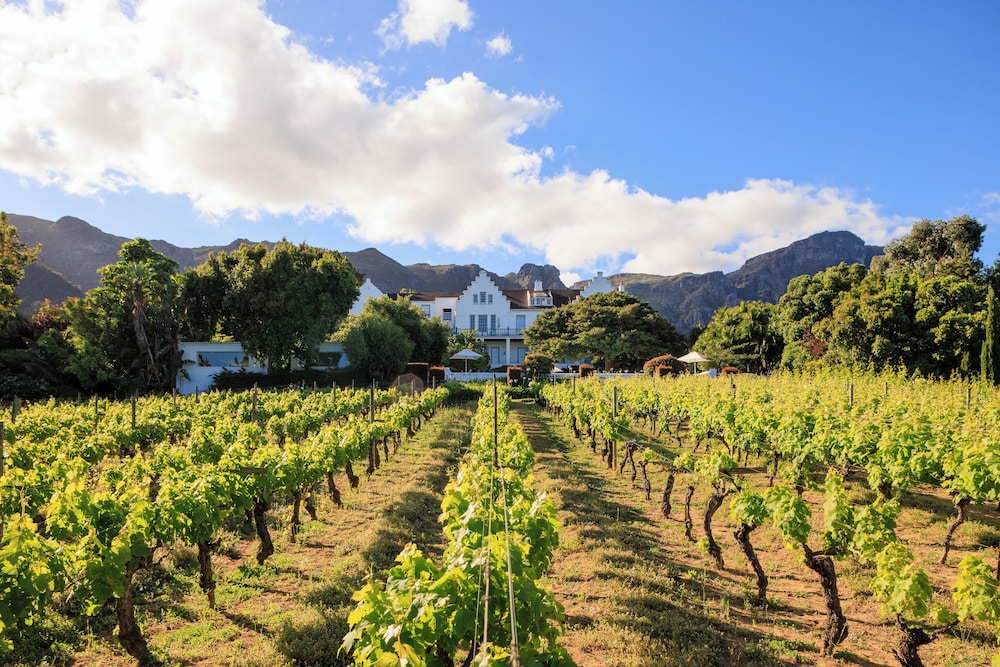
Groot Constantia, ten minutes away, is the oldest wine estate in the country, granted in 1685, and the working parts of it are indoors. The Cape Dutch manor house is a furnished museum, the Cloete Cellar holds the old wine-making equipment and the story of the sweet Constantia wines that eighteenth-century Europe fought over, and the tasting room is warm and dry. A tasting flight runs roughly R100 to R200 a person, often waived against a bottle purchase; a cellar tour with tasting costs a bit more and runs at set times.
Eat at one of the two restaurants on the estate, where a long lunch under the oaks with rain drumming on the roof is a better use of a bad afternoon than anything you would do in the sun. Mains sit around R180 to R320. If you want a second farm, Buitenverwachting and Klein Constantia are minutes away on the same road; Klein Constantia's Vin de Constance tasting is the historical one to do. Skip the vineyard walks in the wet, since the decomposed granite paths turn slick and the views are inside cloud.
Day one, evening: the Baxter, and where to sleep
Book the Baxter Theatre Centre on Main Road in Rondebosch for the evening. It is the University of Cape Town's theatre complex, with three stages and a programme that runs local new writing, jazz, dance and the annual family season, and tickets typically land between R150 and R400. Parking is on-site and secure, which decides it over city-centre venues on a night when you do not want to walk. Cinema alternatives are the Cavendish complex in Claremont for mainstream releases, or an independent art-house screening in Gardens if you would rather be in town.
Sleep in Constantia or Newlands rather than driving back to the Atlantic seaboard. Constantia guest lodges on the wine-farm roads run roughly R2,000 to R4,000 a double, usually with a fireplace and a garden you will not use. Newlands and Rondebosch guesthouses near the cricket ground and the university are more like R1,200 to R2,200 and put you five minutes from tomorrow's road south. Both areas are quiet, green and dark at night; neither has a walkable restaurant strip, so plan dinner before you check in.
Day two, 09:30: Casa Labia and Muizenberg
Drive over Wynberg Hill and down to Muizenberg, twenty minutes, and start at Casa Labia on Main Road: a 1929 Venetian-style villa built for the Italian ambassador, with panelled rooms, chandeliers and a café doing breakfast for R90 to R160 while the rain hits the sea across the road. It functions as a small cultural centre with changing exhibitions, and the collection of period interiors is worth the visit on its own. Entry to the house is either free or a token donation depending on the exhibition; check before you go.
Two hundred metres away, Het Posthuys is one of the oldest buildings in the country, a whitewashed toll house from the 1670s, and takes fifteen minutes. Then walk the covered stretch of Surfer's Corner and watch the surfers, who do not care about rain at all and are often out in the biggest numbers when a front pushes swell into the corner. If someone in your party wants a lesson, the schools run in the rain too; a group session with board and wetsuit typically runs R450 to R650.
Day two, 12:00: Kalk Bay bookshops and a long lunch
Kalk Bay's Main Road is the best wet-weather browsing strip in the metro: an independent bookshop with a strong Africana section, five or six antique and junk dealers where the stock is genuinely old rather than distressed, and a handful of small galleries and craft studios. Budget an hour and a half and expect to buy something. Parking is tight and the road narrows, so take the harbour lot and walk up. The railway line runs between the shops and the sea, which means waves break directly onto the track wall in a southeaster.
Lunch at the harbour. The pub built into the rocks below the station serves beer and fish with the swell hitting the windows and is the most weather-appropriate room in Cape Town. The two better restaurants on the harbour wall do line fish for R180 to R320 and take bookings, which you will want on a Saturday. The kiosk on the quay does hake and chips for R90 to R130 if you would rather eat standing under an awning watching the seals work the fishing boats.
Day two, 15:00: Simon's Town museums, and the sleep decision
Fifteen minutes further south, Simon's Town has three small indoor stops within two blocks of each other on St George's Street: the town museum in the old residency, the naval museum with submarine and dockyard material, and a heritage museum in the old Muslim quarter recording the community removed under apartheid. Each takes thirty to forty minutes and costs very little. There is also a gem-scratching shed near the docks where children sift semi-precious stones for a fixed price per bag, which buys you an hour on the worst afternoon of the trip.
If the sky lifts, the Boulders boardwalk is ten minutes away and penguins in drizzle are no less penguin. Then either sleep in Simon's Town, where guesthouses run about R1,100 to R1,900 a double and the town goes quiet at 21:00, or drive back to the city in forty minutes over Ou Kaapse Weg for a wider dinner choice. On a wet night with poor visibility, the M3 through Constantia is the calmer road than the coastal one, and the Simon's Town option removes the drive entirely.
Before you book
The questions people ask about Constantia, answered with this month’s numbers.
The city centre averages roughly 500 to 600 millimetres a year, most of it between May and September, but it falls in bursts. A typical June week brings two or three wet days rather than seven. Newlands and the mountain-foot suburbs catch far more than the coast, so a wet Constantia morning can be dry in Muizenberg.
Yes, but only on the day. Buy when you can see the upper station clear of cloud, and check the operator's wind status page that morning. Winter gives some of the sharpest visibility of the year between fronts, with air scrubbed clean and snow occasionally visible on the distant Hex River mountains.
Cape Point in a northwesterly gale, Chapman's Peak when the boom is down, any full-day open-vehicle tour, and the hop-on-hop-off bus upper deck. Also skip the beaches for swimming: winter Atlantic water sits around 12 to 14 degrees and the rip currents after a front are worse than they look.