Cape Town on a R900 a day budget
 Backpackers and street food stalls in central Cape Town
A dorm bed, three meals, transport and one paid activity for R900 a day — the numbers work in Cape Town, but only if you get four things right.
The daily maths, and where it breaks
Here is the shape of a workable R900 day: R320 for a dorm bed, R230 for food, R150 for transport, R150 for an activity and R50 of slack. That is achievable across most of the year and comfortable outside December and January, when hostel dorms in Long Street and Sea Point rise from around R280 to R450 and the slack disappears. Travel in May, June, September or October and the same day costs R700-750, with the trade-off of shorter days and, in winter, rain.
The budget breaks on three things: taxis after dark, big-ticket attractions, and drinking. A single Uber from Camps Bay back to town at 01:00 is R150-200. The Table Mountain cableway return is in the region of R420-460 and Robben Island is a couple of hundred more, so those are budget days by themselves. And a Long Street night out at R45-60 a beer is R400 before you have eaten. Plan those as exceptions and the rest of the trip pays for itself.
Beds: where R280-450 actually gets you
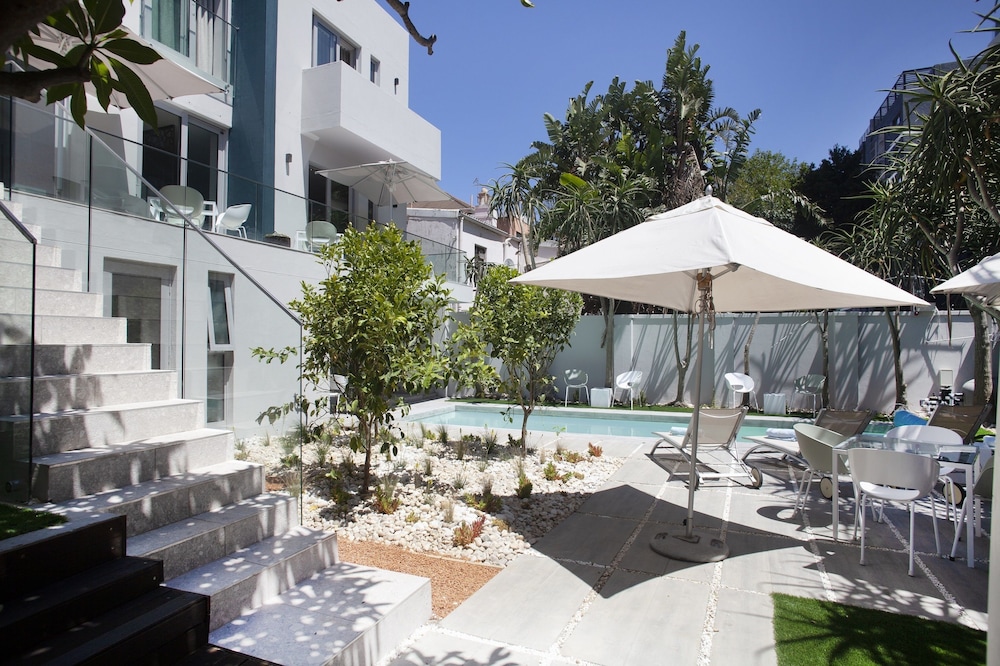
Cape Town has a mature hostel scene concentrated in three places. Long Street and the streets around it in the CBD are the party option — dorms from about R280-400, walking distance to bars, and noise until 03:00 on weekends. Green Point and Sea Point hostels charge similar money for calmer buildings and put you on the promenade. Observatory, out towards the university, is cheapest of all at R250-350, with a student bar strip on Lower Main Road and a 10-15 minute drive into town.
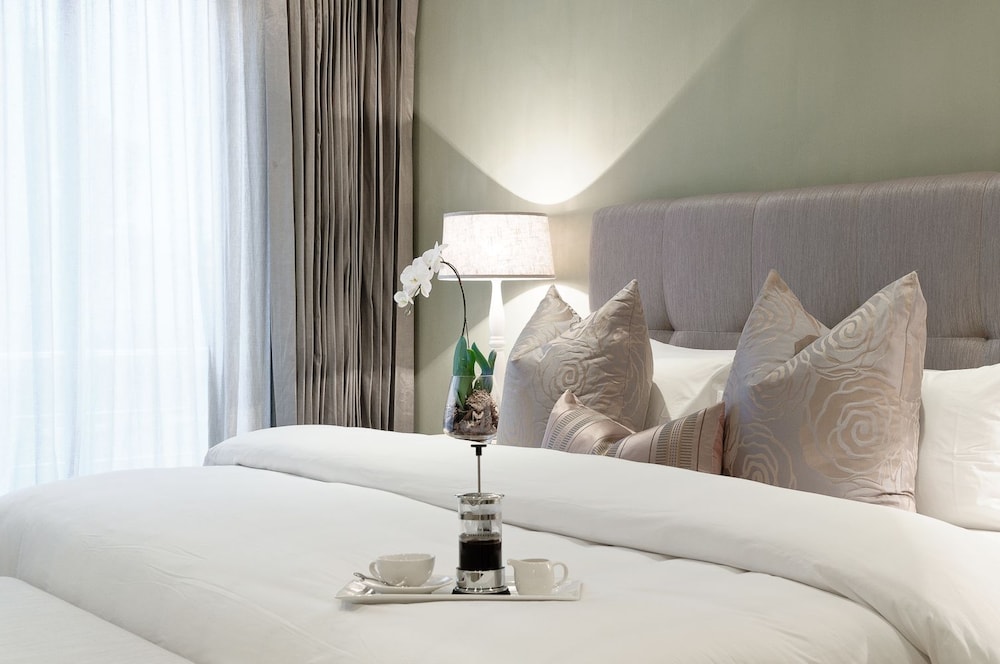
For couples, a private room in a hostel or a budget guesthouse runs R700-1,200 and splits to R350-600 each, which fits two people at R900 a day apiece with room to spare. Look for hostels with a self-catering kitchen — that is the single biggest saving available, because it turns a R160 restaurant lunch into a R45 sandwich. Book December and January six to eight weeks ahead; in May and June you can walk in and negotiate a weekly rate, often 15-25% off.
Eating for R230 a day
Breakfast from a supermarket: bread, eggs, fruit, yoghurt, coffee — R40-60 a day if you cook at the hostel. Lunch is where Cape Town is genuinely generous. A half gatsby, the enormous chip-and-meat roll invented in the Cape Flats, runs R70-120 and feeds two people at a push; find them at takeaway shops in Salt River, Athlone and along Main Road. Boerewors rolls at markets are R50-80. A bunny-chow-style curry roll, samoosas at R10-15 each, and koesisters from a Bo-Kaap bakery on a Sunday morning fill the gaps.
For dinner, R100-160 buys a proper plate: peri-peri chicken and chips in Sea Point, an Ethiopian injera platter in Observatory, a curry in the CBD, or fish and chips in Kalk Bay at R100-150 wrapped in paper on the harbour wall. Skip the Waterfront quays and Camps Bay strip entirely at this budget — R280-450 a main is three days of eating. Markets are the value play: the Saturday Neighbourgoods Market at the Old Biscuit Mill in Woodstock and the Bay Harbour Market in Hout Bay both let you eat well for R120-180 if you are disciplined about drinks.
Getting around for R150
MyCiTi is the backbone: buses run the seaboard route through Sea Point and Camps Bay, the CBD circuits, and the airport service into the Civic Centre station. You buy a myconnect card for a small one-off fee and load value; individual trips across the central zones are a fraction of an Uber. Check current fares and route timetables with MyCiTi directly, since both are revised periodically. Two or three bus trips a day sit comfortably inside R150.
Uber and Bolt fill the gaps — R50-90 across the City Bowl, R70-120 to Camps Bay — and are what you use after dark, always. Minibus taxis run the Main Road corridors for very little money and are used by hundreds of thousands of people daily; they are also crowded, unpredictable in their stopping and not recommended with luggage. The Metrorail Southern Line to Muizenberg, Kalk Bay and Simon's Town is the cheapest scenic ride in the country when it runs properly, but service reliability has been a long-running problem — check with the operator before planning your day around it.
Free and near-free: the best of the city costs nothing
Cape Town's headline experiences are outdoors. Lion's Head at sunset, Signal Hill for the noon gun at 12:00 on weekdays and the evening panorama, the 11km Sea Point promenade, the Pipe Track under the Twelve Apostles, the Bo-Kaap's painted streets, Clifton and Muizenberg beaches, the Company's Garden with its squirrels and free-entry sections — none of these cost more than a bus fare. Platteklip Gorge up Table Mountain is free; only the cable car is not.
Add the cheap-but-not-free tier: Sea Point Pavilion's 50m saltwater pool for under R50, the South African National Gallery and Iziko museums at modest entry with periodic free days, and the District Six Museum at around R60-80 — which, for understanding what happened to this city under apartheid, is the most important R80 you will spend here. First Thursdays sees CBD galleries around Church and Bree Streets open late on the first Thursday of the month, free to wander.
The splurges worth breaking the budget for
Three things are worth saving two lean days for. Robben Island, because a tour led by a former political prisoner is not replicable anywhere else — book ahead through the museum and check current prices. The Table Mountain cableway if the wind is down and the summit is clear, at roughly R420-460 return; buy online, go up in the late afternoon and stay for sunset. And a day on the peninsula: hire a car with two other people for R450-750 plus fuel, split three ways, and do Chapman's Peak, Cape Point and Boulders in one loop.
That car day needs its own budget: the Chapman's Peak toll is roughly R60-70 a car each way, Cape Point conservation fees run a few hundred rand for international adults, and Boulders charges separately — all SANParks tariffs, so confirm the current ones. Split three ways with a picnic instead of restaurant lunches, it comes in around R500-700 each for the best day in the Western Cape. Some visitors buy a SANParks Wild Card if they will visit several parks; do the arithmetic before assuming it saves you money on a short trip.
Where budget travellers waste money here
The commonest error is staying somewhere scenic and paying for it in transport. A R600 dorm in Camps Bay plus R120-180 of Ubers each way is not a saving on a R320 CBD dorm you can walk from. The second is the hop-on hop-off bus at roughly R320-400 a day — good value if you use it all day and have no other transport, poor value if you take two rides. The third is drinking in tourist zones: the same beer is R45 in Observatory and R95 on a Camps Bay terrace.
The fourth is booking every tour through a hostel desk. Peninsula day tours run R900-1,600 and are convenient, but three travellers splitting a hire car see the same coast for less and stop where they like. Where you should not economise: never walk long distances at night to save an Uber fare, never leave a bag on a beach while you swim, and do not book a room in a suburb you have not researched purely on price. Those three savings are the ones that cost people their trips.
Before you book
The questions people ask about Sea Point, answered with this month’s numbers.
It is tight. Dorm rates rise from roughly R280 to R450, and everything else is busier rather than dearer. Budget R1,100-1,200 a day for peak season, or move your trip to May, June, September or October when the same itinerary costs R700-750.
Not for the city — MyCiTi buses and ride-hailing cover the Atlantic seaboard, CBD and Waterfront. Hire one for a single peninsula day, split between three people at roughly R450-750 plus fuel and tolls, and you see Chapman's Peak, Cape Point and Boulders for far less than a guided tour.
Hiking Lion's Head at sunset — free, 45-75 minutes up, and the best view in the city. Go with other people, never alone, take a headtorch for the descent, and time it so you are on the summit about 30 minutes before the sun goes down.