Cape Town Beaches for Families: Where the Water and Sand Actually Work
 Cape Town Beaches for Families: Where the Water and Sand Actually Work
A practical look at the city's family-friendly shoreline, from the calm shallows of False Bay to the Atlantic spots where a windbreak and a short visit are the whole point.
False Bay: the warm, shallow side
If your children are small and you want them in the water rather than watching it, start on the False Bay coast. Boulders Beach near Simon's Town is the obvious pick: the beach is sheltered by granite boulders, the sand is soft, and the water is noticeably warmer than the Atlantic side. You pay a conservation entry fee to use the boardwalk and beach, and you must stay on the marked paths and off the rocks where penguins nest. Arrive before 10am in December and January; the car park fills fast and the beach gets busy by midday.
Muizenberg is the other reliable family stop, and it is the one I would book a hotel near if the trip revolves around children. The beach shelves gently for a long way out, which suits paddling and beginner surfing, and the colourful bathing boxes are easy to find as a meeting point. The trade-off is crowds and occasional wind. Fish Hoek, a few minutes further south, is quieter, with a broad flat beach and a promenade that works well for prams and scooters. Water quality after heavy rain can dip in parts of False Bay, so locals tend to swim a day or two after a big storm.
The Atlantic seaboard: beautiful, bracing, brief
Camps Bay and Clifton are the postcard beaches, and they are genuinely safe in the sense that matters most: lifeguards patrol in season, the sand is clean, and there are plenty of families around. But the Atlantic water here is cold, often around 14 to 16 degrees Celsius, and the swell can be strong. Treat these as sandcastle and sunset beaches rather than all-day swimming beaches. Clifton's Fourth Beach is the most family-oriented of the four coves, with a gentler shelf and more space; the climb down from the road is steep, so pack light and avoid it with a pram.
Camps Bay has the advantage of cafés, toilets and parking along Victoria Road, and the tidal pool at the far end near Bakoven is a good compromise for children who want to get wet without the surf. Wind is the real issue: the south-easter picks up in the afternoon from November to March and can sandblast a picnic in minutes. Go in the morning, take a windbreak, and plan to leave by two. In winter, the Atlantic beaches are quiet, dramatic and not really swimming territory; walk them instead.
Northern suburbs and the West Coast road
Milnerton and Table View face north across Table Bay, with wide beaches, big skies and a view back to Table Mountain that is better than most visitors expect. The water is cold and the currents warrant care, but the lagoon at Milnerton and the calmer stretches near the kite-surfing zone at Bloubergstrand suit families who want space and easy parking. Bloubergstrand's main beach is the classic photograph spot; the lagoon side, near the sailing club, is shallower and kinder for small children. The drive from the city centre is about 20 to 25 minutes outside peak traffic.
Further up the West Coast road, Melkbosstrand is a 40-minute drive from central Cape Town and feels like a small-town beach: long, clean, patrolled in season, with a strip of cafés and a slipway. It is the beach I would choose for a relaxed family day with a car, because you can park close, walk a short distance, and not fight for space. Skip the West Coast if you have no car; the MyCiTi bus network serves Milnerton and Table View but does not reach Melkbosstrand conveniently.
Practicalities that decide the day
Lifeguards on Cape Town's popular beaches generally patrol from November to March, with fuller cover over weekends and school holidays; outside those months, assume no one is watching the water. Shark spotting is active on parts of False Bay, and the shark-spotting flags and sirens at Muizenberg and Fish Hoek are not decorative. Sun is stronger than the temperature suggests, and the south-easter can burn or chill a child quickly. Pack layers, hats and a windbreak, and check the wind forecast the night before rather than at the beach.
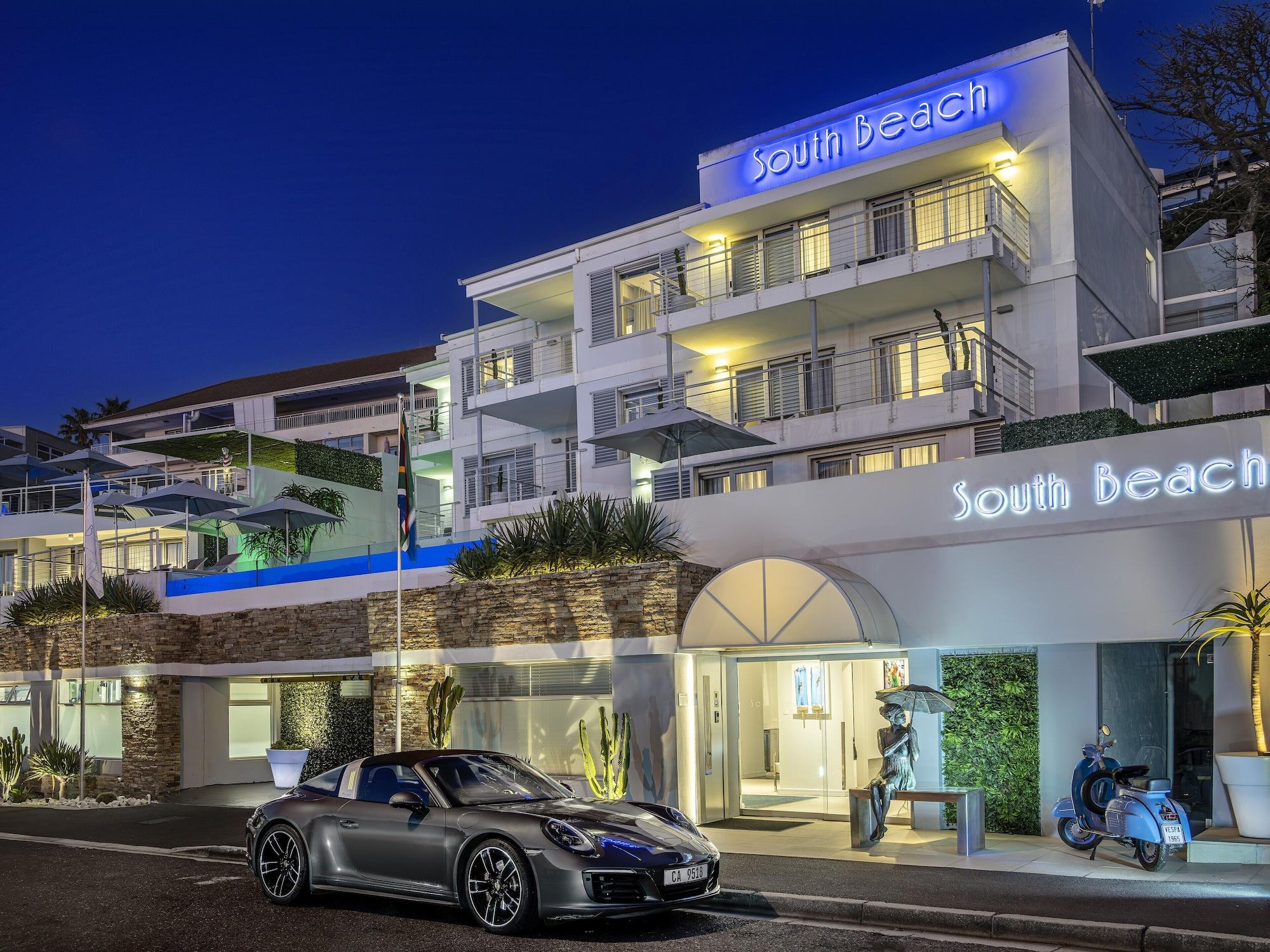
Where you stay shapes which beaches you use. A hotel in the city centre or along the Atlantic seaboard puts Camps Bay and Clifton within 10 to 15 minutes; a base in Muizenberg, Kalk Bay or Simon's Town makes False Bay the default and cuts out the mountain pass drive entirely. If you are booking for a family and want one beach to become the routine, I would take a hotel in Muizenberg or near Kirstenbosch-side Constantia for the quiet, and use the Atlantic beaches as day trips. The current search data on our site shows steady interest in Cape Town hotels but almost no completed bookings, which usually means travellers are comparing areas and need the geography spelled out before they commit.
Related articles
Before you book
The questions people ask about Cape Town, answered with this month’s numbers.
False Bay is warmer than the Atlantic, typically several degrees higher. Boulders Beach near Simon's Town and Muizenberg are the most reliable for comfortable paddling. Atlantic beaches such as Camps Bay and Clifton are cold year-round, usually around 14 to 16 degrees Celsius, and better for sand play than long swims.
Popular beaches including Muizenberg, Fish Hoek, Camps Bay and Clifton have lifeguards in season, generally November to March, with more cover at weekends and school holidays. Outside those months, do not assume anyone is watching the water. Ask locally on the day and watch for the flagged swimming zones.
Muizenberg shelves gently for a long way out, which makes it one of the better choices for young children. Shark-spotting is active and the sirens should be taken seriously. Swim between the flags, avoid the water after heavy rain, and keep children close when the surf picks up.
Camps Bay is roughly 10 to 15 minutes by car from the city centre along the coast road, depending on traffic. Clifton is a few minutes further. Parking along Victoria Road fills quickly on summer weekends, so arriving before mid-morning makes the day much easier with children.
A car makes the False Bay and West Coast beaches far easier, especially Melkbosstrand and Boulders. The MyCiTi bus serves Milnerton, Table View and the city, and trains run to Muizenberg and Simon's Town, but schedules are limited. With children and beach gear, a car or ride-hailing is usually simpler.
December to March is the warm, dry, windy season and the busiest. February often has the most settled weather. November and April are quieter and still pleasant, though lifeguard cover may be thinner. Winter, June to August, is for walks and storm watching rather than swimming on the Atlantic side.
Camps Bay, Muizenberg and Fish Hoek have cafés, toilets and parking close to the sand. Clifton's coves involve a steep walk down from the road and limited facilities. Boulders Beach has a boardwalk and visitor facilities but charges a conservation fee, and you must stay on marked paths.
For a city-centre base, use Camps Bay in the morning with a windbreak and leave by early afternoon, or take the short drive to the Milnerton lagoon for calmer water. If the children want to swim properly, make the 30 to 40 minute trip to Muizenberg instead of forcing a day on the Atlantic.